Independent days · choose your own pace
Hokkaido solo travel, with freedom and a workable plan
Give yourself a comfortable base and a reliable journey back. Compare what each day costs for one person, keep the city days flexible and add a rural experience only when the whole route works.
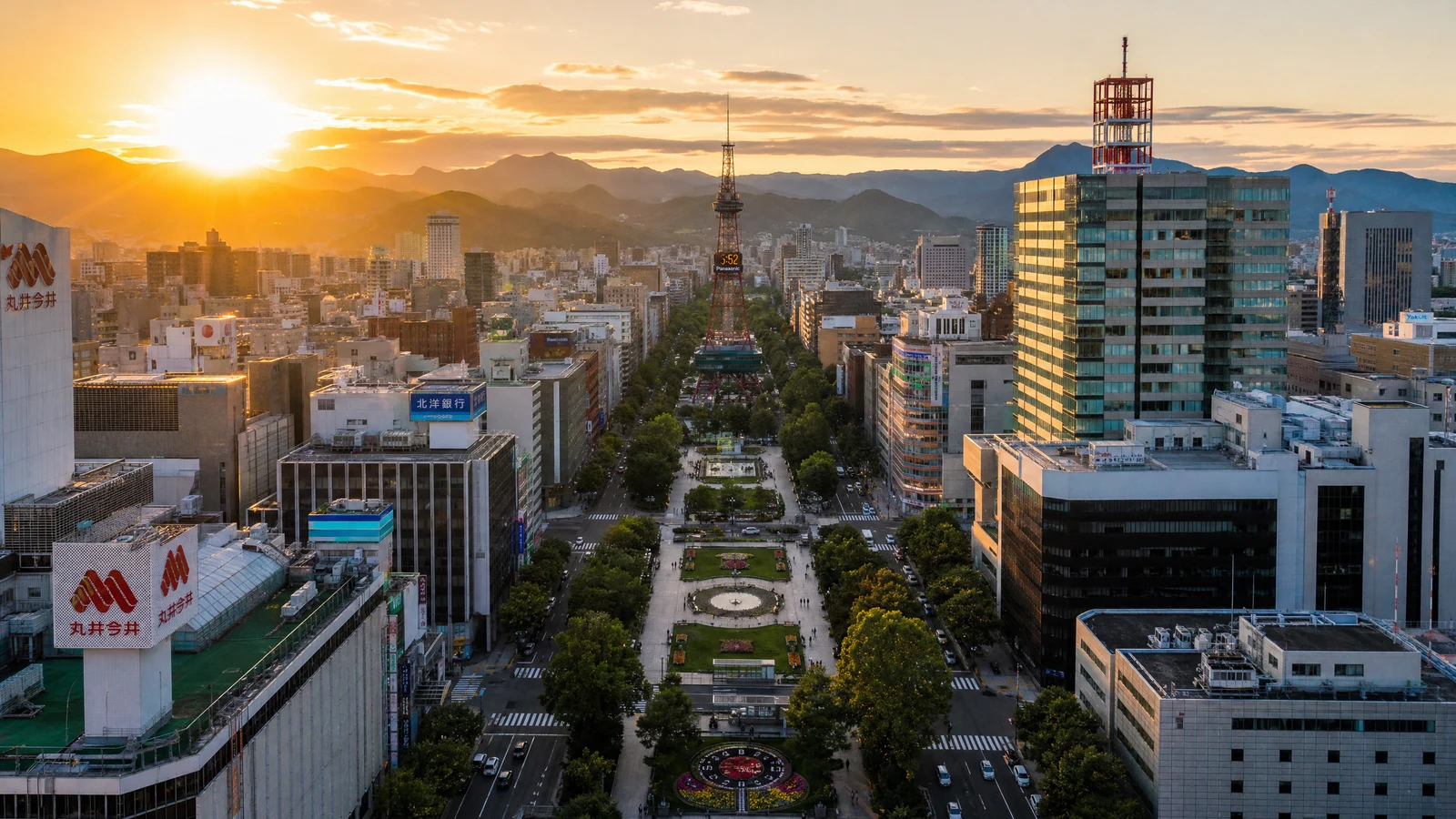
Hokkaido solo travel works best with a clear base
Travelling alone gives you the freedom to spend another hour in a neighbourhood, choose a small museum because it interests you or take a quiet evening after a long journey. Protect that freedom by sorting the fixed parts first: a comfortable base, a reliable way back and an honest budget for one person.
For a compact first visit, Sapporo makes a useful starting point. You can combine a city day with a focused Otaru outing, then decide whether a countryside experience deserves extra nights or a different kind of transport. This guide offers a four-day outline, ways to compare costs and a method for adding rural travel without assuming you need a car every day.
Hokkaido’s regional distances still matter when only one person is travelling. Use the trip planner to choose your main area and the car-free guide for transport detail. Keep a longer eastern or southern journey as a deliberate regional plan rather than an extra stop attached to a short city break.
Choose the hotel by your actual return journey
| Possible base | Why compare it | What to check |
|---|---|---|
| Sapporo Station area | Useful when the trip includes airport or intercity rail journeys. | The hotel entrance and station exit, the walk with bags and a practical evening meal nearby. |
| Odori and central city | Useful for a city-focused stay and selected local connections. | The actual subway or walking route to each day’s start, rather than the word central in a listing. |
| Near your evening interest | Useful when a particular neighbourhood or booked activity shapes the trip. | The late return, reception arrangements and whether the daily station journey remains convenient. |
| A second regional base | Useful when Furano, Asahikawa, Hakodate or another area is the main interest. | Transport, meal options and the number of useful nights gained after the hotel move. |
Check the total price for one occupant and the room type you will actually book. A price per person based on two sharing can be misleading for a solo budget. Compare cancellation conditions, reception hours, bag storage and the approach from the station alongside the room facilities.
Keep the first evening close to the hotel. Learn the route back in daylight when possible, save the Japanese address offline and check the building entrance. For late arrival, confirm check-in directly. These small arrangements can make independent travel feel straightforward without filling every hour in advance.
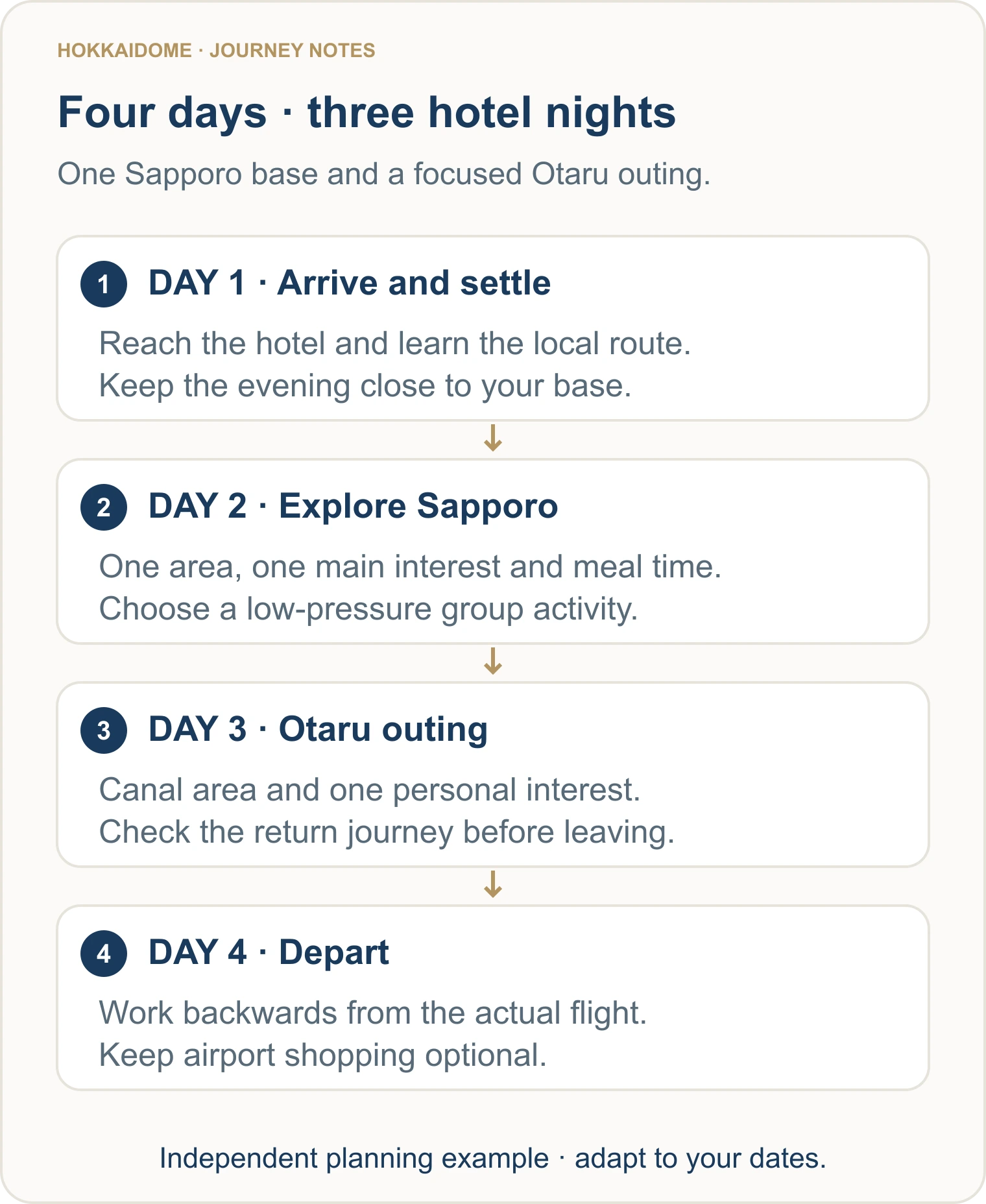
A four-day solo outline from one Sapporo base
This editorial example uses three hotel nights in Sapporo. Day 1 and Day 4 are travel days, so the plan has two full sightseeing days. Move the activities to match your actual flight times, interests and season.
- Day 1 · Arrive and find your bearings
Complete the airport-to-hotel journey, settle in and choose a nearby meal. A short neighbourhood walk is optional. Do not make a distant attraction the test of whether arrival day was worthwhile.
- Day 2 · Make Sapporo your own
Choose one area and a main interest: a museum, architecture, shopping, a park or a booked workshop. Keep lunch and the afternoon flexible. If you want company, add one structured activity rather than a packed programme.
- Day 3 · Give Otaru a focused day
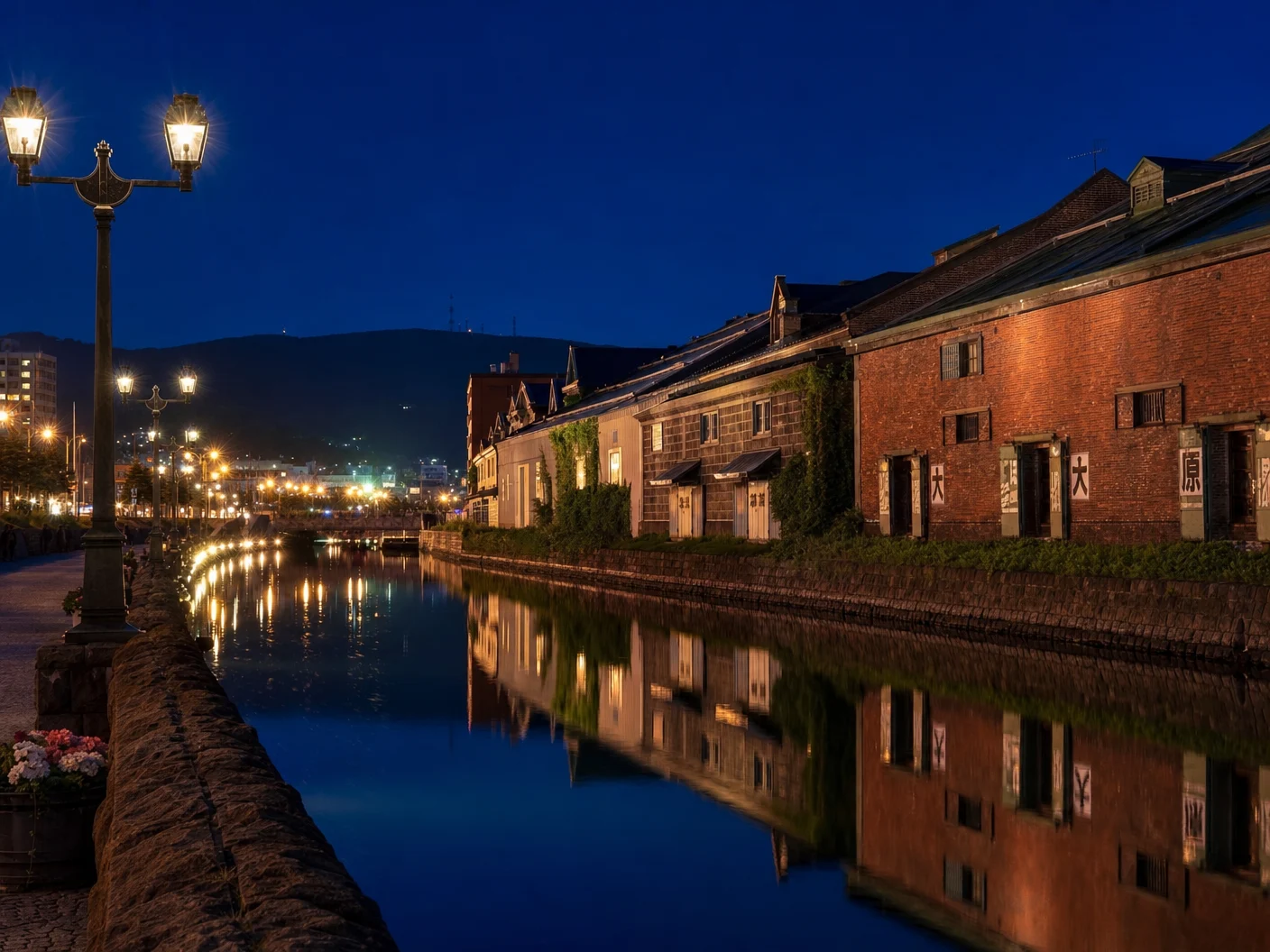
Check the outward and return journeys, then combine the canal area with one craft, food or shopping interest. Leave time to walk and sit down. Return to the same Sapporo hotel rather than moving bags for one outing.
- Day 4 · Depart with the flight as the fixed point
Work backwards from the airline’s requirements and your complete airport journey. Shopping and extra sightseeing stay optional. An early flight can make this a departure-only day.
For a longer stay, add open time first. Then consider one regional extension that fits your interests. The five-day and seven-day guides show different route shapes; they are alternatives to adapt, not a checklist to combine with every stop above.
Compare transport costs honestly for one person
The solo price comparison changes because there is nobody automatically sharing a vehicle or room. A convenient rail journey can be excellent value; a rental car or private charter may be worthwhile for a specific interest, but you pay the whole vehicle cost. Compare the complete day rather than only the first ticket or headline price.
For public transport, include local connections at both ends and any reservation or supplement required. For a group excursion, check the meeting point, admissions, meals, minimum participants and return time. For a car, include the actual route, bags, parking and other charges. A cheaper-looking option is not equivalent if it misses the attraction you care about.
| Option | Cost basis for one traveller | Useful decision |
|---|---|---|
| Rail and local transport | Your tickets and both final connections. | Choose it when the actual service and entrance are convenient. |
| Group day excursion | One booked seat plus any separate costs. | Compare it for a rural day when a fixed meeting point and programme suit you. |
| Rental car | Full vehicle cost, fuel, parking and applicable conditions. | Choose it only when the route and driving conditions fit your experience. |
| Private car and driver | The full confirmed vehicle-and-route quotation. | Consider one selected day when timing, bags, walking needs or a specific rural interest justify it. |
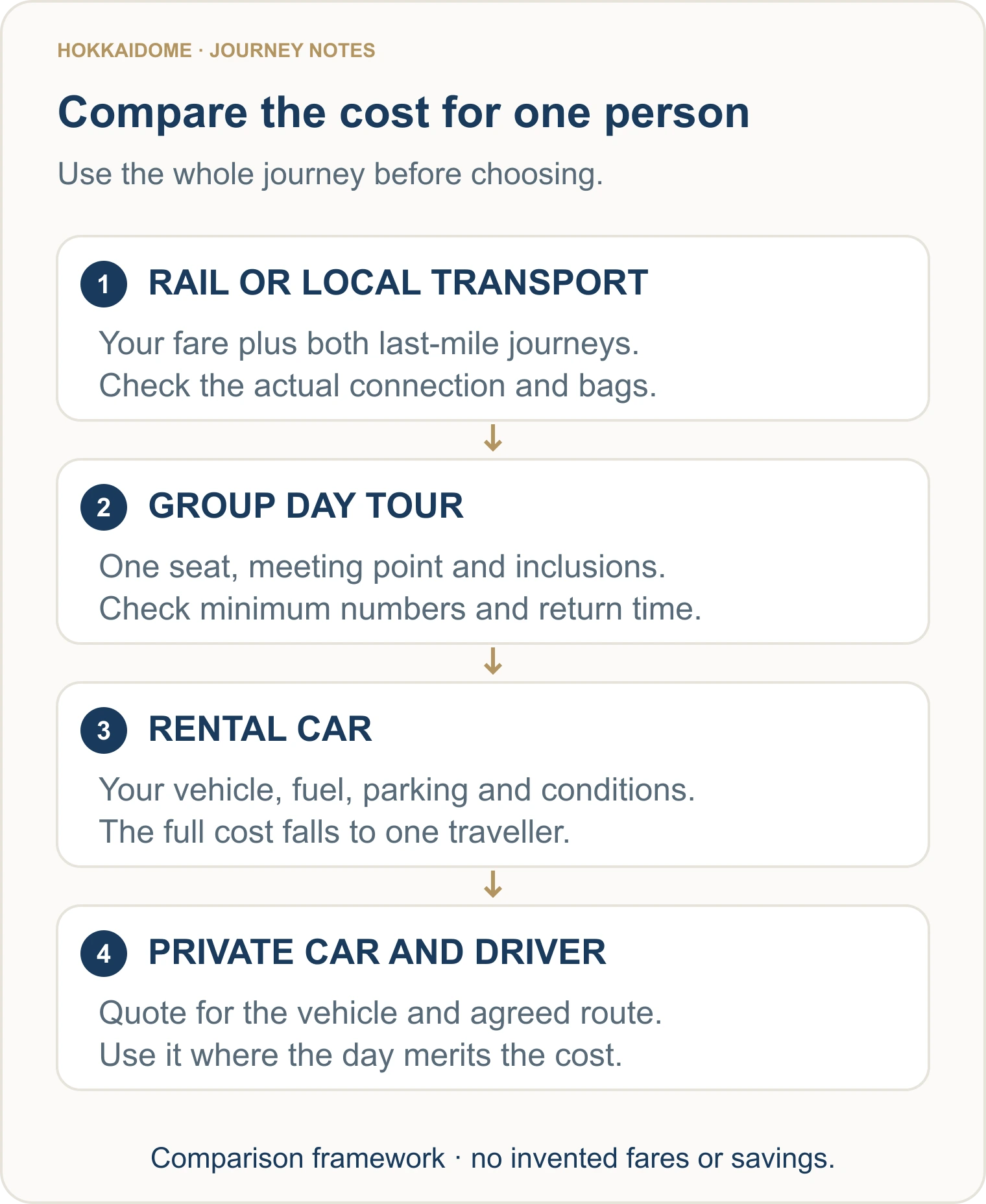
Use the trip-cost guide to separate accommodation, meals and activities. The private-driver price guide explains the published vehicle basis; request a route-specific written quote where needed. We do not imply that another passenger will be found to split your booking.
Add countryside travel only after the last connection works
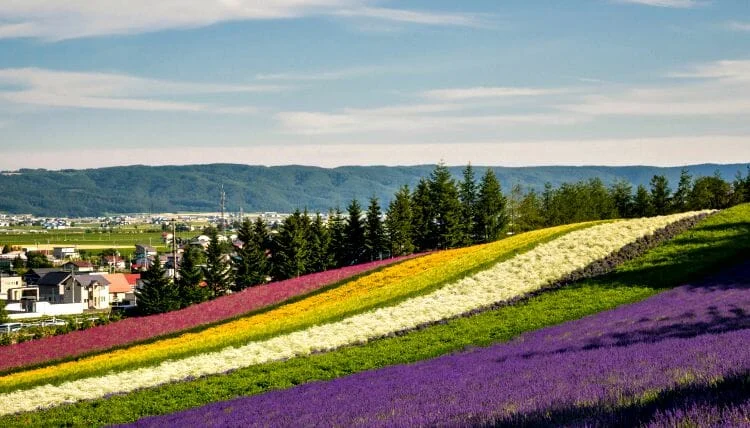
A solo Furano and Biei day needs the same route discipline as a group day. Choose the actual attraction, check the local connection and allow time to return. A train to a town does not automatically deliver you to flower fields, a pond or a rural hotel. Seasonal local services need the current year’s operating information.
If the countryside is the main reason for travelling, a nearer overnight base can be more useful than repeating a long journey. Compare Asahikawa, Biei or Furano for the exact stops and season. The Furano and Biei route guide explains the clusters; the Asahikawa Airport connection guide helps if a different gateway fits.
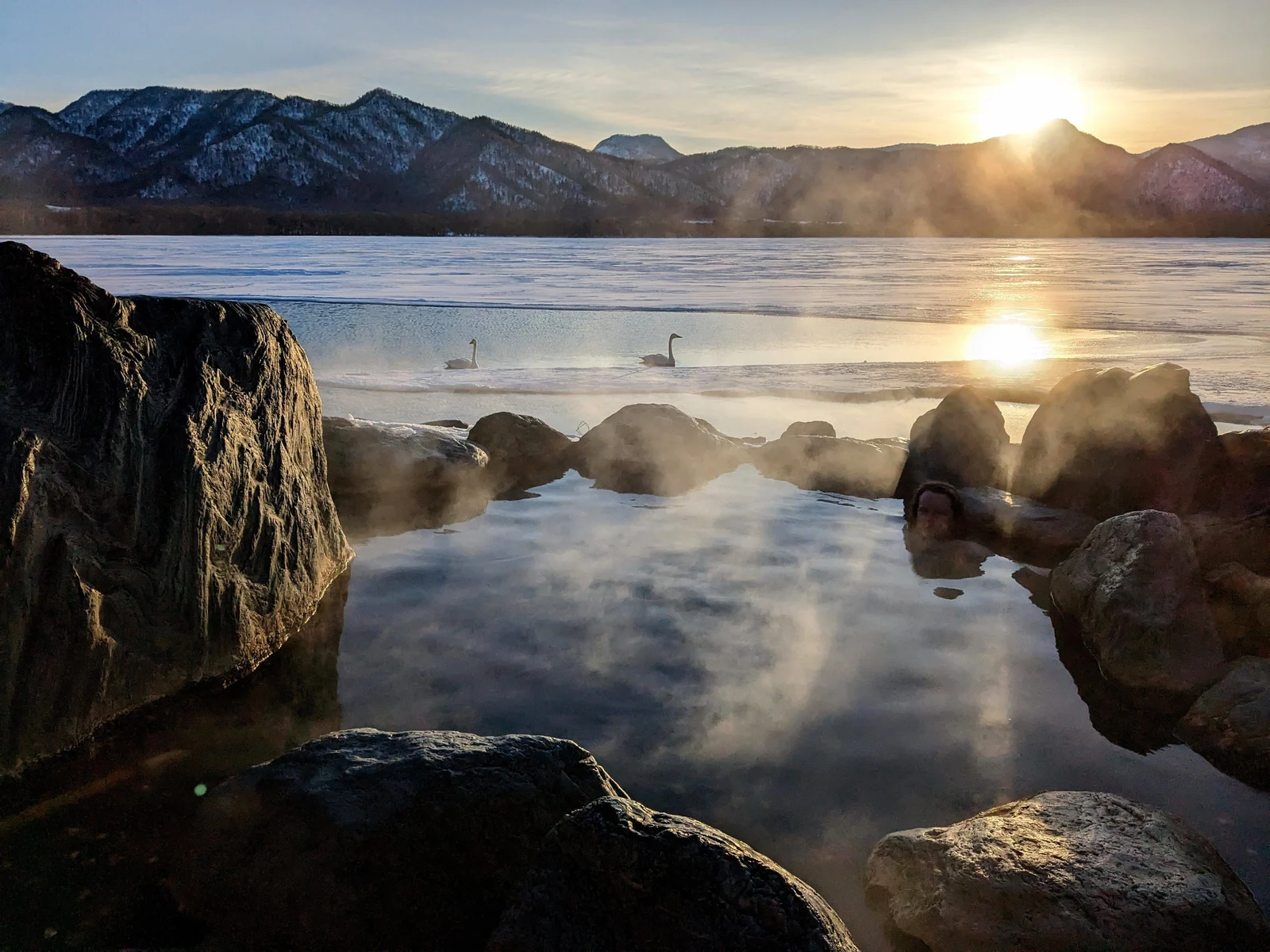
For a hot-spring stay, check the room-only or meal-inclusive arrangement, single-occupancy booking, access and the last return if you are not staying overnight. A beautiful outdoor-bath photograph does not establish day-use admission, private-bath availability or any particular property’s rules.
Keep the freedom of travelling alone
Book a small number of time-sensitive activities and leave the spaces between them usable. A workshop, guided walk or small-group excursion can provide company without turning the entire trip into a group itinerary. Confirm that the activity accepts a solo booking and will run on your date before arranging a special journey to its meeting point.
For meals, choose places that suit your interests and check their current ordering arrangements. A counter seat can be convenient, but not every venue accepts walk-ins or has a single seat available. If you have dietary requirements, use the food and allergy-planning guide and contact the actual kitchen before relying on it.
Keep the practical backup modest: a nearby meal, an indoor visit or an earlier return. Save essential addresses and contacts offline and keep someone you trust aware of a longer outing. Use current local guidance for outdoor activities and the operator’s requirements. A city-based solo itinerary does not prepare you for an independent mountain route.
In winter, protect the journey back and match the plan to your experience. Snow and ice affect walking as well as vehicles. Check the seasonal guide, current transport notices and the winter-driving considerations before deciding whether a rental is appropriate. There is no need to make the first solo visit a test of driving confidence.
Hokkaido solo travel questions
Is Hokkaido suitable for solo travel without a car?
A focused city-based visit can work well independently. Start with a convenient Sapporo hotel, a manageable city day and an Otaru outing. Rural attractions need closer checks of the final connection, service dates and return. You can add a group tour or one private day instead of renting a car for the whole holiday.
How many days should I allow for a first solo Hokkaido trip?
Our compact example uses four days and three nights in one Sapporo base, with arrival and departure treated as travel days. That leaves two full days for the city and Otaru. More nights can add a regional stay or a longer interest-focused day; they do not need to become a race across the island.
Where should I stay when travelling alone in Sapporo?
Compare a station-area base, an Odori-area base and a hotel nearer your main evening interests. Check the actual walk, station exit, reception and late check-in arrangements. For one person, the total room price and return route matter more than a per-person rate based on two people sharing.
Is a private driver good value for one traveller?
It depends on the day. A private vehicle is priced for the confirmed route and vehicle, so one person carries the full cost. Scheduled transport or a group-tour seat can be better value for an easy connection. A private day may make sense for a particular rural route, bags or accessibility needs after comparing the complete journey.
Can I visit Furano and Biei alone by public transport?
It can be possible with a selective route and services that operate on your date. Check the station-to-attraction legs and the return, not only the train into the region. A seasonal local tour, nearer overnight base or private quote may be worth comparing. Do not treat every countryside stop as walkable from a station.
How can I meet people without booking a group holiday?
Choose one optional structured activity such as a workshop, walking visit or small-group excursion that genuinely interests you. Confirm that it runs on your date and accepts a solo booking. Keep the rest of the day flexible so a social activity adds to the trip rather than controlling every evening.
What changes for solo travel in winter?
Leave more time for ground travel, walking surfaces and weather changes, and keep suitable clothing accessible. Check service and activity operation. Avoid choosing a winter rental or remote outdoor plan simply because it appears in another traveller’s itinerary; match it to your experience and current local guidance.
How do I request one private day for a solo trip?
Send the Japan date, pickup and drop-off addresses, your main interest, walking preferences, luggage and the latest useful return time. Tell us which other days you will travel independently. We confirm the route, vehicle, availability and written quote; no shared passenger or split-cost arrangement is implied.
Check services and local information
Reviewed 20 October 2026. The four-day outline and cost framework are HokkaidoMe editorial suggestions, not a fare quotation or fixed package. Use the actual operator’s date-specific services, accommodation conditions and local guidance.
Plan it with HokkaidoMe
Discuss one private day for your solo trip
Tell us your dates, pickup and drop-off addresses, main interest, luggage and preferred walking pace. We can quote the journeys you need while you keep other days independent.
We reply in English with availability and a personalised quote. A form enquiry does not create a confirmed reservation.