Hokkaido One Day Trip: Sapporo, Lake or Otaru Choices
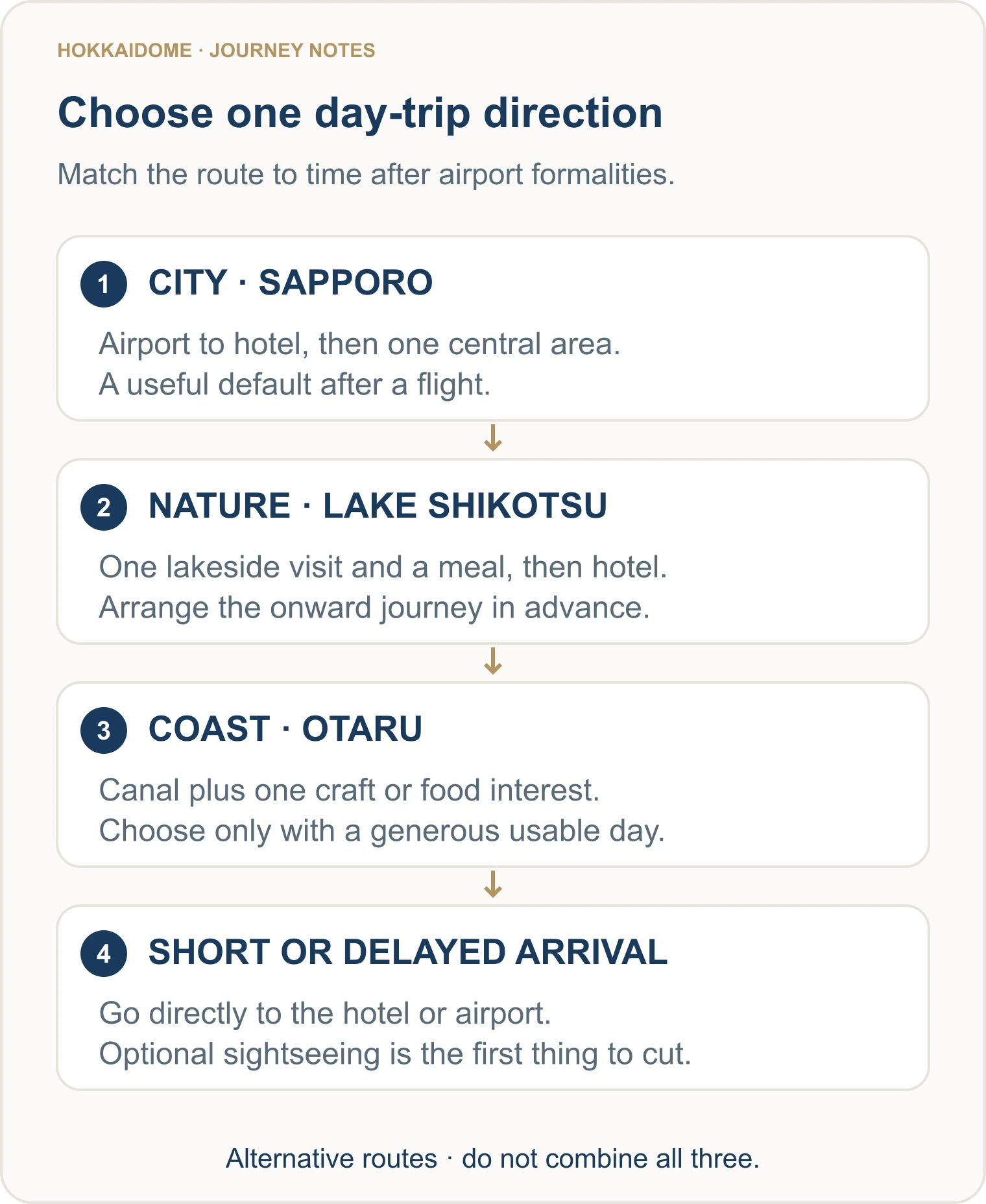
Choose a city arrival, one lakeside visit or a focused Otaru outing. Start with the hours you really have, then build in food, bags and a comfortable finish.
HokkaidoMe planning team · Reviewed 16 November 2026
A compact central Sapporo visit is a useful first-day option after reaching your hotel.
One directionCity, lake or canal town
Ground timeAfter arrival procedures and bags
A clear finishHotel or confirmed airport journey
A Hokkaido one day trip starts with a usable time window
One day in Hokkaido can be a satisfying introduction if you give it one clear direction. After a flight, that might mean a first walk in central Sapporo, a lakeside pause at Shikotsu or a focused visit to Otaru. The good choice is the one that leaves room for lunch, your bags and a comfortable finish.
Start by writing down the fixed points: when you can realistically be ready after arrival, where the day must end and whether another flight is involved. A plane’s scheduled landing time is not a pickup-ready time. Immigration, baggage collection and finding the agreed meeting point all sit before the first sightseeing stop.
This page offers three alternatives. It does not propose visiting all three in a single day. If you already have a full day from a Sapporo hotel, see the Sapporo private-driver guide for a different starting point. For a longer countryside outing, plan a separate Furano and Biei day.
Your usable ground time
A sensible starting idea
What to keep out
Short or uncertain after a flight
Direct transfer, bags, a meal near the hotel
A distant detour with a fixed admission booking
Several unhurried hours and a Sapporo finish
One central Sapporo neighbourhood
Multiple suburbs and a mountain viewpoint
A generous half-day with arranged onward travel
Lake Shikotsu as the main stop
A second onsen valley added automatically
A full, flexible ground day
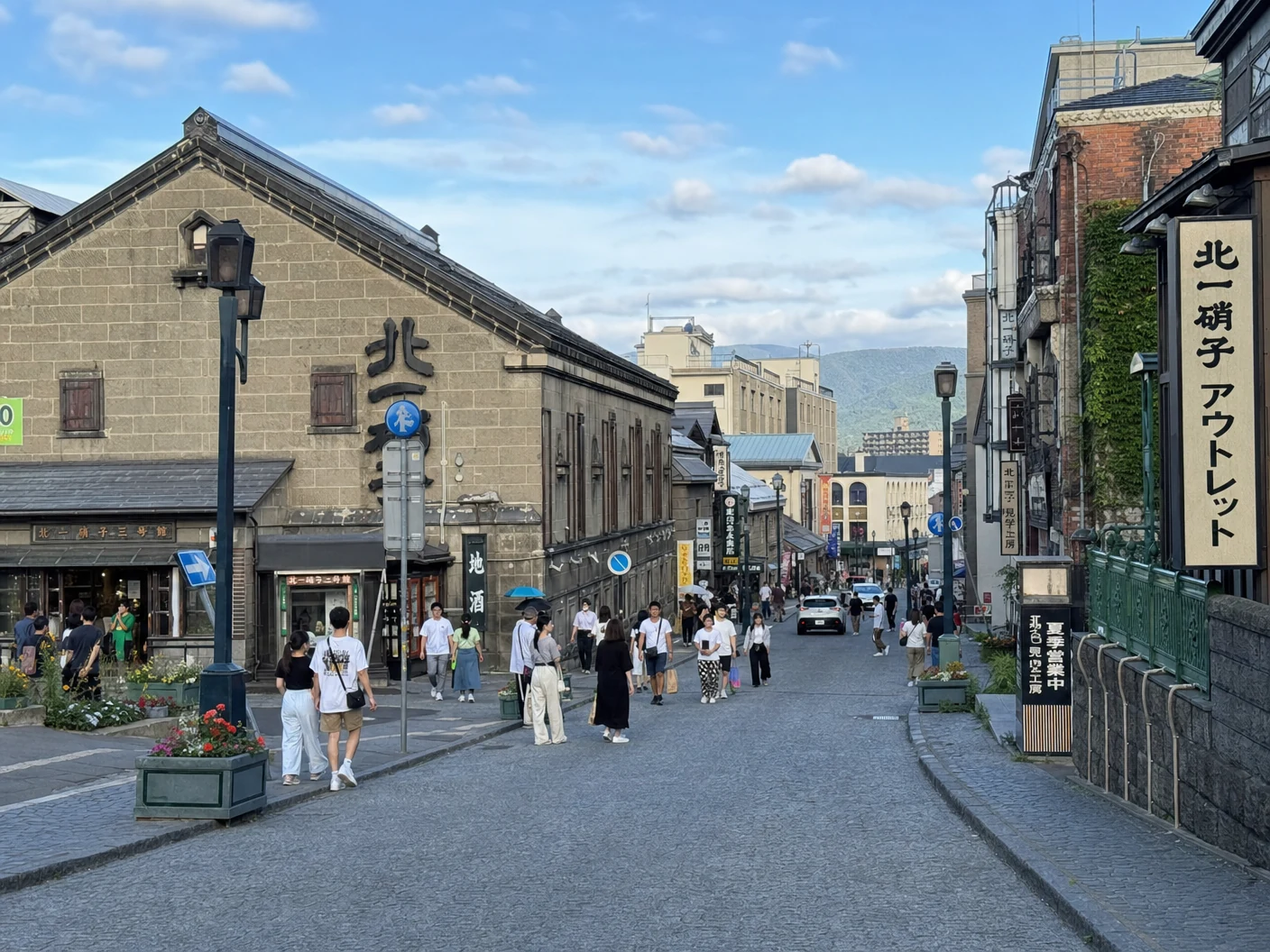
Otaru with a focused canal and craft visit
Furano, Biei or Niseko added to the same loop
Choose one direction. Your flight, weather and final address decide which one works.
Which kind of Hokkaido day trip are you planning?
An arrival afternoon, a hotel-based excursion and a flight connection have different starting lines. For an arrival day, begin when the whole group has cleared procedures and collected its bags. For a hotel day, begin at the actual hotel entrance after breakfast. For a connection, first establish whether leaving the airport is possible under your own bookings and entry arrangements, then subtract every return requirement. The same attraction list cannot simply be pasted into all three.
Write a start address and a finish address beside the hours. A city day ending at your Sapporo hotel can use its final hour for dinner; a day ending at an airport needs that hour allocated to the agreed terminal journey. If the usable window is still uncertain, choose a flexible city walk or direct transfer. Keep a prepaid workshop or outdoor activity for a day whose starting time you can control.
A useful test before choosing places
Name one experience that would make the day worthwhile, one meal and the point at which sightseeing must stop. If two people choose different priorities, choose one route with two nearby interests rather than two distant destinations. A canal walk and a glass shop belong together; a lake activity and a distant flower-farm visit create a different, much larger day.
Option 1: airport to Sapporo, then a compact city visit
For a first arrival, a city finish is often the most forgiving choice. Travel to your hotel, ask about storing bags before the room is ready and choose a nearby meal. Sightseeing then becomes something you can adjust rather than an appointment you are chasing from the airport.
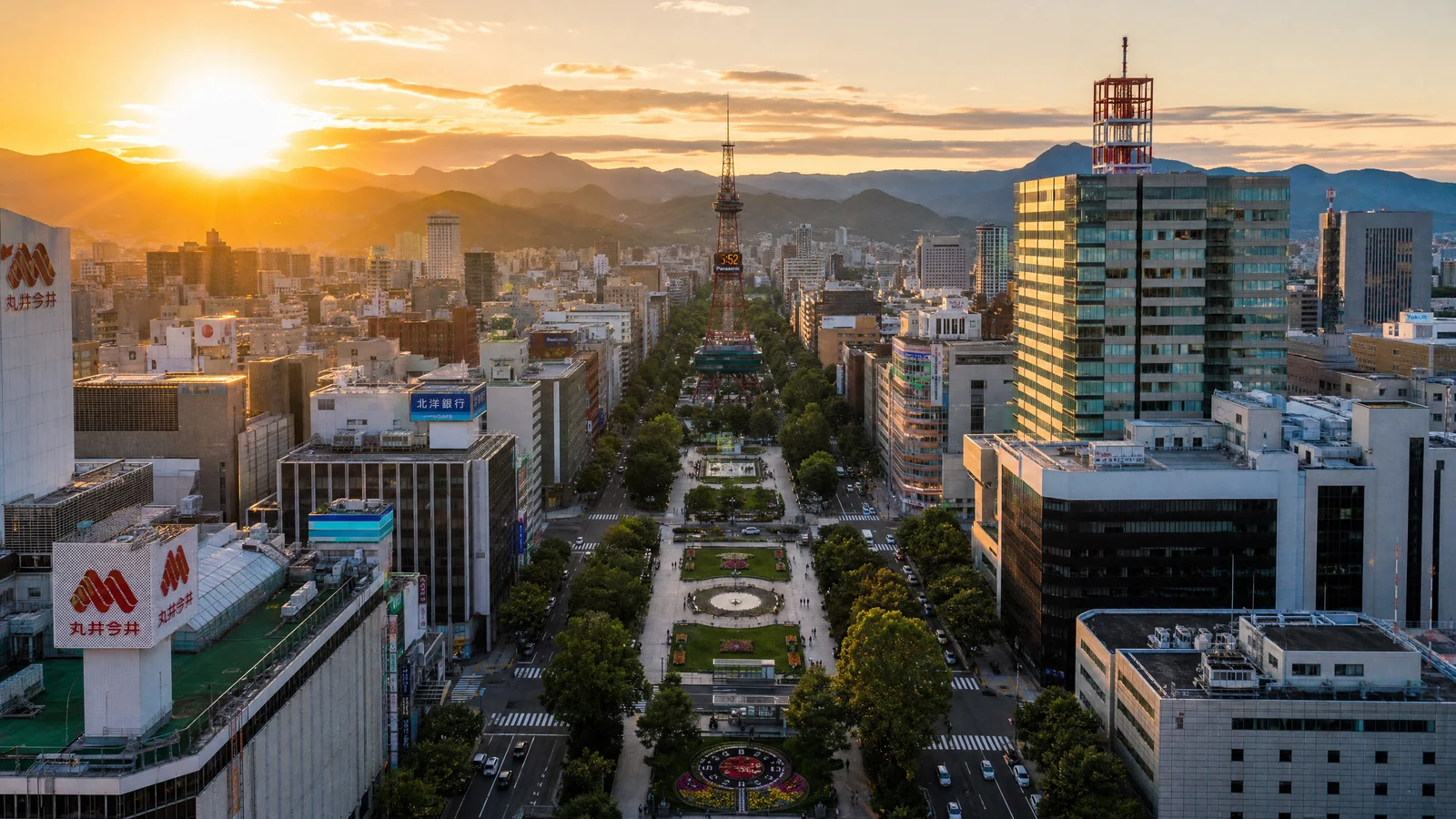
Use Odori Park and the Clock Tower area as a compact starting point. Pick one main interest: a short architectural walk, time inside a museum or a view from the TV Tower if conditions and opening arrangements suit. Add Tanukikoji or a nearby dinner only if the group still wants more walking.
The official Visit Sapporo first-visit walk connects several central landmarks. You do not need to reproduce its entire route after a flight. Choose a manageable piece of the city and leave its other stops for a day when you have slept and settled in.
JR’s current airport guide lists the fastest New Chitose–Sapporo service at 33 minutes. This is train time, not the whole airport-to-hotel journey. Add the station approach, waiting, luggage and the final connection; use the actual date’s service when making a flight-sensitive plan.
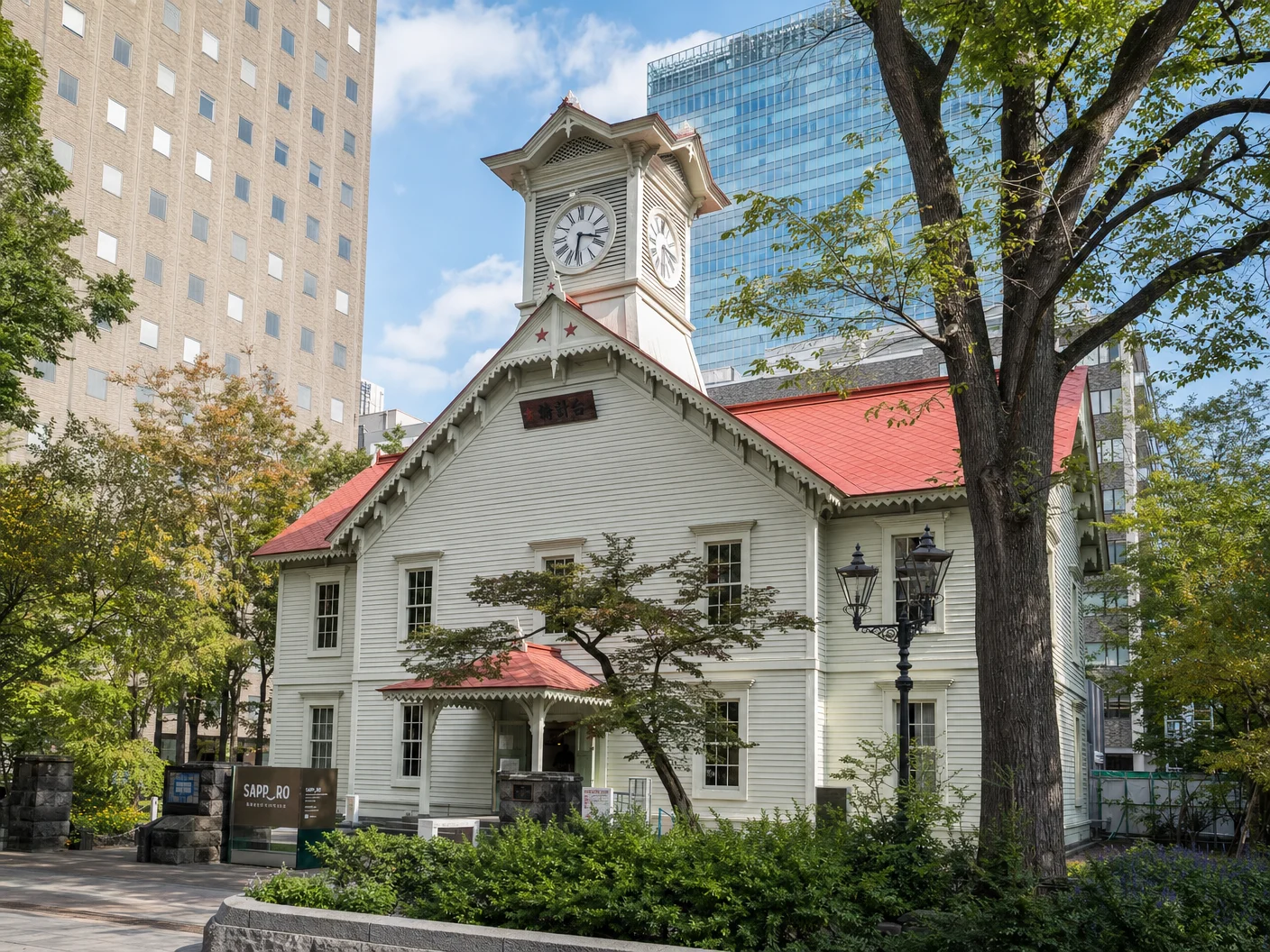
The Clock Tower and Odori area work as a focused central-city outing; check admission details before planning an indoor visit.
A gentle arrival afternoon
Airport → hotel and bags → lunch → one central sightseeing area → dinner close to the hotel.
A full city day already on the ground
Choose a main morning interest, a proper lunch and a second nearby area. Keep a distant viewpoint optional.
A delayed flight
Go directly to the hotel. Keep a local meal as the plan and move sightseeing to another day.
A Sapporo walking route with room for lunch
Start with the station–Clock Tower–eastern Odori area if you want a compact introduction to the city. The appeal is the change from the station district to the historic wooden Clock Tower and the open axis of Odori Park. Looking at an exterior and taking a few photographs is a different visit from entering an exhibition or observation deck. Decide which one matters, and check that attraction’s opening and admission conditions before reserving the rest of the afternoon.
For a food-led afternoon, keep lunch and the covered shopping area around Tanukikoji as the main pair. For a park-led visit, spend longer in one park instead of crossing the city for a second short photograph. Maruyama, the Beer Museum and an outlying confectionery attraction are separate journeys from this central walk; select one as a replacement when it is the real priority.
If the arrival runs late
Leave the hotel with a small essentials bag and a shorter route. Ask the hotel about luggage storage rather than assuming that early room access is available. If everyone is tired, keep a nearby meal and one outdoor landmark. There is no need to recover an ambitious first-day plan by keeping children out late or rushing dinner.
Option 2: one Lake Shikotsu visit before the hotel
Choose Lake Shikotsu when the lake is the experience you want, rather than a quick photograph on the way to several other regions. The official Hokkaido tourism listing gives around 50 minutes by car from New Chitose Airport to the hot-spring lakeside area. Check the actual route and conditions before converting that access estimate into a plan.
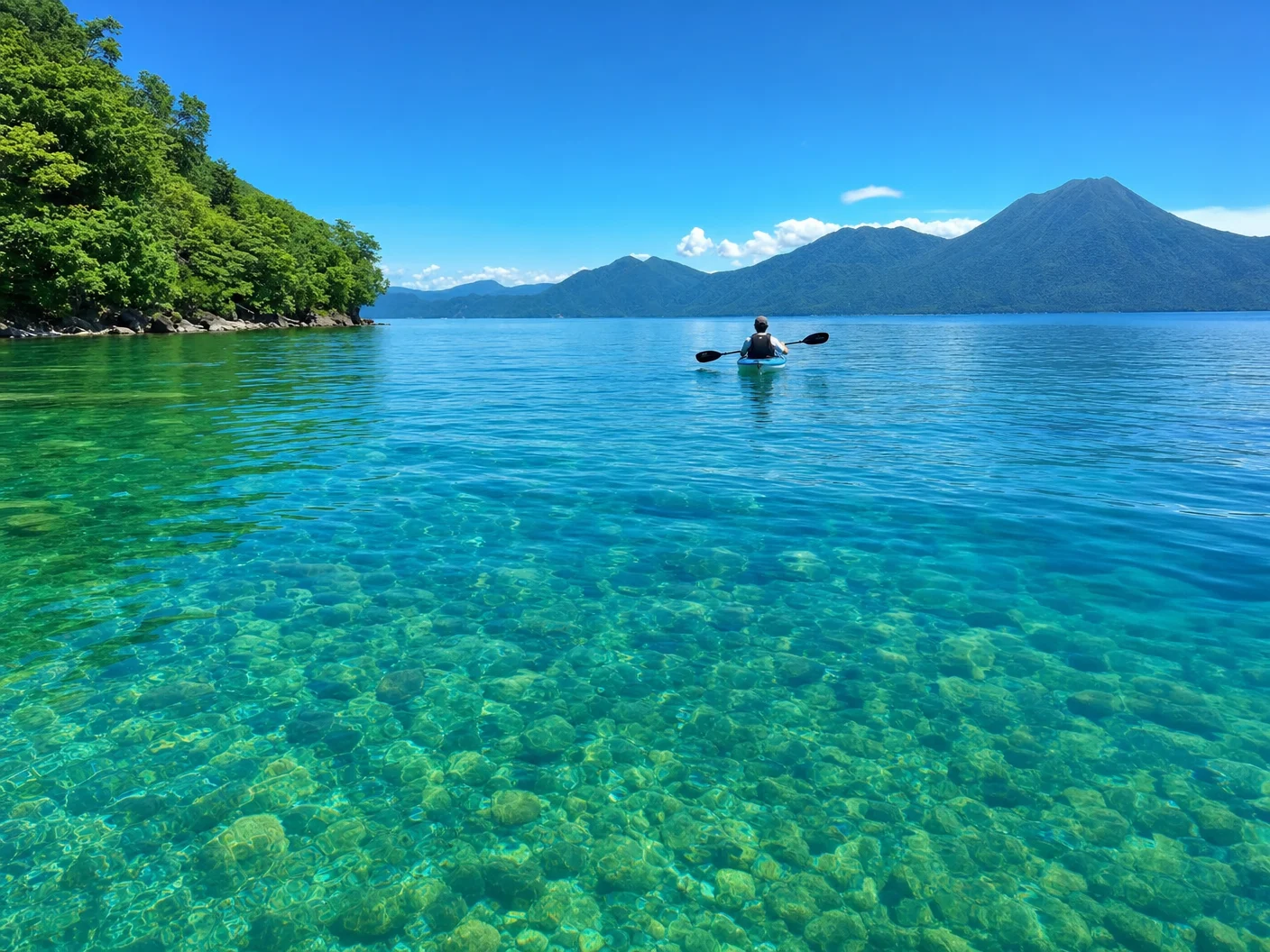
Allow time for an unhurried look at the shore and a meal or warm break. A canoe outing, boat trip or day bath needs its own availability check and enough time to participate properly. Do not treat an activity pictured in a summer photograph as included or operating on your visit date.
Decide the next leg before leaving the airport. A transfer onwards to a Sapporo hotel is a separate part of the day; returning to the airport creates a different time limit. If using a scheduled bus, check the actual outward and onward departures before choosing how long to stay.
Leave Jozankei, Lake Toya and Noboribetsu out of this short outline unless a route-specific review shows that they support the purpose of the day. They are separate destinations with their own travel and visiting time. One worthwhile lakeside stop is enough.
A green-season view of Lake Shikotsu. Water activities require separate confirmation and are optional.
Lake Shikotsu: choose a shore visit or a booked activity
A lakeside visit can mean a gentle look at the water, a meal and time to sit down. A canoe session or another guided outdoor activity is a separate commitment: preparation, equipment, briefing and changing time belong in the day as well as the advertised activity itself. Give the operator the ages and needs of the group and confirm its meeting point, participation conditions and weather arrangements.
The short access estimate from the airport does not describe a complete airport–lake–Sapporo journey. Price and time both legs, including any return for luggage. If the water is windy or visibility poor, choose a shorter shore visit and a warm nearby break only where access remains suitable. Ask the activity operator what it will operate; a vehicle reservation does not establish that an outdoor activity will run or be refunded. For a bus visit, New Chitose Airport and JR Chitose Station are separate boarding points. Follow the visitor centre's access guide for the onward bus to Lake Shikotsu; reaching Chitose by train is not the same as reaching the lake. Check your travel date, boarding stop and both the outward and return departures before booking a timed activity.
When the lake should replace another plan
Choose this route because the lake is the main experience. If Otaru’s crafts are the priority, take the Otaru route instead. Combining the lake, canal town and an onsen valley turns three alternatives into an extended driving loop and removes the time that makes each visit rewarding.
Option 3: give Otaru a generous ground day
Otaru suits travellers who want a canal walk, local craft shops and a meal more than another checklist of city landmarks. From an airport arrival, choose it only when you have a substantial and flexible ground window. Reaching the town is one part of the outing; walking, lunch and the final journey still need space.
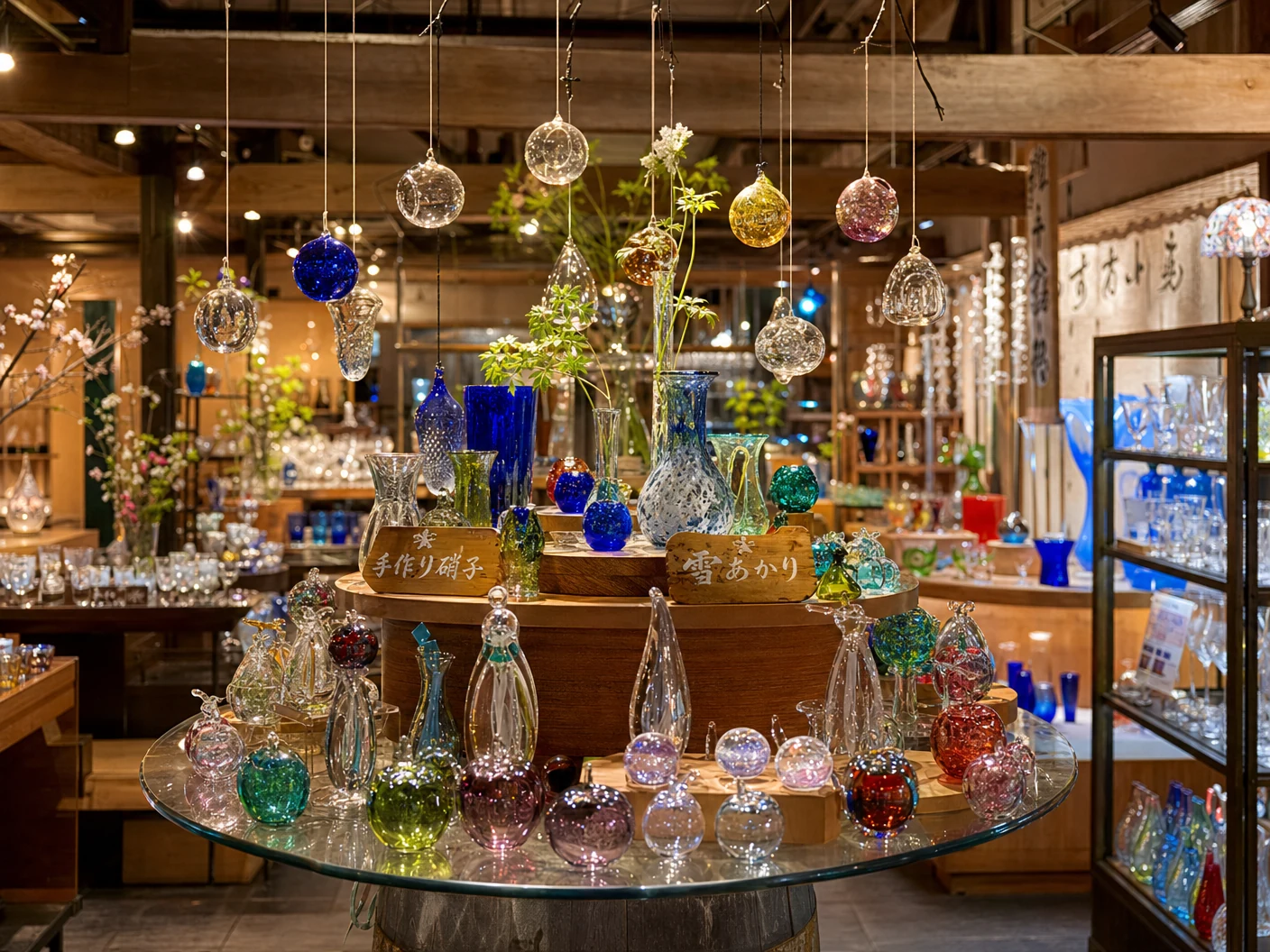
Choose the canal and one part of the Sakaimachi area rather than adding every museum, a ropeway, the aquarium and a distillery. If a cruise or workshop is a priority, check the operator and reserve it where appropriate, then make the rest of the visit fit around that commitment.
The canal-cruise operator describes its boarding point as approximately a ten-minute walk from JR Otaru Station and notes busy roads on weekends and public holidays. Include that final walk, suitable footwear and any actual booking check-in time. A station arrival is not automatically an attraction arrival.
Ending in Sapporo can be simpler than returning to the airport after a long outing, but the answer depends on your real hotel or flight. For a dedicated visit, use the Otaru destination guide. Keep an onward Niseko transfer as a separately planned route rather than an improvised final detour.
Otaru: link the canal, crafts and a meal
Use the canal and a selected part of Sakaimachi as the core, with a sit-down meal between visits. The canal explains the port’s warehouse landscape; the craft shops offer something different from another viewpoint. A workshop needs a confirmed session, participant age requirements and a plan for collecting or shipping the finished work. A cruise needs its own meeting and boarding arrangements. Book one experience first and let the rest stay flexible.
Think about the walking direction before choosing the final station or vehicle pickup. A route ending near the southern craft-shopping area may put you away from the place where bags were stored. Do not select another station solely because it looks close on a map: check the actual walk, gradients, entrances and train service. A car pickup also needs an agreed legal meeting location, rather than a promise to stop at any shop door.
What to leave for another visit
The aquarium and herring heritage area at Shukutsu, Mount Tengu and Yoichi each need additional travel and their own visits. Choose one as the main replacement for part of the central walk, not an automatic addition. Snow, wet stone paving or a pushchair can make even the central route slower than an attraction-to-attraction map suggests.
A time budget that leaves room to enjoy the day
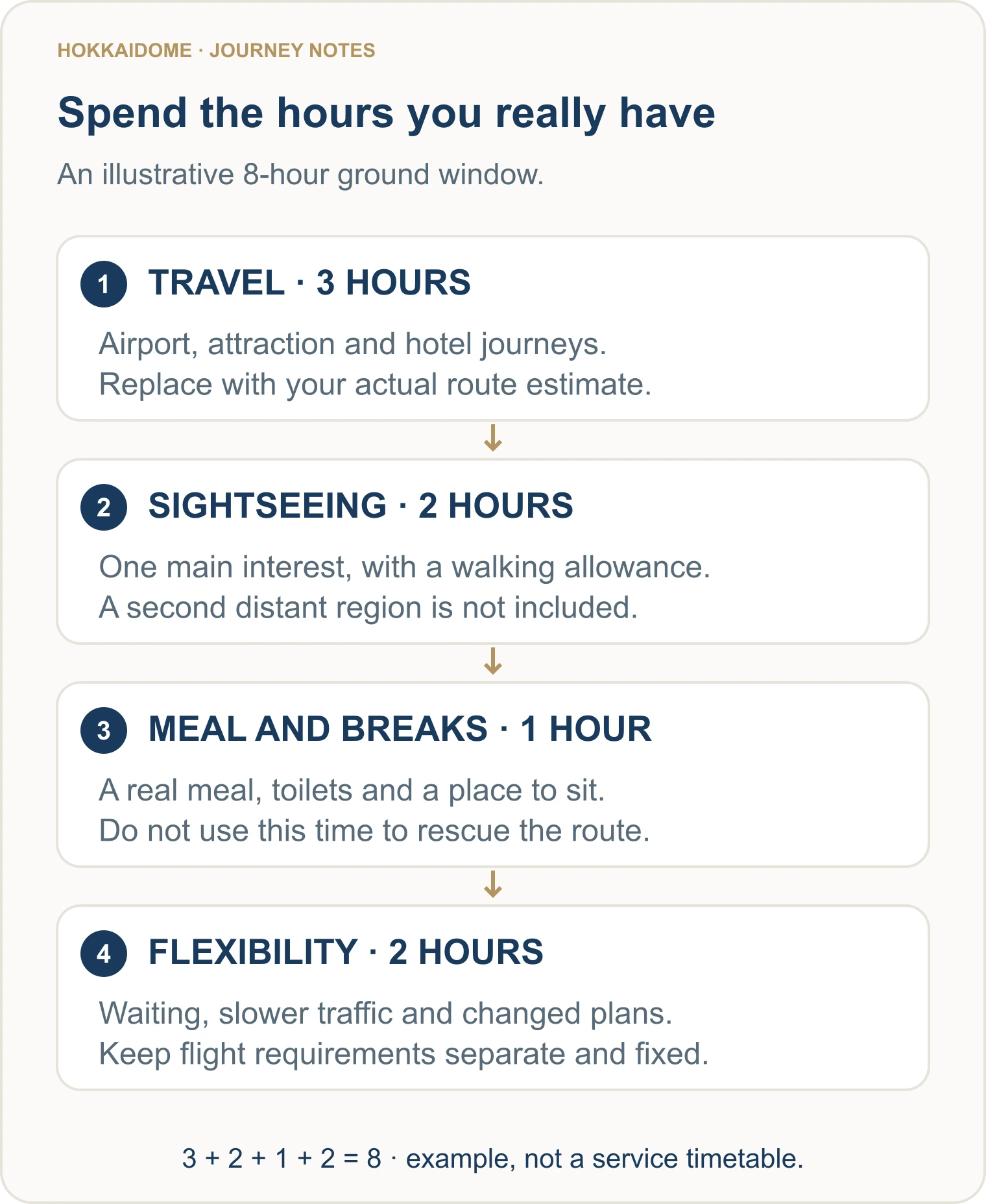
The example below uses an eight-hour window on the ground, after arrival formalities. It is an editorial worksheet, not a measured duration for every route or a guarantee of a connection. Replace each figure with your actual route and bookings.
Budget the whole day. Airline requirements and any airport return deadline must be set separately.
A three-hour travel allowance is not a promise that your chosen route will take three hours. It is a way to see what happens when a day has finite space. If travel grows to four hours, reduce the sightseeing plan; do not quietly remove lunch, toilet stops and the margin that made the plan realistic.
For a departure-day visit, work backwards from the airline’s instructions and the complete return journey first. A car can simplify bags and intermediate stops, but it cannot make an airport connection independent of weather or traffic. The last optional attraction is the first item to cut.
Keep the actual terminal, bags and onward flight arrangements at the centre of any airport-based sightseeing plan.
An eight-hour worksheet, without pretending it is a timetable
Suppose, purely as a planning example, that you are ready at 09:30 and must finish the ground outing at 17:30. The existing eight-hour diagram allows three hours for all transport, two for visits, one for meals and breaks, and two for flexibility. Those are allocations, not measured journey times. Put your actual outward and onward travel in first, then give each main visit a start and end.
If the transport estimate becomes four hours, only four hours remain for everything else. Keep food, toilets and the required return margin; shorten the optional visit. If an activity has a fixed two-hour session plus preparation, that is likely to consume the sightseeing allocation by itself. A more expensive vehicle cannot turn eight hours into ten.
Use a clear stopping rule
Choose the last optional stop in advance and agree that it disappears if the earlier part runs late. Check the next transport service and airport or hotel arrival before buying another admission. For a flight-sensitive outing, this worksheet begins only after the airline’s deadlines and the full terminal journey have been protected.
Winter, rain and different walking needs
In winter, choose fewer outdoor stops and put a warm break where the group will actually need it. Allow for slower road journeys and walking on snow or ice. A short city outing may become the best plan even if a longer countryside route looked attractive when you booked.
For rain or poor visibility, choose a nearby indoor interest instead of chasing a better view in another region. Check opening arrangements and the walk from the vehicle or station. An attraction being indoors does not make its entrance or the journey to it step-free.
Tell us about strollers, child seats, mobility aids and shorter-walking preferences before the vehicle and route are confirmed. A private car keeps the group together, but the precise drop-off, vehicle access and facilities still need checking. Share the actual needs rather than relying on the label “easy tour”.
Children, luggage and lunch are part of the route
List every suitcase, stroller and mobility aid before choosing the vehicle or storage plan. A group that arrives together should also have a workable plan for carrying its belongings between the station, lunch and the hotel. Ask about the actual storage hours and collection point; a locker being marked on a map does not guarantee a free compartment of the right size.
Choose a meal near the route, with a second nearby choice if the first has a queue or is closed. Seafood is one option rather than an obligation: a cooked meal, soup curry or a simple cafe lunch can make a better day for a mixed group. Share allergies and dietary requirements directly with the restaurant. Do not assume that a seafood menu, vegetarian label or photograph establishes ingredient or cross-contact suitability.
Shorter walks can still be worthwhile
State how far the least mobile person wants to walk between breaks. A lakeside pause or one central city block may offer more enjoyment than a long sequence of entrances. Check lifts, toilets and the distance from the actual drop-off; private transport alone does not make the entire outing accessible.
Choose the transport for the route you actually need
Option
Works well when
Check in advance
Rail and local transport
Your day stays near convenient stations
Bags, walking, service times and the final hotel connection
Direct private transfer
Your priority is a straightforward airport-to-hotel arrival
Flight, terminal, hotel address, all passengers and luggage
Sightseeing charter
The route has an agreed stop or rural visit with bags
Route, time limit, inclusions, parking and the written total
A transfer fare is not a sightseeing allowance. Use the New Chitose to Sapporo transfer page for a direct arrival, or send the proposed sightseeing route for an individual quote. Vehicle capacity depends on both people and luggage, including strollers or large equipment.
HokkaidoMe provides English trip-planning support. Drivers assist with conversational English and translation tools; specialist guiding and admission arrangements are separate requests. Send two priorities and a finish time so the route can be built around the experience you want.
Compare rail, a direct transfer and a sightseeing charter
JR Hokkaido’s regular-ticket table checked on 10 November 2026 lists an adult non-reserved one-way fare of JPY1,230 between New Chitose Airport and Sapporo, and JPY2,040 between the airport and Otaru. Thus a simple airport–Sapporo return is JPY2,460 per adult before local travel, storage or admissions. These figures describe the stated rail journeys, not a day-tour package or an airport-to-hotel door service.
For a group, multiply the correct person fares and add the journeys that actually occur. Compare that with a written vehicle quote covering the same date, pickup, final address, hours and luggage. A direct transfer quote covers its agreed route; adding a lake visit, waiting or sightseeing must be assessed separately. Keep admissions, food, workshops and any specialist guide as separate lines unless explicitly included.
Make the request specific
Send the day type, Japan-local date, flight details if relevant, both addresses, all passengers and bags, two priorities and the required finish. Say which activity is already booked. The useful answer is an achievable route and a clear written total, rather than an unsupported promise to fit every place into one day.
Hokkaido one day trip questions
Can I take a Hokkaido one day trip from New Chitose Airport?
Yes, when your actual ground time is long enough for a focused route. Count from after arrival formalities and baggage collection, not the aircraft’s landing time. Choose Sapporo, one Lake Shikotsu visit or a selective Otaru route; do not combine all three simply because they appear in the same guide.
What is the easiest arrival-day route for a first visit?
A direct journey to your Sapporo hotel, followed by a compact central-city outing, is a useful default. Leaving bags and checking the room arrangements first makes the rest of the day easier to shorten. Choose a lake or Otaru instead only if the available hours and your onward journey support it.
Can I visit Furano and Biei on an airport arrival day?
We would normally give those places their own full sightseeing day from a suitable base. Airport formalities, the long approach, stops and a hotel transfer make a short arrival window a poor fit. If the countryside is your priority, plan the hotel nights around it rather than adding it to a city arrival.
Is Lake Shikotsu close enough for a short stop?
The official Hokkaido tourism page gives about 50 minutes by car from New Chitose Airport to Lake Shikotsu Hot Spring. That is an access estimate for one leg, not the length of the whole outing. Add the visit, food, your next destination, the season and a realistic margin.
Can I use this itinerary during a flight connection?
Only after checking the booking, terminal, baggage arrangements, entry requirements and the airline’s return deadlines. A short connection is not a sightseeing day. Confirm your own ability to leave and re-enter the airport with the relevant airline and authorities; an editorial route does not establish that permission.
Does an airport transfer price include sightseeing stops?
Treat a direct transfer and a sightseeing charter as different requests. Send the stops, full hotel address and desired arrival time so the written quote can confirm the route, duration and inclusions. A published direct-transfer fare should not be read as an unlimited sightseeing package.
What changes in winter?
Use a shorter route, allow more time for the actual journey and keep a nearby warm alternative. Snow, ice and poor visibility can change the order or feasibility of stops. An airport deadline remains fixed even when a sightseeing plan needs to be reduced.
What should I send when requesting a one-day charter?
Send Japan-local dates, flight number and terminal, the group and all bags, pickup and final destination, two priorities and the time you need to finish. Include child-seat and shorter-walking needs. We confirm feasibility, vehicle availability and the quote before a reservation is made.
Give the countryside a proper dedicated day from a suitable base.
Check the actual journey before booking
Reviewed 16 November 2026. Route choices, the eight-hour worksheet and cut-down plans are HokkaidoMe editorial examples. Use current operators for transport, admission, activity availability and flight requirements.
Send your Japan-local date, flight and terminal, pickup and finish addresses, group, bags and two priorities. We will check the route and confirm an appropriate vehicle and quote.
We reply in English with availability and a personalised quote. A form enquiry does not create a confirmed reservation.
Fields marked * are required. Please use your local travel dates in Japan.