Sapporo private driver and city planning
Choose the particular day and route where a vehicle is useful.
Five days · one Sapporo base
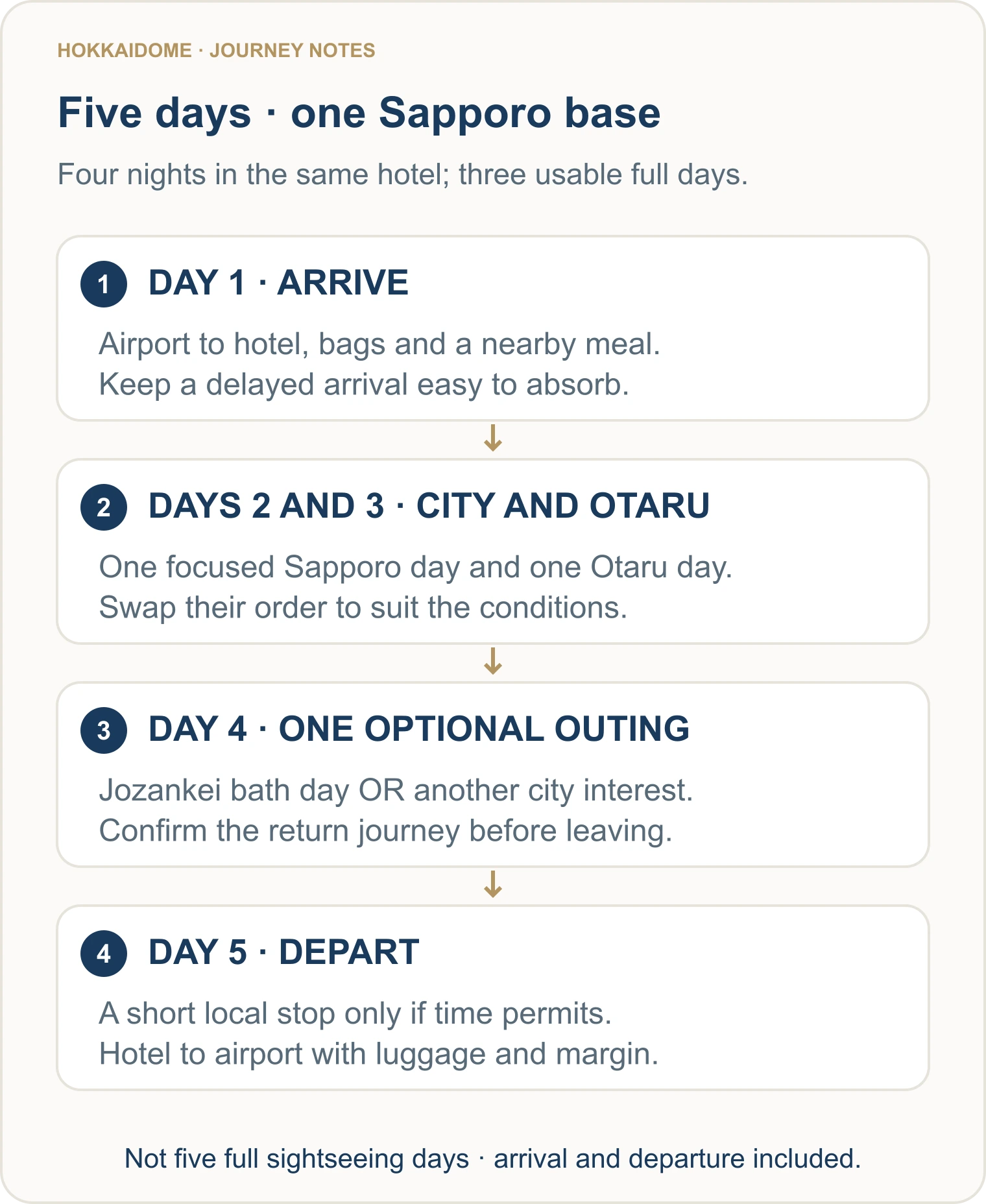
Stay four nights in the same hotel, enjoy a proper city day and give Otaru time to unfold. Add a Jozankei bath day or another city interest, with room to adapt to the weather.
A Sapporo 5 day itinerary works well when you want city food, a canal-town day and an onsen outing without moving hotel every morning. The main plan uses four nights in the same Sapporo accommodation. Arrival and departure take the first and fifth days, leaving three full days that can be organised around your interests and the conditions.
The shape is simple: arrive, explore Sapporo, visit Otaru, choose Jozankei or another city interest, then depart. The middle three days do not have to remain in that order. Keep any confirmed reservation fixed, but move the flexible outdoor outing to the more suitable day rather than treating the first draft as a timetable.
This page focuses on Sapporo and nearby day trips. For a green-season journey with overnight time in the flower country, see our five-day Hokkaido countryside itinerary. If you want lakeside and onsen hotels as part of the experience, the four-day south-western circuit uses a different overnight structure.
| Day | Suggested plan | Sleep |
|---|---|---|
| 1 · Arrival | Airport to hotel; a nearby walk and a first Sapporo meal | Sapporo · night 1 |
| 2 · City | Choose a central walking area and one additional interest | Same hotel · night 2 |
| 3 · Otaru | Canal, a local meal and Sakaimachi; return to Sapporo | Same hotel · night 3 |
| 4 · Flexible | A confirmed Jozankei bath day OR a second Sapporo day | Same hotel · night 4 |
| 5 · Departure | A short nearby activity if time allows, then the airport | No overnight in this five-day plan |
Travel from New Chitose Airport using the connection you have planned for the actual hotel. JR’s airport service is a useful option for a rail-friendly address; the official page lists the airport-to-Sapporo trip at as fast as 33 minutes. That is the train segment, so still allow for airport formalities, waiting and the final walk or local connection.
For a private airport transfer, share the flight number, bags and full hotel address. The published New Chitose Airport to Sapporo transfer page explains the direct service and vehicle choices. If you would like to see the city before reaching the hotel, ask for a sightseeing arrangement with an agreed finish time.
Once the bags are handled, keep the first outing close. A short central walk and a relaxed meal let you settle in without spending the arrival afternoon crossing the city repeatedly. Miso ramen, soup curry and a seafood meal offer different ways to begin; choose around your group’s tastes and dietary requirements, not a compulsory restaurant queue.
Use the evening to check tomorrow’s weather, opening arrangements and any fixed bookings. A late arrival can simply become dinner and sleep. The three full days still give the trip room to work.
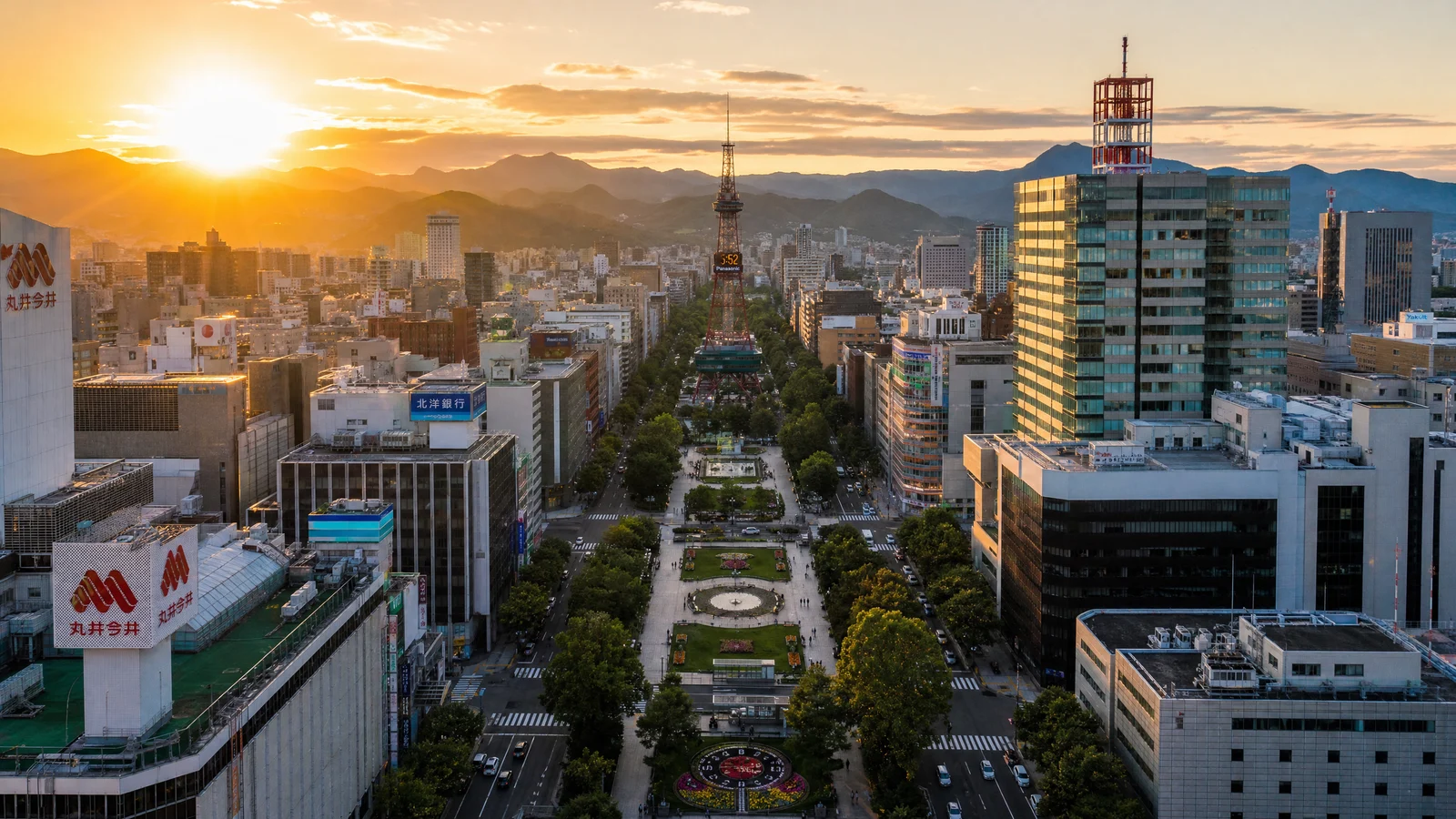
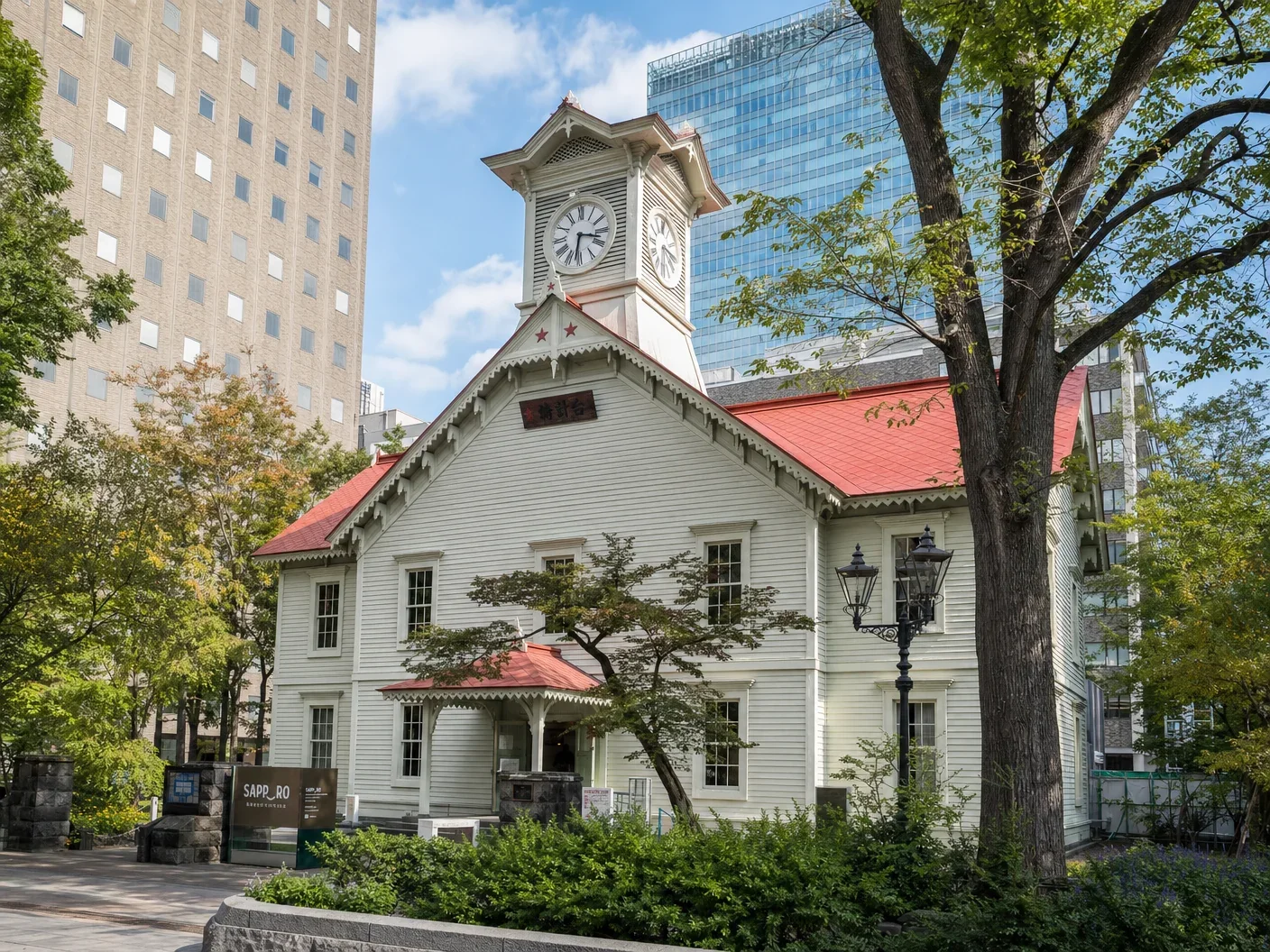
Start with a central walking cluster. Odori Park, the Clock Tower area and the red-brick former government building can form the basis for a city introduction, with a coffee or meal break along the way. Choose the route to suit walking distance and the places you genuinely want to enter. Looking at three buildings from outside and visiting them in depth are different programmes.
After lunch, add one interest rather than another full list. A craft or food-themed visit, a museum, an observation experience or a neighbourhood walk can each fill the afternoon. Families should decide around the children’s ages and energy. Travellers who want a slower day can stay central and use the time for browsing and food.
A viewpoint such as Mount Moiwa is best treated as a weather-dependent choice. Check the operator’s current service and whether visibility makes the visit worthwhile. If conditions are poor, keep the evening in the city instead of travelling uphill merely because the stop appears in an itinerary.
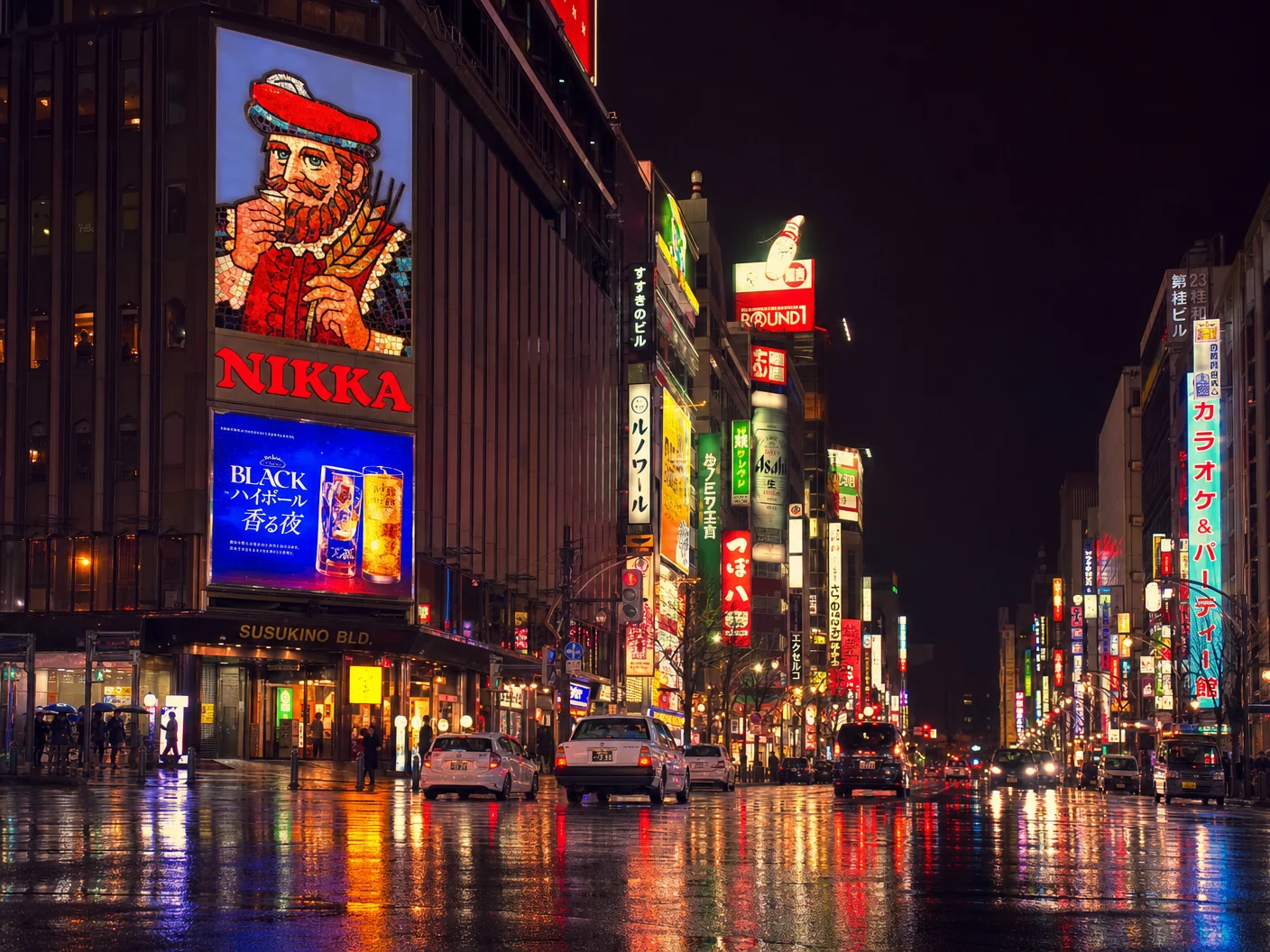
End with a meal in a convenient area such as Susukino or near the hotel. Reserve an important dinner directly and explain any dietary needs in advance. You can enjoy the atmosphere without promising the party that every restaurant will have space on arrival.
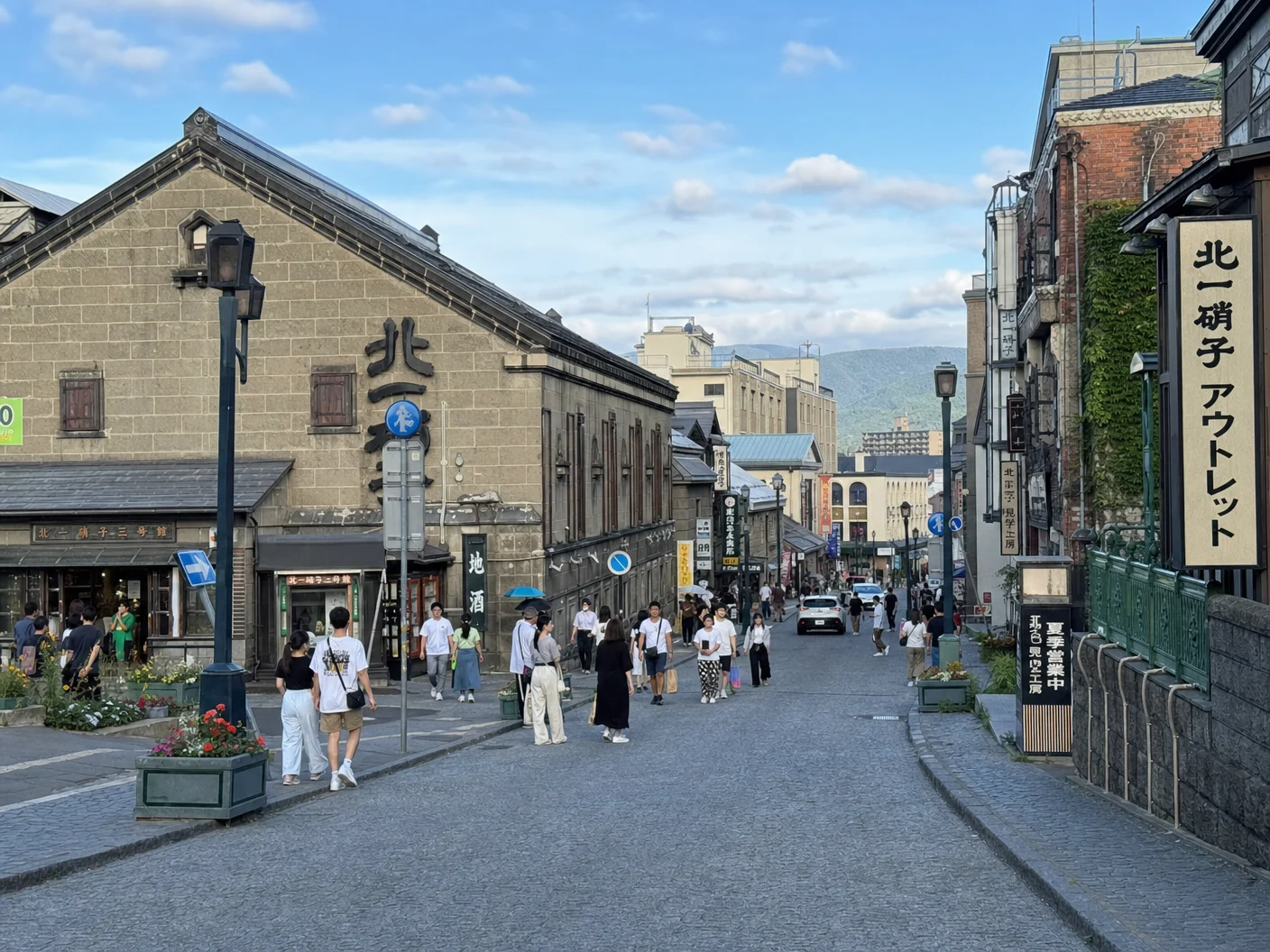
Otaru is a useful day trip because the town can be enjoyed as a place, not just a photo stop. Plan the journey from your hotel, then choose a station arrival and walking route suited to the stops you want. The canal cruise operator’s access page gives an approximately ten-minute walk from JR Otaru Station to its canal-area reception; that is a starting point, not the walking total for a whole day.
Combine the canal with a local meal and time around Sakaimachi. Pick one main interest, such as glass, music boxes or food shopping, and let the rest stay flexible. If you want a workshop, cruise or particular restaurant, book or confirm it separately and arrange the walking order around the actual appointment.
Keep opening hours in mind when choosing between a daytime outing and an evening canal view. A night photograph and a street of open shops are not automatically available at the same time. In winter, shorter outdoor sections and somewhere warm to sit are as useful as the scenery.
For the return, know how you will reach the station or agreed pickup point with any purchases. Keep the Sapporo evening easy after a full day out. Our Otaru destination guide can help you choose a narrower route if members of the group prefer less walking.
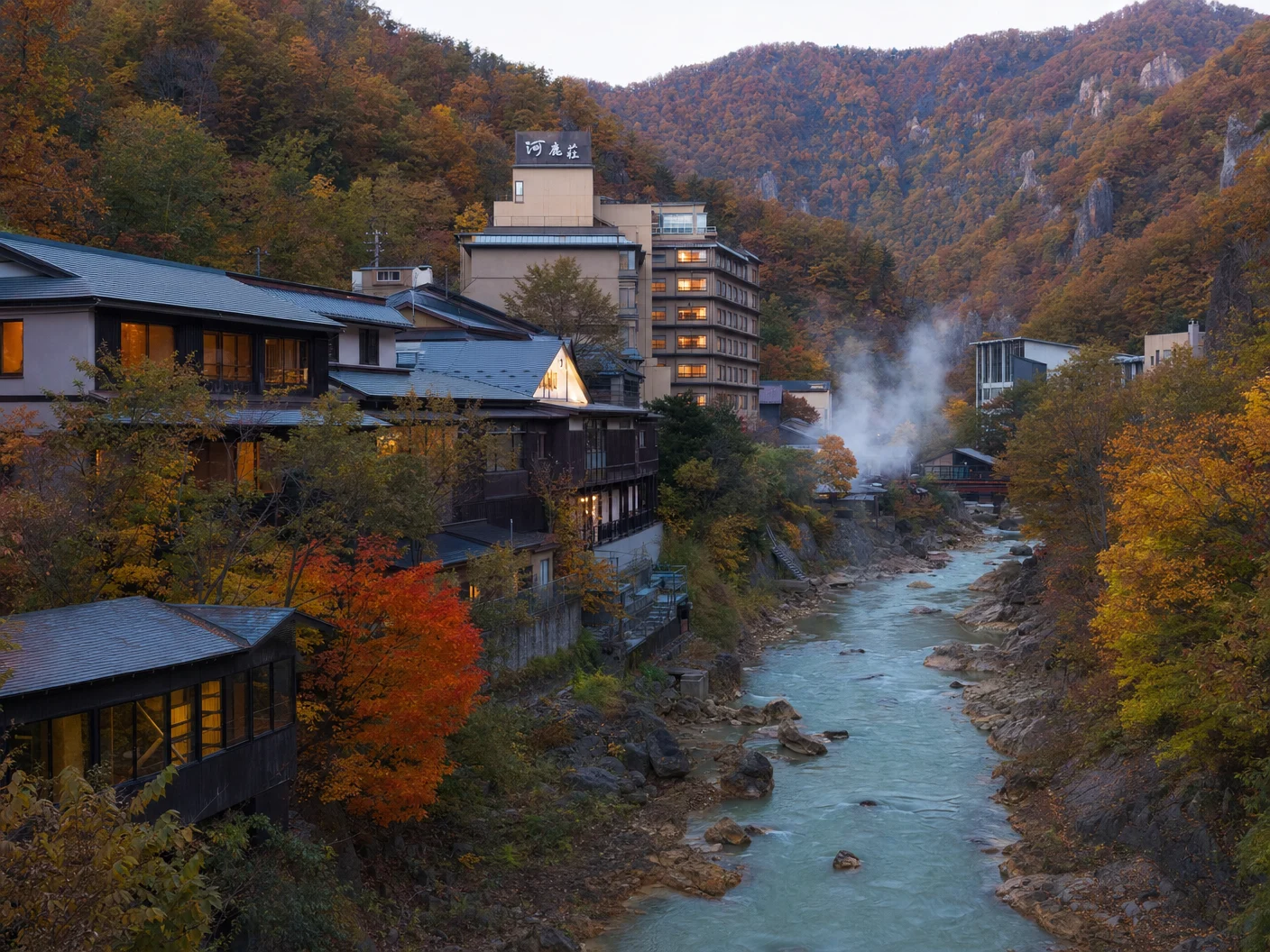
Choose Jozankei when the bath and a quiet change of setting are the reason for going. Select the actual day-use facility before booking transport. Reception times, admission, towels, meal options and any reservation requirements belong to that property. A hotel offering overnight stays does not automatically accept day visitors on the same terms.
Plan both journeys. Jotetsu’s Kappa Liner information explains the current reservation and service arrangements; check the boarding stop and the return that suits your bath booking. An accommodation shuttle is a separate service and should be used only if the operator has confirmed that you are eligible and have a place.
A private return trip can be useful for a group with specific pickup needs or a selective additional stop. Agree the route and return time in advance. Do not turn a bath day into an unplanned tour through several distant hot-spring towns simply because a car is available.
For a city alternative, choose an interest you left out on day two and allow a more leisurely meal or shopping period. This is also a useful day to absorb a poor-weather Otaru plan. Keeping the same hotel means the change can remain small: you exchange an outing, rather than cancelling a chain of different overnight stays.
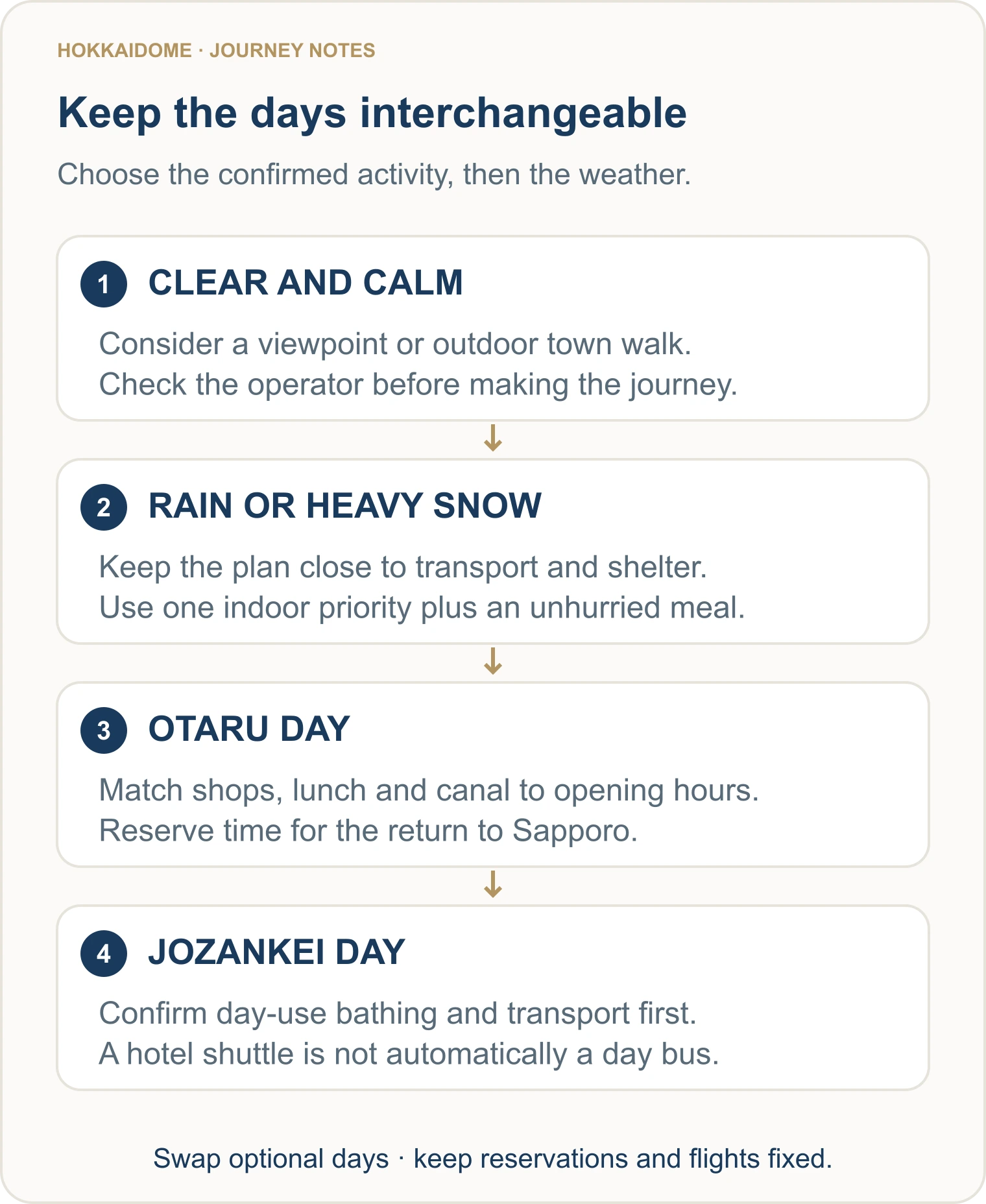
Mark three things separately on your plan: fixed reservations, flexible interests and the airport journey. A booked workshop may set the Otaru day; a bath reservation may set the Jozankei outing. Where there is no fixed appointment, choose the outdoor day when the actual conditions make it more worthwhile.
For a winter visit, combine short outdoor sections with warm indoor breaks and time to manage footwear and coats. Snow or ice can change walking speed as well as driving. For rain or a day of low visibility, pick one convenient indoor priority and a meal instead of replacing a missed viewpoint with three new cross-city journeys.
Seasonal events are a separate booking and date check. The Sapporo Snow Festival is not a feature of every winter week, and a summer attraction photograph does not establish winter access. If a particular event is the reason for the trip, confirm its published dates and build the accommodation around them.
Work backwards from the airline’s requirements for your flight and terminal. Add the complete journey from hotel checkout to the airport, luggage handling and a margin for the actual conditions. The last day is a departure day, even when the flight is in the evening.
If time remains, choose something nearby that can finish cleanly: a local breakfast, a short walk or collecting a purchase. Confirm luggage storage and collect the bags before the agreed departure. A final long-distance excursion is a different plan and should be checked as such, rather than squeezed into an apparently empty morning.
Keep tickets, pickup details and the hotel address available offline. When requesting a transfer, share the flight and all bags instead of asking for an arbitrary pickup time. A provider can then confirm the requested journey against the actual destination and schedule.
Sapporo Station, Odori and Susukino can all be useful bases, but the correct choice is the particular address and room. For rail day trips, examine the real walk to the station entrance. For evenings on foot, examine the streets around the hotel. Check steps, lifts and winter access where those details affect your group.
Keep the transport mix flexible. A city day may need no car. Otaru may suit rail, while a private vehicle can help with a specific day’s walking needs, dispersed stops or family logistics. Booking the same vehicle service for every calendar day is not a requirement of this itinerary.
Budget for four hotel nights, airport journeys, the day-trip transport you choose, food, activities and any shopping separately. Compare per-person fares with a per-vehicle quote using the actual group size and bags. Confirm ticket, toll, parking and additional-hour arrangements in writing rather than assuming that a general charter price includes every expense.
To ask HokkaidoMe for help, send the Japan-local dates, full hotel address, group and luggage details, fixed bookings and two priorities. We can plan the requested transfers or sightseeing days around those facts. Our team handles enquiries in English; specialist guiding or language support beyond ordinary driver communication is a separate request.
Five calendar days with four hotel nights usually give three full days between arrival and departure. That can support a city day, an Otaru day and one optional Jozankei or additional city day. It is a different kind of trip from changing hotels to reach several Hokkaido regions.
Choose the actual hotel around the journeys you intend to make. Sapporo Station can be useful for rail day trips, while Odori or Susukino can suit central walks and evening food. Compare the walk from the station exit, steps, luggage and room arrangements rather than relying only on the neighbourhood name.
No. A central city day and an Otaru rail journey may be straightforward independently. A private vehicle can be useful for the exact day that combines door-to-door transport, bags, walking needs or dispersed stops. Ask for that service instead of automatically booking a car for all five days.
Yes, when the bath you want accepts day visitors and the outward and return journeys are planned. Confirm the facility’s date-specific hours, reception, towels and any booking requirement. Check the current Jotetsu service information; do not assume an accommodation shuttle is available to a day visitor.
Use shorter outdoor sections, warm breaks and flexible ordering of the full days. Choose only confirmed seasonal activities for your dates. The city, Otaru and Jozankei can still be interests, but snow, traffic or operator changes may require a shorter outing or a city day instead.
That would use the time intended for the local days and substantially change the journey. If those are your priorities, remove other outings and plan the relevant transport and activity bookings first. Our countryside and ski guides are better starting points than treating them as spare stops in a city-based itinerary.
No. This is a route suggestion, and any cruise needs its own availability, timing and ticket arrangements. The day can be enjoyable with a canal walk, a meal and a craft interest. A reservation should match the actual arrival and return plan.
Send the Japan-local date, hotel address, passengers and bags, any child-seat or shorter-walking needs, preferred outing and the time you need to return. Include fixed reservations and say which elements matter most. We confirm the route, availability, vehicle and price before a booking is made.
Reviewed 23 October 2026. The five-day structure, flexible-day diagram and hotel checklist are HokkaidoMe editorial examples. Check the official transport and facility information for your own dates.
Plan it with HokkaidoMe
Share your hotel, dates, flights, group and luggage, fixed bookings and the outings you prefer. We will help plan the particular transfers or sightseeing days you need.
We reply in English with availability and a personalised quote. A form enquiry does not create a confirmed reservation.