Food requirements · a clear plan before ordering
Gluten free in Sapporo: plan meals with clear answers
Start with your exact requirements, check the actual dish and preparation, and put meals into the route. Use these Sapporo leads and planning steps for a more informed food conversation throughout Hokkaido.
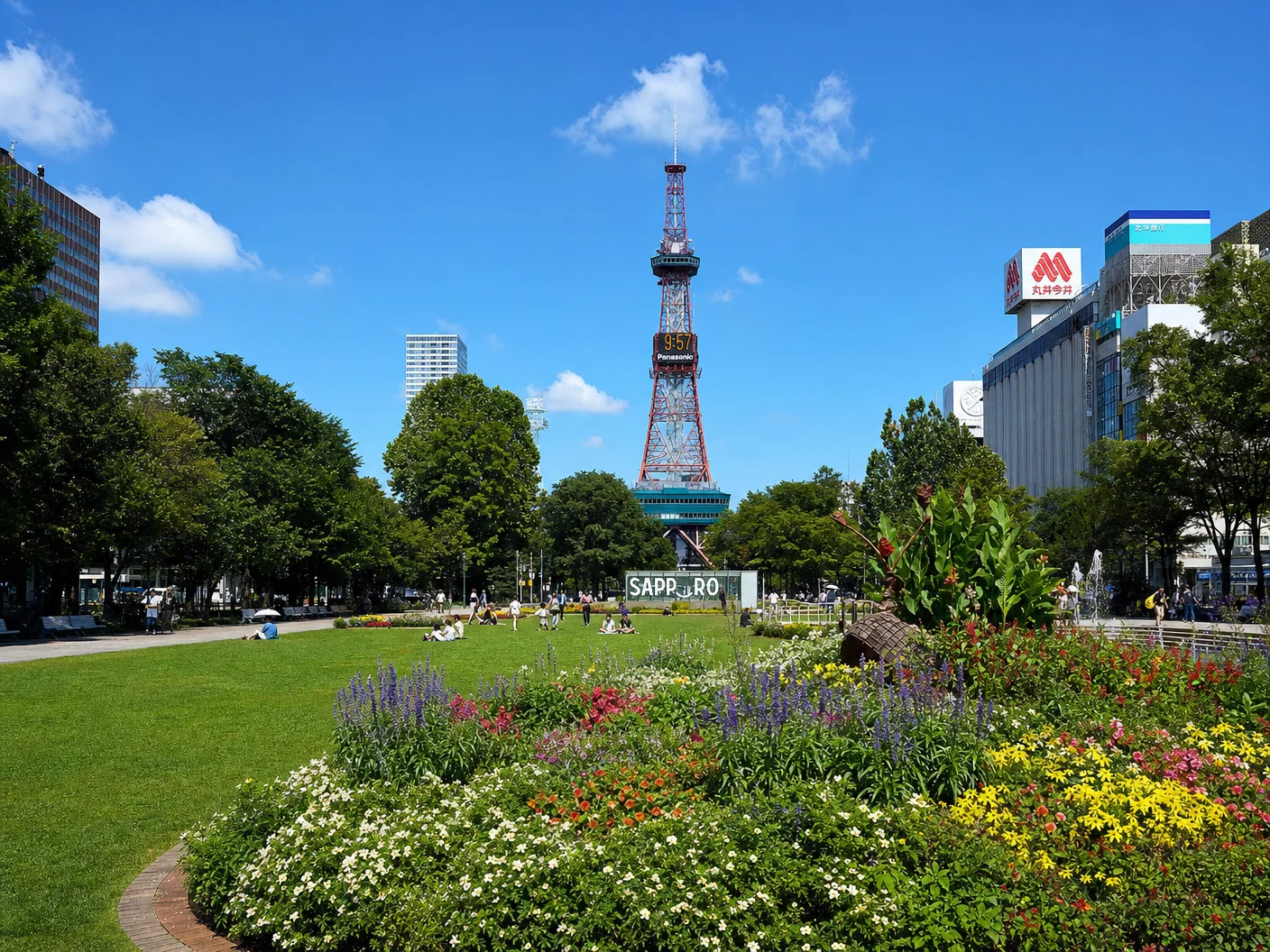
Plan gluten free in Sapporo with a clear set of questions
Finding a useful meal starts before sitting down. Identify the food you must avoid, find a venue or product worth contacting, and ask about the complete dish and how it is prepared. For a Hokkaido trip, also decide where those meal stops fit between hotels, transport and sightseeing.
This guide brings together specific Sapporo leads and a practical checking process for gluten-free travel, food allergies and other dietary requirements. It does not label a collection of dishes as universally safe. Use the dietary and emergency advice you have received from your clinician, and ask the actual food provider about your own requirements.
Coeliac UK identifies wheat, barley and rye as gluten-containing grains and notes that processed foods such as sauces and soups also need checking. A wheat-only check therefore does not answer every gluten-related question. Wheat allergy, coeliac disease, another allergy and a dietary preference should be explained accurately rather than treated as interchangeable.
Two Sapporo starting points to contact directly
The following examples were checked against official tourism or producer information on 20 October 2026. They are specific leads for questions, rather than a ranked restaurant list. Recheck the particular product, current opening, ordering arrangements and preparation before travelling.
| Starting point | What the source actually says | What you still need to confirm |
|---|---|---|
| Hanaafu · Hiragishi, Sapporo | The official Welcome HOKKAIDO directory lists a rice-flour crepe and sweets shop and asks visitors to enquire in advance about dietary and allergy options. It asks for advance reservation of egg-free batter. | Which batter and filling fit your requirements, other allergens, shared equipment, current opening and whether the item is available on your date. |
| Madomadore · Sapporo | The producer describes its rice-flour madeleine as gluten-free and lists butter, milk and egg among the ingredients. It also describes its production arrangements. | The current product and package information, your other allergens, preparation questions and purchase or collection arrangements. A madeleine is a snack or gift, not a complete lunch plan. |
These examples show why the exact item matters. A rice-flour crepe may have a filling that changes the answer. A gluten-free madeleine can still contain milk and egg. A directory badge can help you find a conversation, but it does not answer the full set of questions for your needs.
Use the directory to find possible venues in the region you will actually visit. Confirm the address with the venue before attaching it to a day trip. Do not make a large sightseeing detour around an old listing or assume that a bakery will have stock whenever you arrive.
Check the whole dish, including the less visible parts
| Food or menu description | Questions worth asking |
|---|---|
| Noodles, ramen or soba | Which ingredients are in the noodles? What is in the broth, dipping sauce and toppings? Are water, utensils or preparation surfaces shared? |
| Soup curry, curry or a sauce | What is in the stock, seasoning, thickener and premade mix? Can staff check the actual product rather than the name of the dish? |
| Seafood, grilled food or a rice bowl | Are there marinades, sauces, mixed ingredients or garnishes? How is the item prepared and served? |
| Rice-flour bread, crepes or sweets | Does the entire item meet the requirement, including fillings and toppings? What other allergens and preparation conditions apply? |
| A vegetarian or vegan option | Does it also meet your separate allergy or gluten-related requirements? Ask about the stock, seasoning and all other ingredients. |
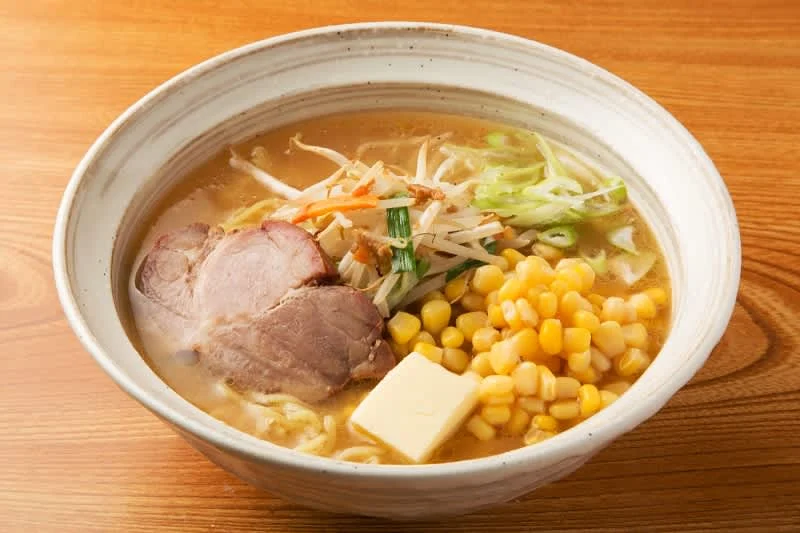
Ask about preparation as a separate question from ingredients. Shared fryers, water, utensils and surfaces can matter even when the main ingredient sounds appropriate. The kitchen’s actual process is the relevant information; a general statement from another traveller cannot describe every service.
Avoid asking for a small change and assuming it resolves the whole meal. Removing a visible topping does not establish what is already in a stock or sauce. If staff cannot confirm the details, use your prepared alternative rather than negotiating an answer from an uncertain description.
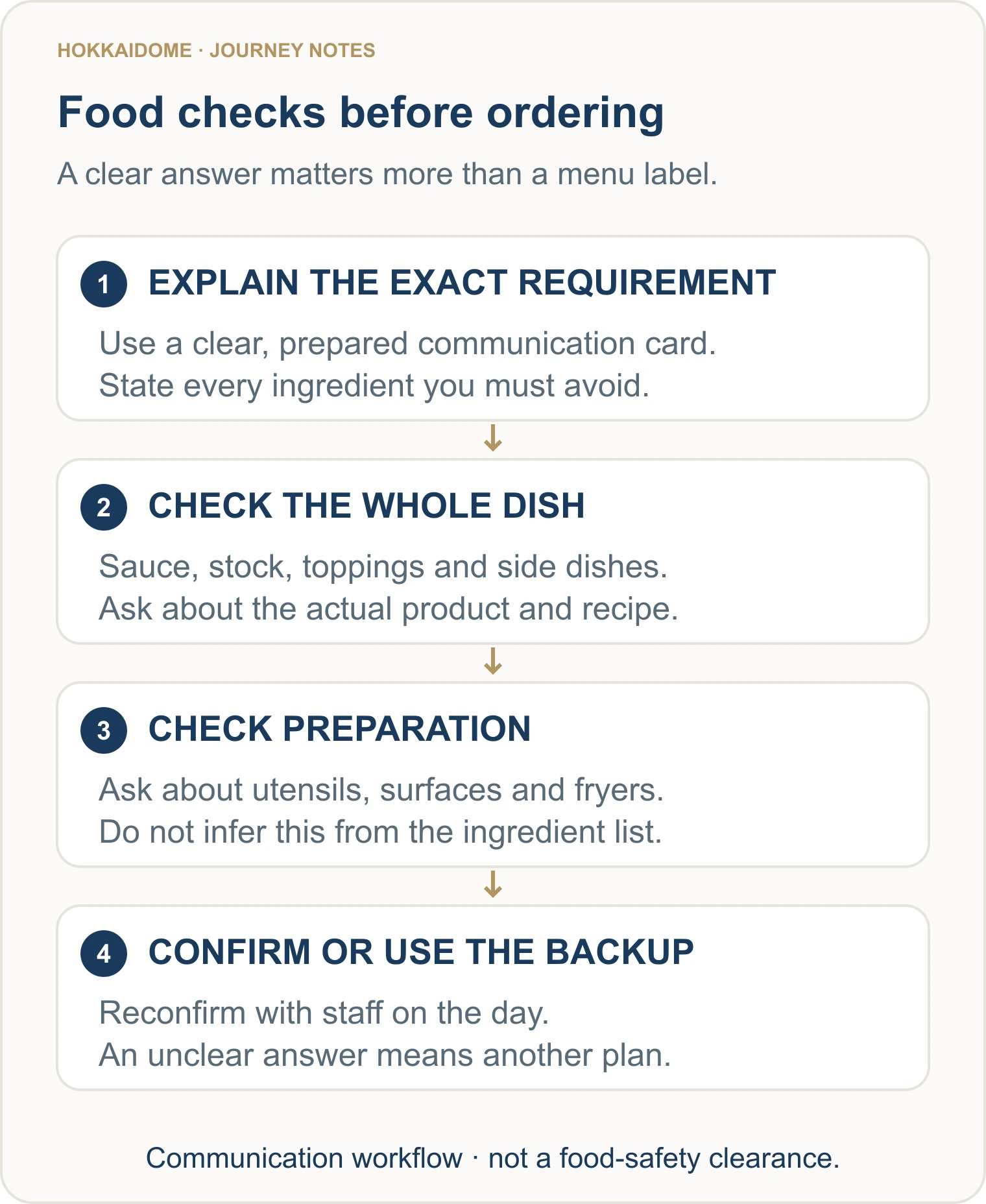
Explain your needs before ordering or reserving
Prepare a clear card before leaving home, with the ingredients you must avoid and the questions relevant to your own requirements. The Consumer Affairs Agency’s English food-labelling page links downloadable food-allergy communication sheets. Download the sheet for its interactive checkboxes to work, as the agency instructs, and review what it does and does not cover.
Show the card before ordering and give the kitchen time to answer. A greeting or a translated menu is not confirmation that the food requirements have been understood. Reconfirm on the day if the recipe, product or staff have changed. Keep an earlier written reply available, but do not use it to override new information from the kitchen.
Packaged-food information and a restaurant menu are different sources. JNTO notes that allergy information is not displayed everywhere and recommends checking in advance or directly with staff. Read the actual package or ask about the actual dish; a translation app is a communication aid, not a substitute for missing ingredient or preparation information.
Put lunch into the Hokkaido route before adding stops
A meal plan that works in central Sapporo may not transfer to a rural sightseeing day. Identify lunch before finalising a Furano, Biei, Niseko or lake-area route. Check the opening day and last order, the actual kitchen’s reply, and how far the venue is from the sightseeing stops.
Keep a nearby alternative or independently checked food option that fits your requirements. If you intend to carry food from home, check the current Japanese customs and quarantine rules for the actual item. Do not assume every snack, meat product or plant-based food can be brought into the country.
For a hotel change, ask the accommodation about breakfast or dinner well before arrival, including any reservation deadline. An inn with included meals needs a different conversation from a room-only hotel. A buffet offers choices but does not, by itself, answer questions about shared utensils or preparation.
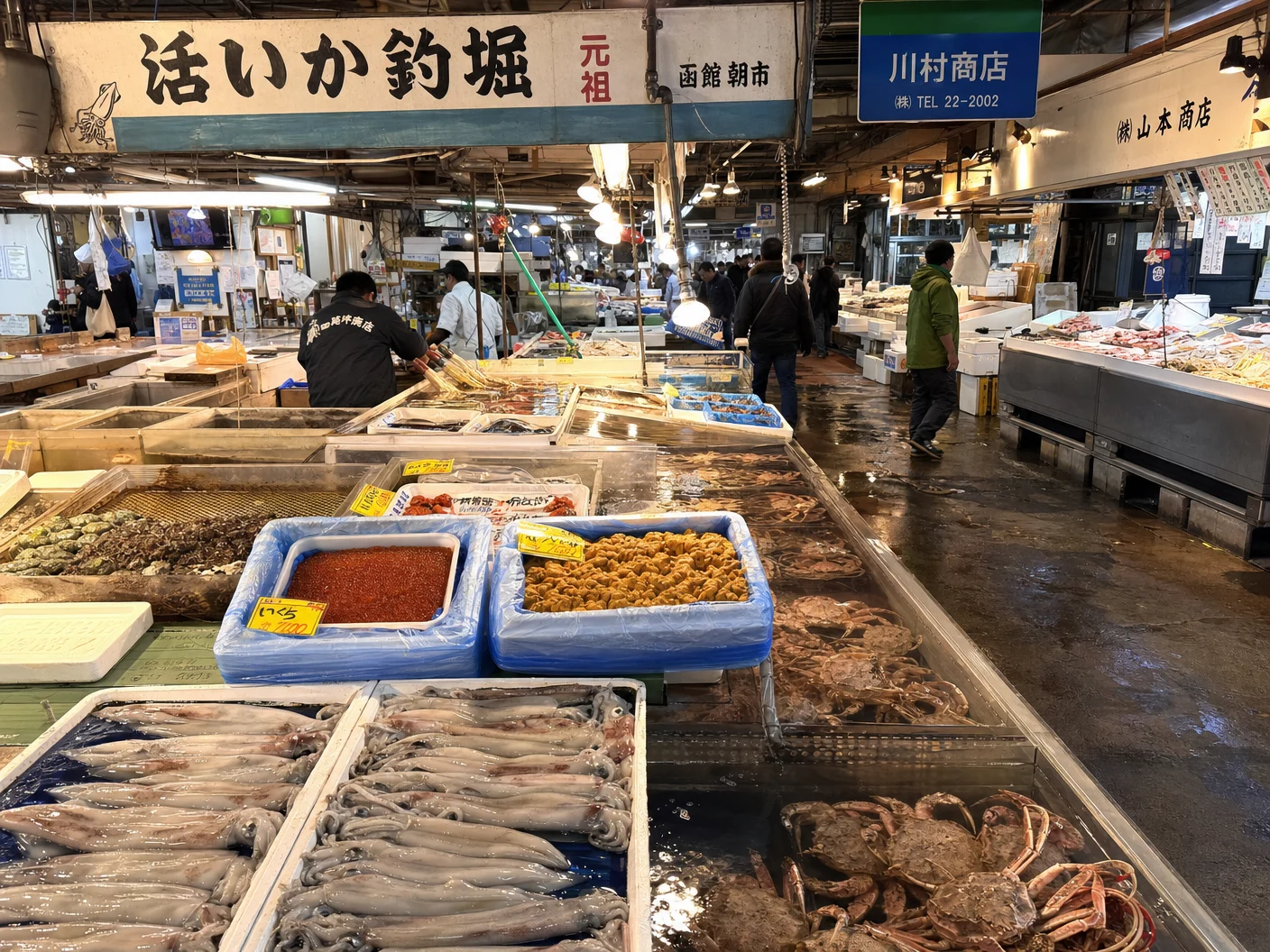
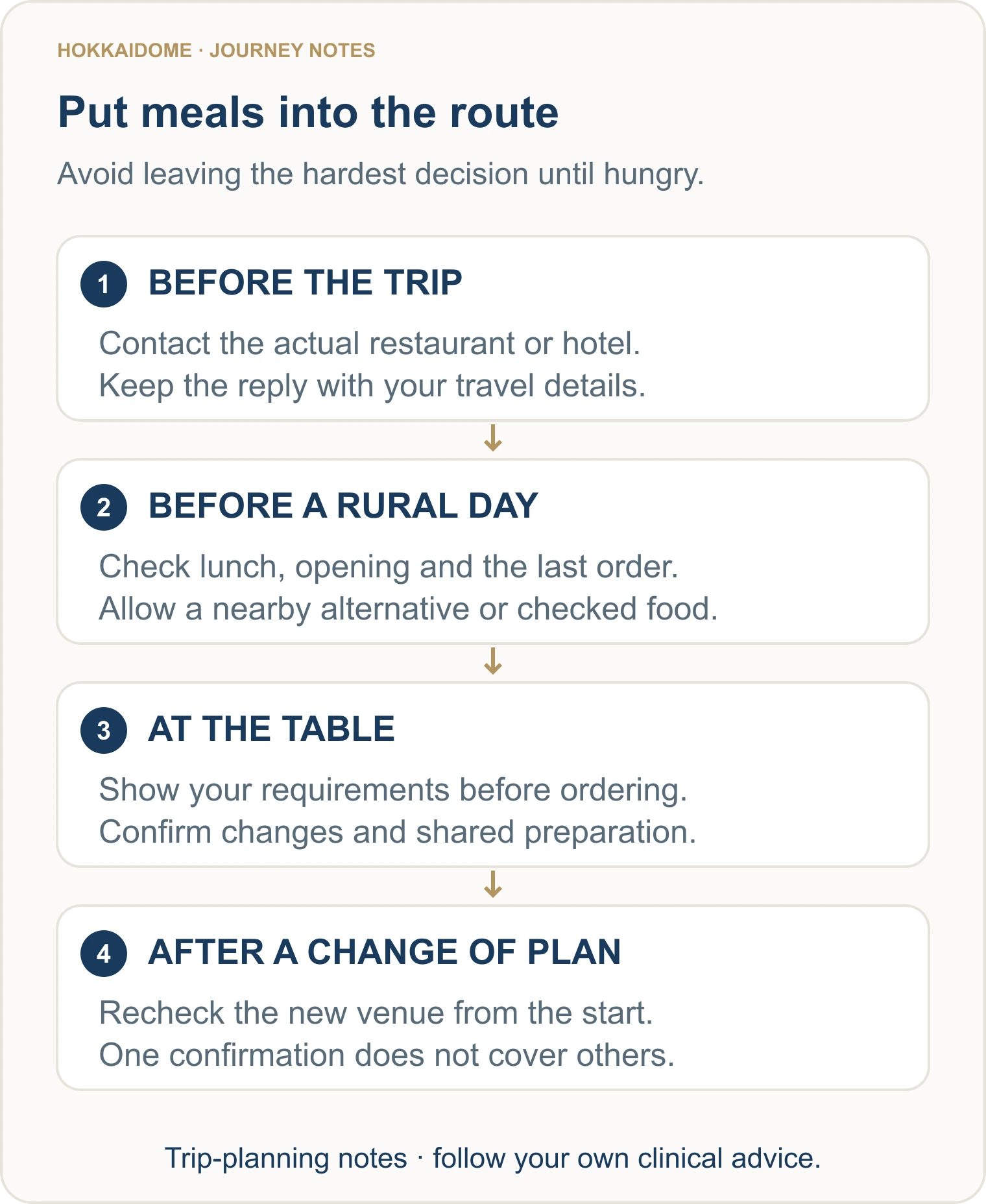
If a checked lunch is the day’s fixed point, build sightseeing around it. A shorter stop list can leave the time needed to arrive, communicate and eat calmly. The trip planner and Furano and Biei guide help you test the travel time before adding more locations.
Keep other dietary needs and your own health plan visible
Vegetarian, vegan, religious and allergy-related requirements can overlap, but they are different. Give the food provider the complete list. A dish meeting one requirement may still fail another; an appealing seasonal menu is not enough information to decide.
Keep your own clinical and emergency plan prepared before travel. Use qualified healthcare advice for your condition and prescribed medication, and check the official Japanese rules for anything you plan to bring. JNTO links medical-information and visitor-support resources; seek urgent local medical help when needed rather than waiting for a travel-planning reply.
HokkaidoMe can discuss the route, lunch timing and the questions you want to raise with a venue. The food provider must confirm what it can prepare. Our English-speaking planning team and a booked driver do not certify an allergen-free kitchen or provide clinical advice.
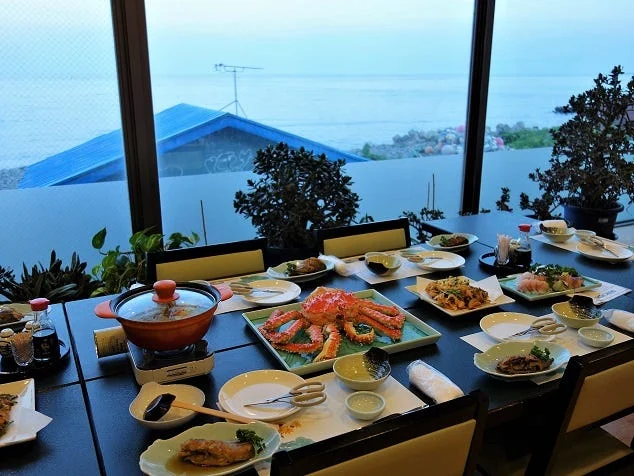
Use the form below for itinerary and vehicle planning, with any meal-stop timing you need. Keep detailed medical documents in your own secure records. An enquiry helps us discuss the travel logistics; it is not confirmation of a restaurant reservation or dietary accommodation.
Gluten-free Sapporo and food-allergy questions
Can I find gluten-free food in Sapporo?
There are specific products and venues to investigate, including the official-directory Hanaafu listing and Madomadore’s rice-flour madeleine information linked below. They are starting points for direct questions, not a blanket guarantee for an entire menu or every dietary requirement. Confirm the actual item, preparation, opening and availability with the provider.
Does rice flour mean a product is gluten-free?
The words rice flour describe an ingredient, not necessarily the whole recipe or preparation. A product can use more than one flour, a filling or a sauce. Check the complete product information and ask about shared preparation when that matters to your requirements. Do not decide from a photograph or the main ingredient alone.
Is a wheat-allergen label the same as a gluten-free statement?
No. Gluten-related requirements include more than a wheat-only check, and wheat allergy and coeliac disease are different conditions. Use the dietary guidance you have received from your clinician, explain it precisely and check the complete food information. Do not translate one label or condition into another.
Can I assume ramen, soba or soup curry can be made gluten-free?
No. Ask about the particular noodles, soup or stock, seasoning, roux, toppings and preparation equipment. Changing one ingredient does not confirm the whole dish. A kitchen may be unable to make a suitable substitution; arrange a different meal rather than relying on an unconfirmed change.
Are vegetarian, vegan and gluten-free options interchangeable?
No. They describe different requirements. A plant-based meal can contain wheat or other allergens, and a gluten-free sweet can contain milk or egg. If you have more than one requirement, give the kitchen the complete list and confirm the specific meal rather than relying on one dietary symbol.
What is the best way to explain a food allergy in Japan?
Prepare a clear communication card before travel and show it before ordering. The Consumer Affairs Agency provides downloadable sheets linked in this guide. Include your actual allergens and discuss any needs that the sheet does not cover. Ask about ingredients and shared preparation, and keep a backup when the kitchen cannot give a clear answer.
How should I plan food for Otaru, Furano, Niseko or a rural day trip?
Confirm the actual lunch venue and opening arrangements before the route is final. Allow time for a checked alternative or food you have independently confirmed is suitable. A Sapporo restaurant’s answer does not cover another branch, a market stall, a hotel buffet or the next town.
Can HokkaidoMe guarantee an allergen-free meal?
No. We can discuss route timing, meal stops and the information you want to raise with a venue, but the kitchen must confirm what it can provide. Keep your own clinical and emergency plan. A driver booking or enquiry does not certify a restaurant, product or shared kitchen as suitable for you.
Official food and travel information
Reviewed 20 October 2026. Specific examples come from the official directory or producer pages linked above. Food information, stock and operating arrangements can change; use the actual provider’s current reply and your own clinical guidance.
- Consumer Affairs Agency: food labelling and downloadable allergy communication sheets
- Welcome HOKKAIDO: official dietary-information directory
- Madomadore: official rice-flour madeleine ingredients and production information
- Coeliac UK: gluten-containing grains and ingredients to check
- JNTO: current frequently asked questions, including allergy information
- JNTO: customs and restricted food imports
- JNTO: emergencies, current support links and travel preparation
Plan it with HokkaidoMe
Plan travel around your confirmed meal stops
For route and vehicle planning, send your dates, hotels, group and the meal-stop locations or timing you need. The food provider must separately confirm dietary accommodation.
We reply in English with availability and a personalised quote. A form enquiry does not create a confirmed reservation.