Four seasons · different journeys
Hokkaido seasons: choose the holiday you want
A flower-field holiday, a foliage route and a first snow trip need different plans. Choose the experience first, then use regional timing and current operating information to shape the journey.
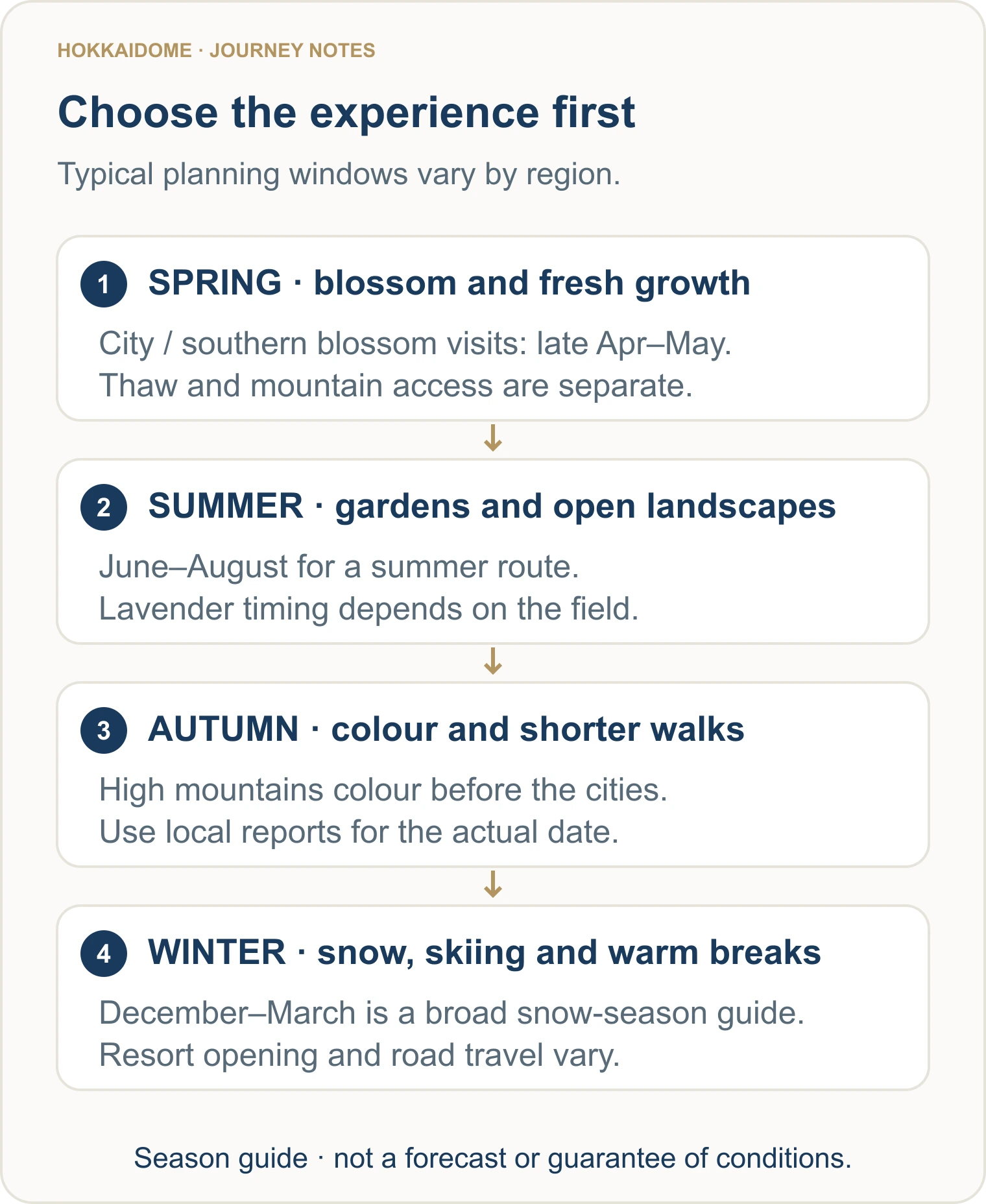
Choose among Hokkaido seasons by the experience you want
Start with a sentence about the holiday you want: “We want to see flower fields,” “We want a first snow holiday,” or “We want a relaxed city break with autumn colour.” That sentence is more useful than asking for one perfect month. Hokkaido’s high mountains, southern coast, inland towns and eastern landscapes do not share one timetable.
The windows below help you choose a direction. They are broad travel-planning guides, not forecasts. Once the experience and region are clear, check the exact facility, flowering report or activity operator. Keep a second plan that still makes the trip worthwhile if the signature view changes.
For a detailed month-by-month comparison, continue to when to visit Hokkaido. This guide focuses on the practical choice between four different kinds of holiday.
| Seasonal idea | Broad planning window | What decides the actual day |
|---|---|---|
| Spring blossom and fresh growth | Late April–May for many city and southern blossom visits. | The specific location, annual flowering reports and the difference between city thaw and mountain access. |
| Summer gardens and countryside | June–August for a summer route; lavender timing is field-specific. | Flowering and harvest reports, heat, rain, bookings and the region you stay in. |
| Autumn foliage and varied landscapes | Higher areas colour earlier; lower towns and cities follow later. | Altitude, local reports, weather and the current road or ropeway operation. |
| Winter snow, skiing and warm breaks | December–March is a broad snow-season guide. | Actual snow, resort and programme operation, daylight and ground-travel conditions. |
Spring: separate blossom travel from the thaw
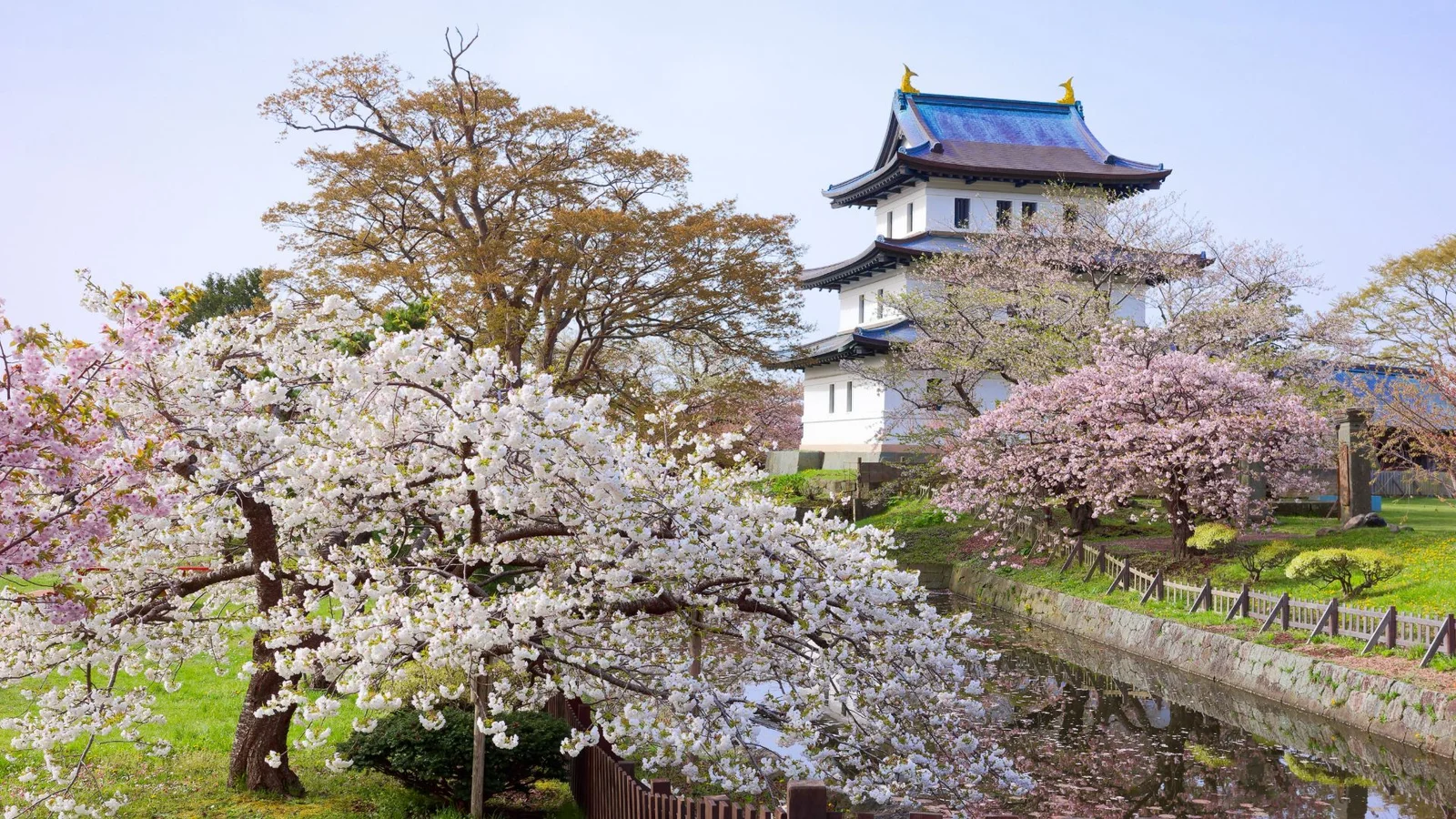
A spring trip needs a local calendar. Hakodate’s official guide describes cherry blossoms around late April into early May; that is a useful southern-Hokkaido example, not an island-wide promise. Select the park or region you want, then follow that location’s reports as the trip approaches.
A city losing its snow does not mean every higher path or road is open. Plan a blossom-focused stay around accessible towns and parks before adding a mountain outing. If your dates are fixed outside the expected bloom, choose other reasons to enjoy the city rather than making the entire stay depend on a peak that lasts only a short time.
For a simple route, keep a city base, one main park visit and an indoor or food-focused alternative. Bring layers for changing conditions and check the walking surfaces at the destination. A scenic drive is only useful if the stops themselves are open and comfortable for the group.
See our spring travel guide for route choices, or use the month-by-month planning guide to compare a fixed date.
Summer: give the countryside enough time
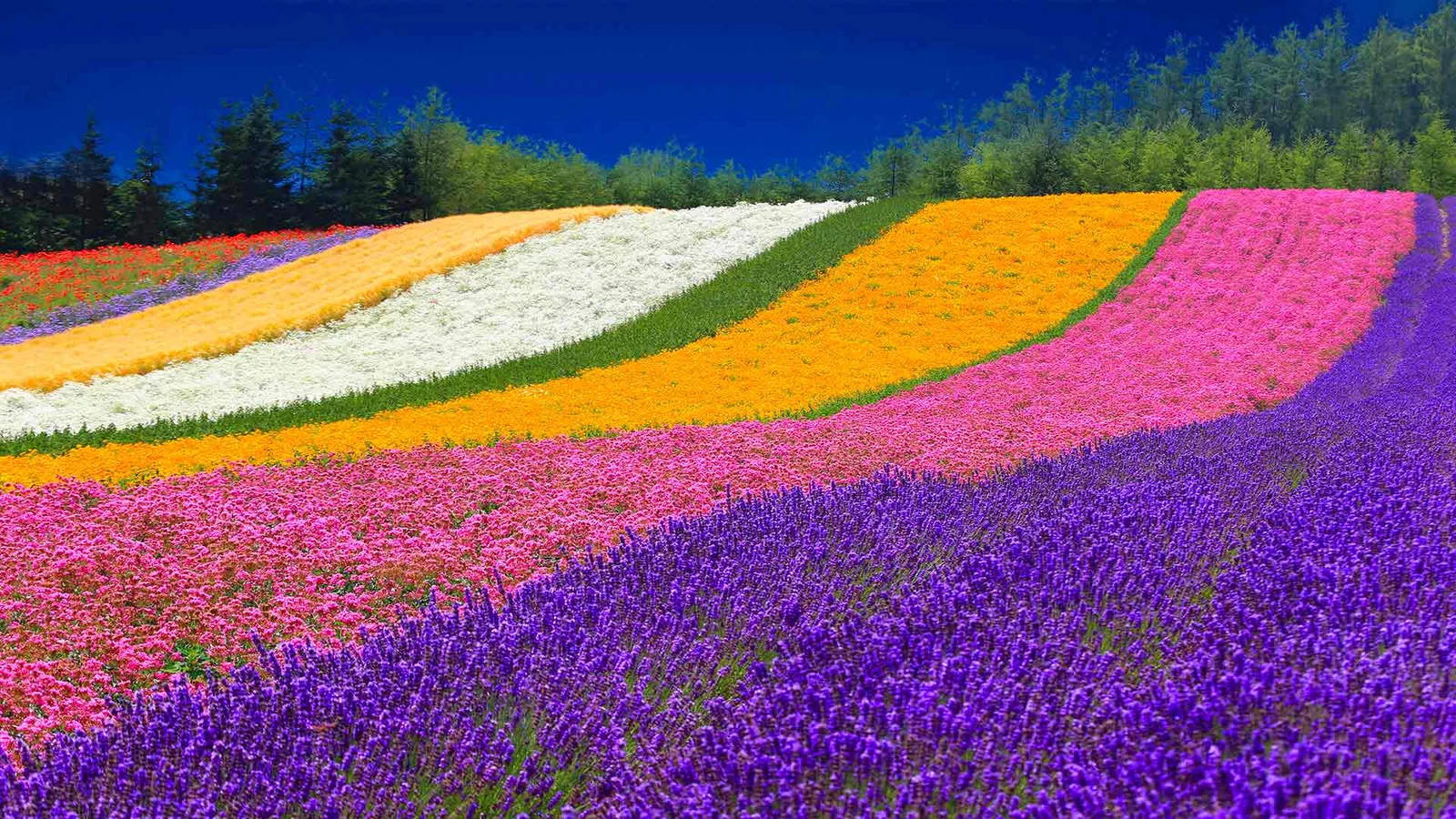
Summer suits travellers who want gardens, open landscapes and longer outdoor visits. It still needs a selective route. Furano’s flower areas, Biei’s countryside and a city hotel are separate places; choose a base that leaves time to walk and eat after the driving.
For lavender, July is a sensible starting point. Farm Tomita’s own guide gives individual fields different flowering windows, with weather and harvesting affecting the view. Decide whether lavender specifically or a broader flower-and-countryside day matters more. That distinction gives the route useful flexibility.
Allow for rain and warm days as well as the pleasant landscape photographs. Keep water, sun protection and a light outer layer accessible, and shorten exposed stops when conditions call for it. For families, a single garden with a comfortable lunch can be more enjoyable than a long list of similar fields.
Use the Furano and Biei guide for the shape of a day, or add a nearer overnight base when the countryside is your main priority. Ask about a sightseeing transfer if you are changing hotels with luggage.
Autumn: choose the altitude as carefully as the month
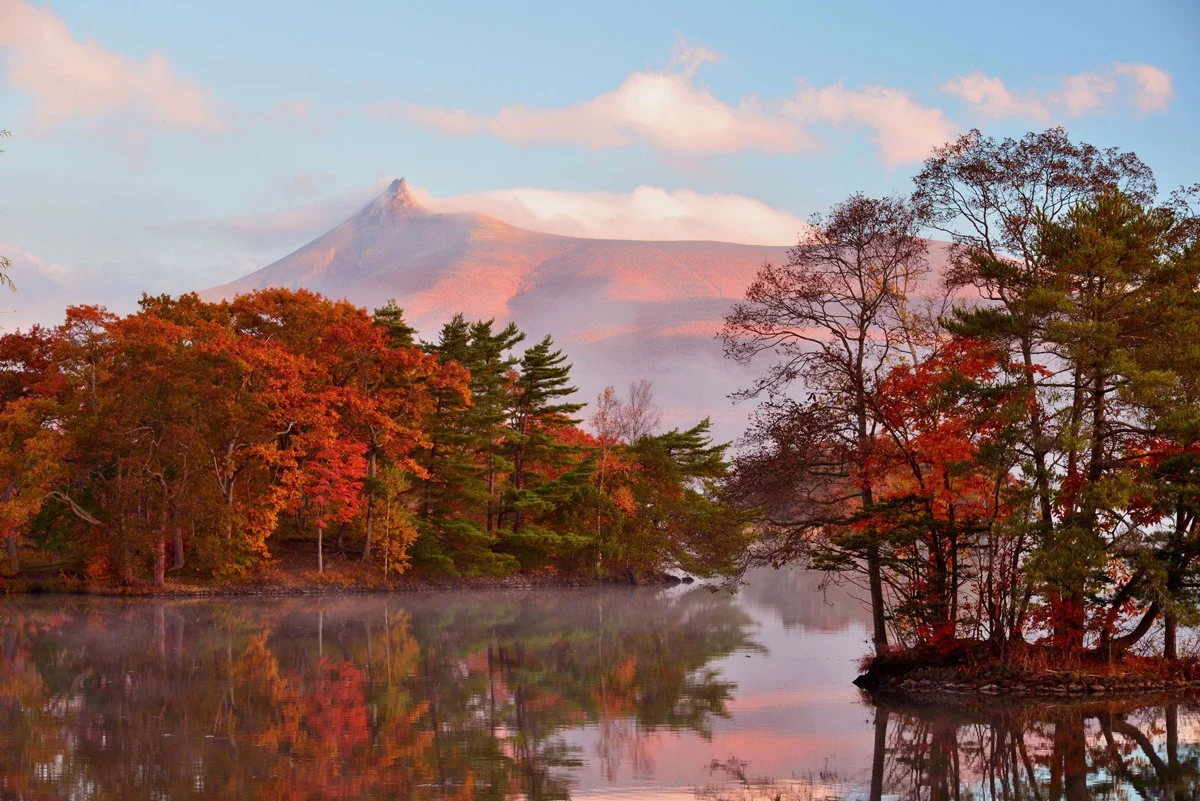
Autumn is a moving sequence, not one island-wide peak. The official Sugatami Pond guide describes colour beginning in the Asahidake area around early September. A city garden is a different setting and can follow a different calendar. Use the specific destination’s recent reports instead of applying a mountain date to the whole route.
Choose whether you want a higher landscape with more weather exposure or a city-and-lower-country route with shorter walks. A ropeway operating notice, maintenance closure or change in conditions can matter as much as the foliage report. Keep a lower alternative that does not require the same mountain access.
Autumn itineraries also benefit from deciding the final viewpoint and return journey in advance. A late arrival at a distant stop can leave little useful visiting time. Give photography one or two good locations rather than racing between every place that has appeared in a seasonal article.
The detailed autumn guide remains the next step for regional foliage ideas. Pair the landscape with a route you would still enjoy if the trees were a little earlier or later than expected.
Winter: book an actual snow experience, then plan around it
A snow holiday can mean beginner skiing, a resort stay, short outdoor play, city illuminations or a winter landscape drive. Those choices need different accommodation and travel plans. Choose the experience and operating venue before filling the remaining days with sightseeing.
December–March is a broad winter guide, but an activity needs its own confirmed operating dates and conditions. Snow visible in a city photograph does not establish that a ski area, snow-play park or zoo programme is available. Look at the current season’s announcement rather than copying last year’s event date.
Keep transfer days simple and leave time for warm breaks. Put footwear, gloves and outer layers where they can be reached without unpacking every suitcase. A car can simplify moving equipment and children, but travel can still be slowed or changed by snow, ice and visibility. Plan the flight connection separately from the day’s optional stops.
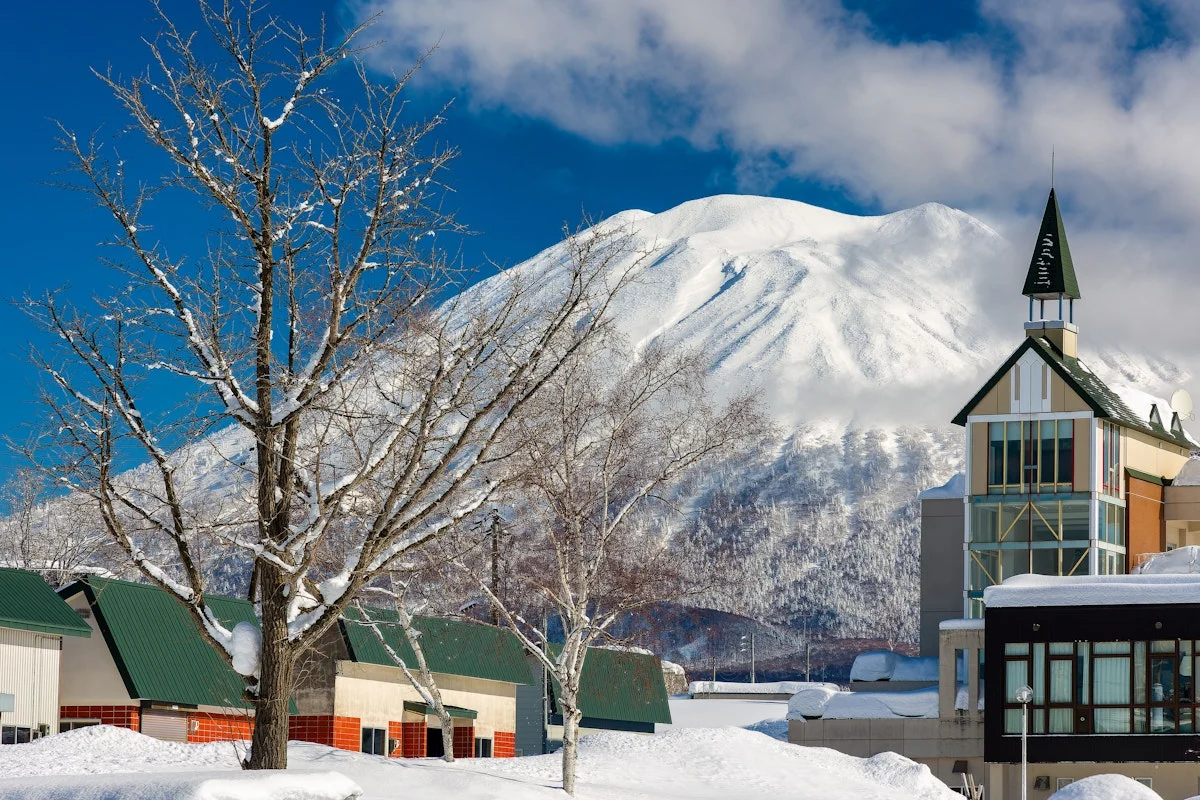
A New Chitose Airport to Niseko transfer serves a different purpose from a sightseeing day. Tell the team about ski bags, the full group and the actual resort address. For independent driving, review the winter-driving considerations before choosing the route.
Handle shoulder months and fixed dates with a workable core plan
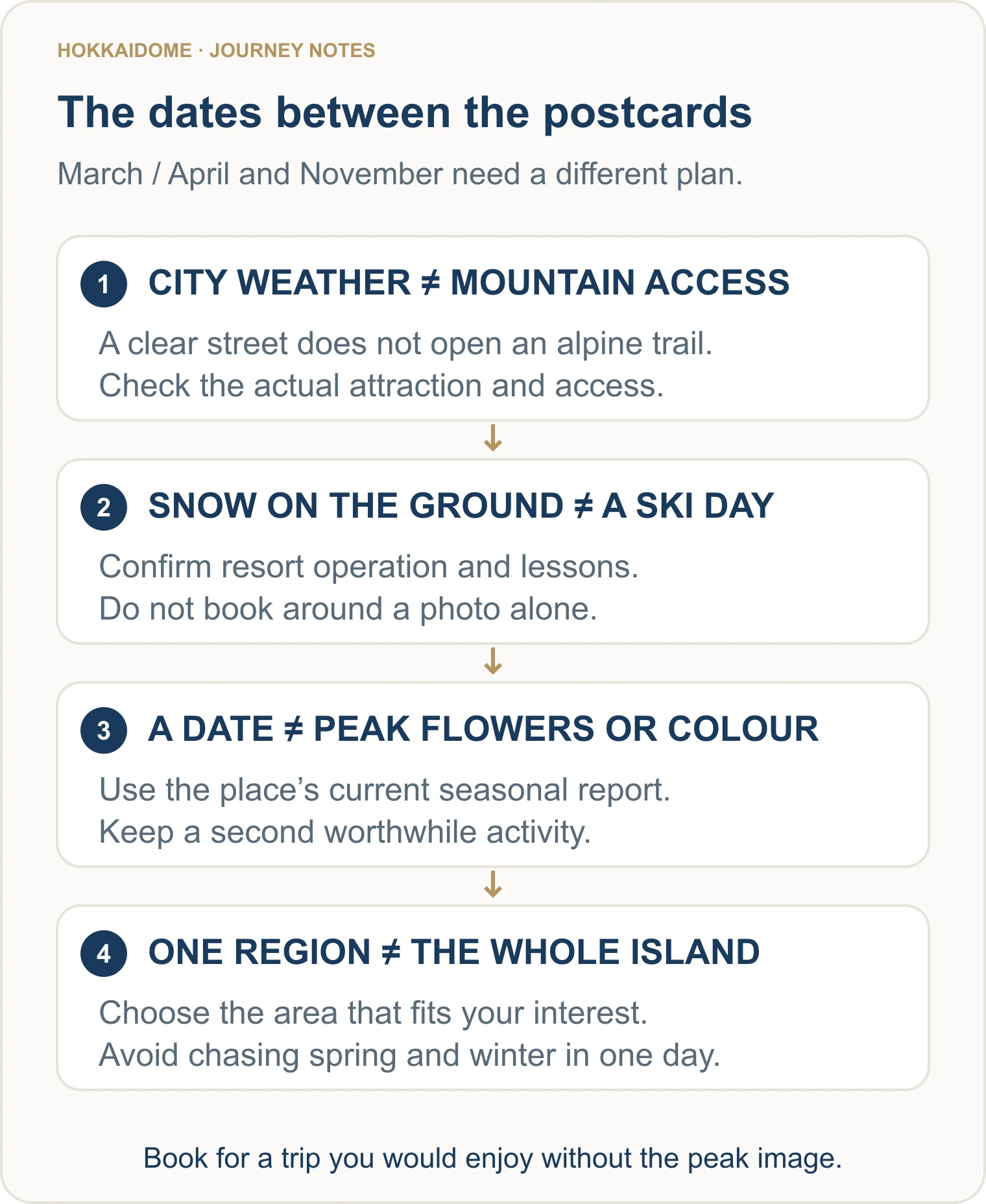
March into April and late autumn can combine seasons. A lower city may be easy to explore while a higher route has snow or a seasonal facility is closed. Start with what is open on your actual date and add scenery around that core. Do not assume that a discounted room makes a closed attraction available.
When dates are fixed, choose the best regional version of those dates rather than chasing a photograph from another month. When dates are flexible, identify the priority experience first and watch the relevant local calendar. In both cases, keep one nearby alternative and know which optional stop will be removed first.
For a private-day enquiry, send the dates, region or hotel, desired experience, walking pace and complete group and luggage details. Our English-speaking planning team can help shape the route; drivers assist with conversational English and translation apps. The trip planner turns that seasonal choice into nights, transport and a useful budget.
Questions about Hokkaido seasons
Which Hokkaido season is best for a first visit?
Choose the experience first. A summer countryside holiday, an autumn foliage route, a spring blossom visit and a winter snow trip need different dates and regional plans. There is no single best season for all of them. Start with the comparison table, then check current conditions for your chosen destination.
Is March the cherry-blossom season in Hokkaido?
Do not plan a Hokkaido blossom trip from a generic Japan-in-March calendar. Southern and city blossom visits commonly fall later, around late April into May, with dates varying by place and year. Check the local forecast and flowering reports before fixing a blossom-focused day.
When should I visit Furano for lavender?
July is a useful starting window, but the exact field and cultivar matter. Farm Tomita publishes separate flowering guides, and weather and harvesting affect the appearance. Check current reports for the fields you want rather than expecting every lavender area to peak throughout summer.
Does autumn foliage peak everywhere at the same time?
No. High mountain areas can colour before lower towns and city parks. Choose the specific area and use recent local reports; a mountain photograph from September does not establish the timing of a city garden. Include current access, maintenance and weather information in the decision.
Is snow guaranteed throughout December to March?
That is a broad winter planning window, not a guarantee for every location or activity. Resort operation, snow-play areas and animal programmes have their own dates and conditions. Check the actual operator and recent weather before building a trip around a particular snow experience.
Are April and November good months to travel?
They can suit a trip whose activities are actually open, but both can involve transitions between seasons. A city may be easy to visit while a mountain route or seasonal facility is unavailable. Choose a workable core itinerary first; a lower room price does not replace the experience you travelled for.
Can one short trip include lavender, cherry blossoms and deep snow?
Those are different seasonal priorities. A short visit cannot reliably reproduce photographs taken across the year. Choose one main seasonal experience and add activities that fit the same place and dates. For a family, a realistic pace and a weather alternative matter more than collecting every signature image.
What should I tell HokkaidoMe for a seasonal itinerary?
Share fixed or flexible Japan dates, the experience that matters most, arrival and departure points, hotels, passengers, walking preferences and luggage. Tell us which activity can be dropped if conditions change. We can discuss a seasonal route and written quote; flowering, snowfall and access cannot be guaranteed.
Seasonal information to check before travelling
Reviewed 20 October 2026. The seasonal comparisons are planning guidance. Flowering, foliage, snow and access vary by location and year; current operator notices and local reports take priority over a general calendar.
Plan it with HokkaidoMe
Plan around the season you will visit
Tell us your fixed or flexible dates, the seasonal experience that matters most, hotels and group details. We will discuss a route that fits the time you have.
We reply in English with availability and a personalised quote. A form enquiry does not create a confirmed reservation.