HokkaidoMe planning team · Reviewed 7 November 2026
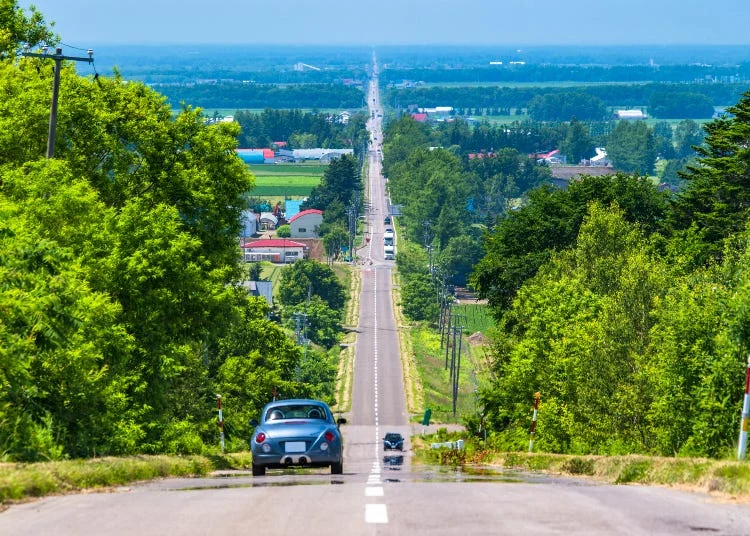
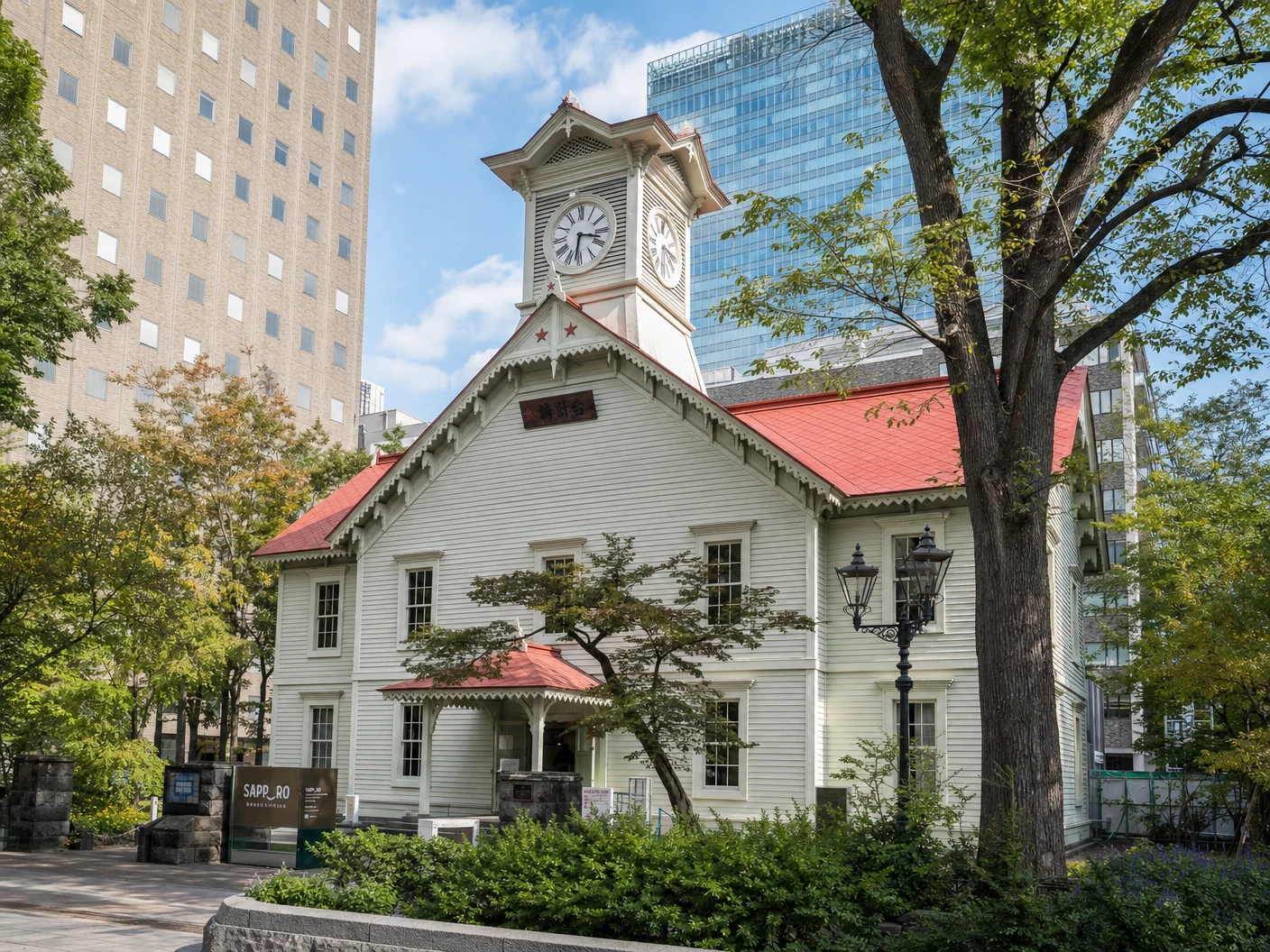
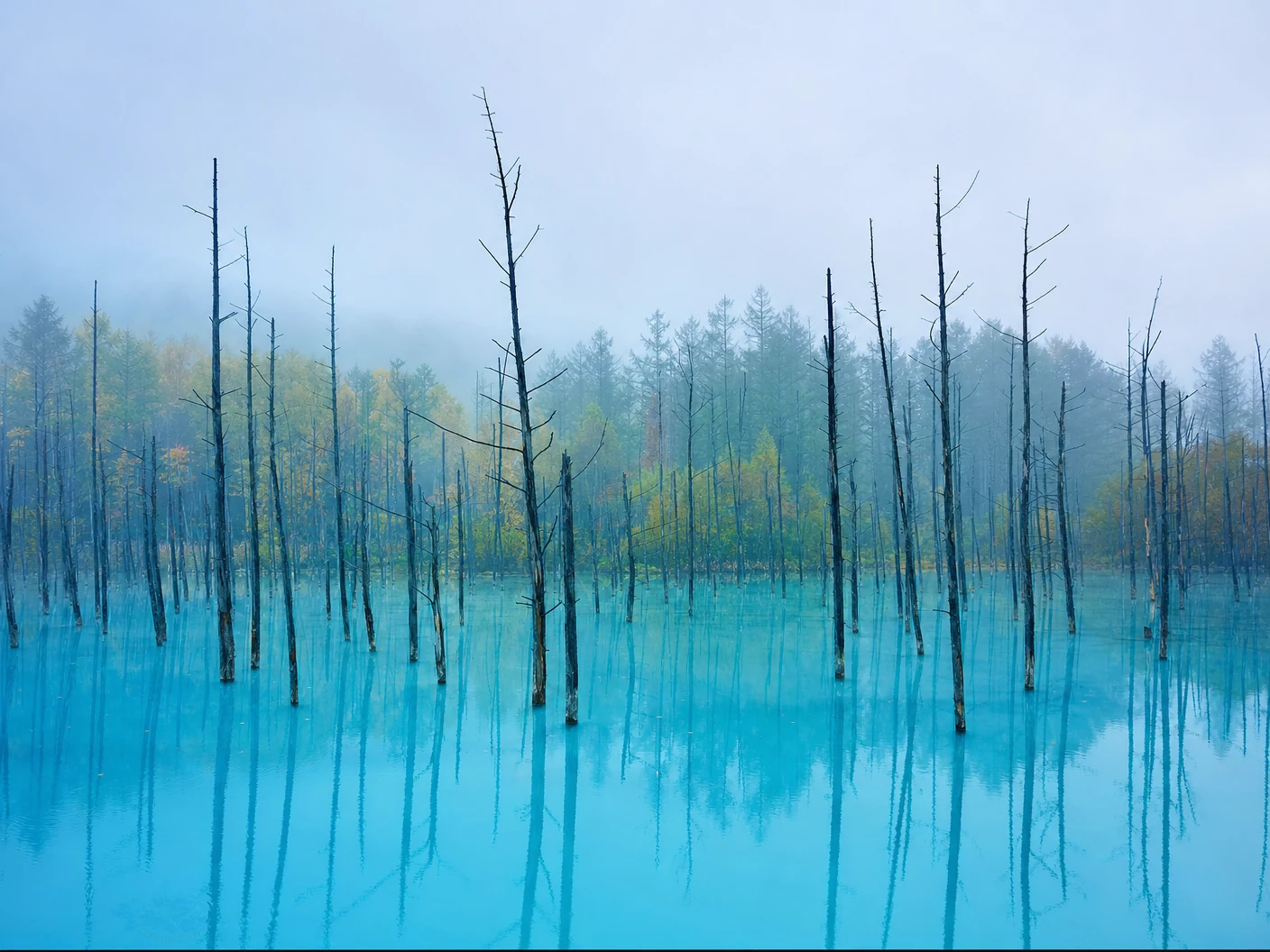
A snow-free countryside photograph. This itinerary is a regional plan, not an island-wide loop.
7 days / 6 nightsArrival and departure included
One rural baseTwo consecutive Furano-area nights
Season mattersA separate winter choice
A week of Hokkaido, with six nights accounted for
A good Hokkaido 7 day itinerary gives you time to enjoy a place after you arrive. Our central-Hokkaido plan combines Sapporo food and city walks, an Otaru day trip, and two nights around Furano for the countryside. It returns towards New Chitose Airport before the final travel day, so the last morning is not a race across the island.
The main version suits the snow-free sightseeing season, especially when gardens and countryside stops are operating. It assumes flights into and out of New Chitose Airport and seven calendar days including both flights. For winter, a ski priority or a Hakodate arrival, use the substitutions below. Your nationality does not change the route; your flight times, season and preferred pace do.
Day
Main purpose
Overnight
1
New Chitose Airport → Sapporo; settle in
Sapporo · night 1
2
Sapporo: one city area, food and a flexible afternoon
Same hotel · night 2
3
Otaru day trip; return to Sapporo
Same hotel · night 3
4
Move to the Furano area; one stop if time allows
Furano area · night 4
5
One full day for selected Furano and Biei sights
Same countryside hotel · night 5
6
A nearby morning, then return towards the airport
Sapporo / airport area · night 6
7
Airport transfer and departure
No overnight included
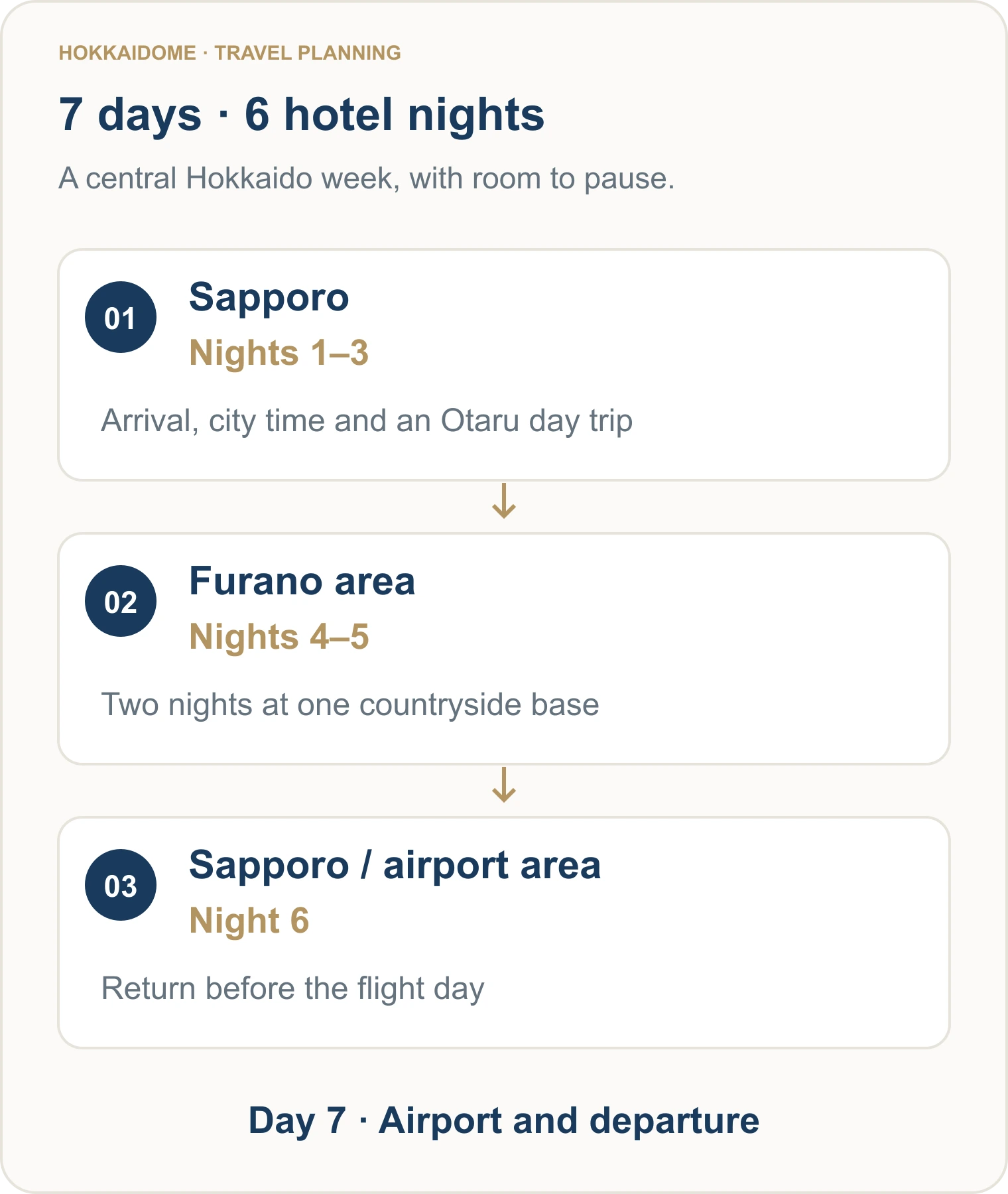
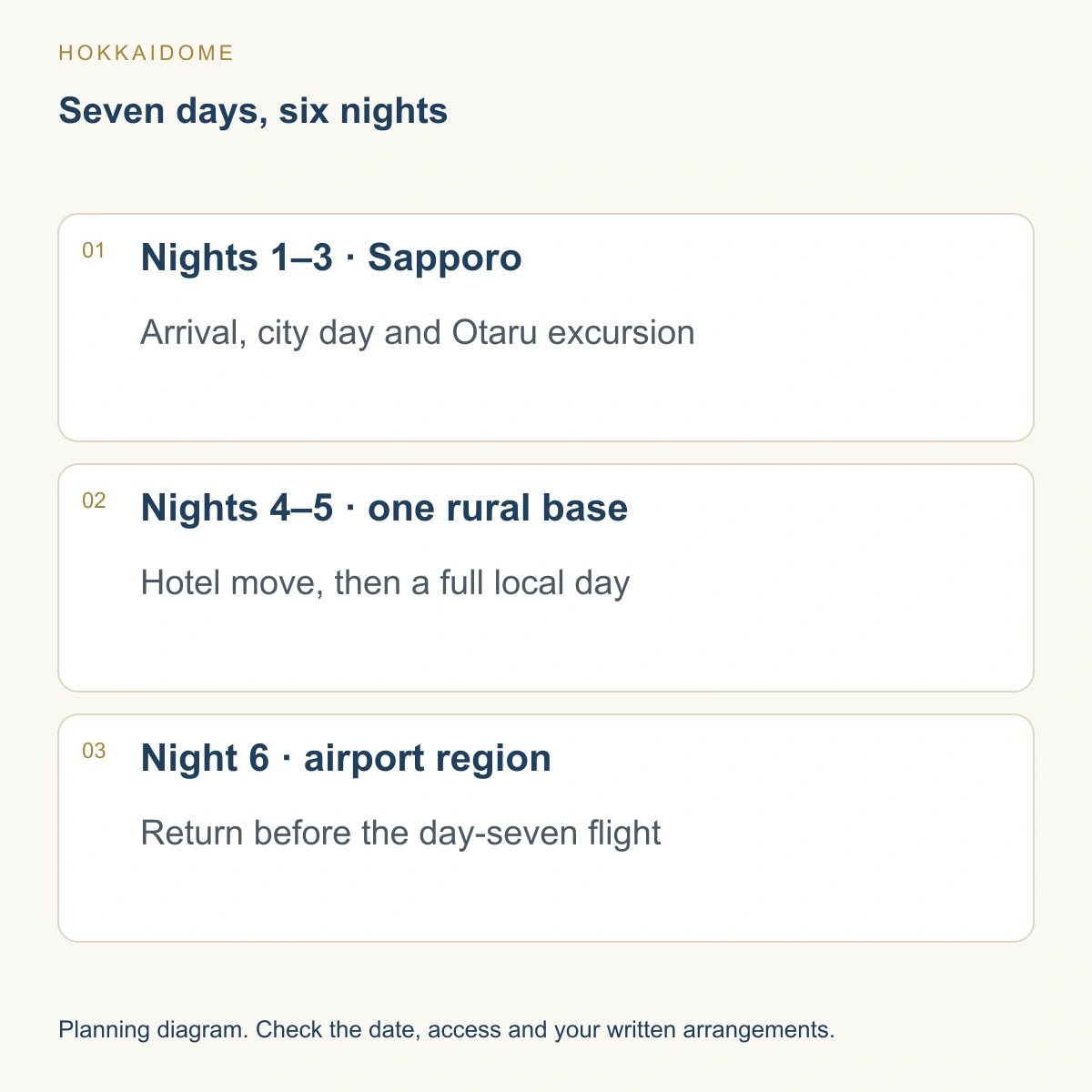
Original itinerary diagram. Three overnight blocks; not a geographic map or a booked package.
Six nights, seven days: check the hotel ledger before booking
This route uses six nights: nights one to three in Sapporo, nights four and five at one Furano or Biei base, and night six back in Sapporo or near New Chitose Airport. Day seven is departure and has no seventh hotel night. Write that ledger next to your flight confirmation before searching rooms. A plan advertised as seven sightseeing days with departure on day eight is a different-length holiday; do not silently add its last night or long final transfer to this six-night itinerary.
The extra time compared with a five-day visit is valuable because you have a full Sapporo day and can complete the countryside-to-airport-region journey before departure. It does not require another distant city. If someone wants Hakodate, Noboribetsu or Niseko, decide which existing nights and activities it replaces, then check the complete route again. Adding a location while leaving all six existing nights untouched usually hides another journey or an overnight that has not been accounted for.
Days 1–2: land, unpack and find your Sapporo
Day 1 · The hotel comes before the highlights
After landing, allow for arrival procedures, bags and the onward journey. JR airport services and private transfers are both options; the train journey itself is only one part of getting to the hotel. Use JR’s current airport guide for the actual service, or send your flight and hotel to our New Chitose to Sapporo transfer team.
Keep the first evening near your accommodation. A short Odori-area walk and a meal are enough if you have travelled overnight. If the flight arrives late, preserve the hotel check-in and remove sightseeing. A room near a useful station is helpful, but check the real entrance and the walk with cases before choosing it.
Day 2 · Choose one main interest
Spend the morning on one Sapporo interest: historic buildings and parks, a museum visit, food shopping, or a quieter neighbourhood. Use the afternoon for a second nearby area or a café break. The city day is a chance to enjoy Hokkaido food without timing every meal around a highway departure.
For an outdoor viewpoint, check the weather and current operation before travelling across the city. For a popular restaurant, check its booking or queue arrangements. Families can make the main visit in the morning and leave the afternoon flexible. Read our Sapporo guide for ideas, then select the ones that fit the group rather than treating the whole page as a checklist.
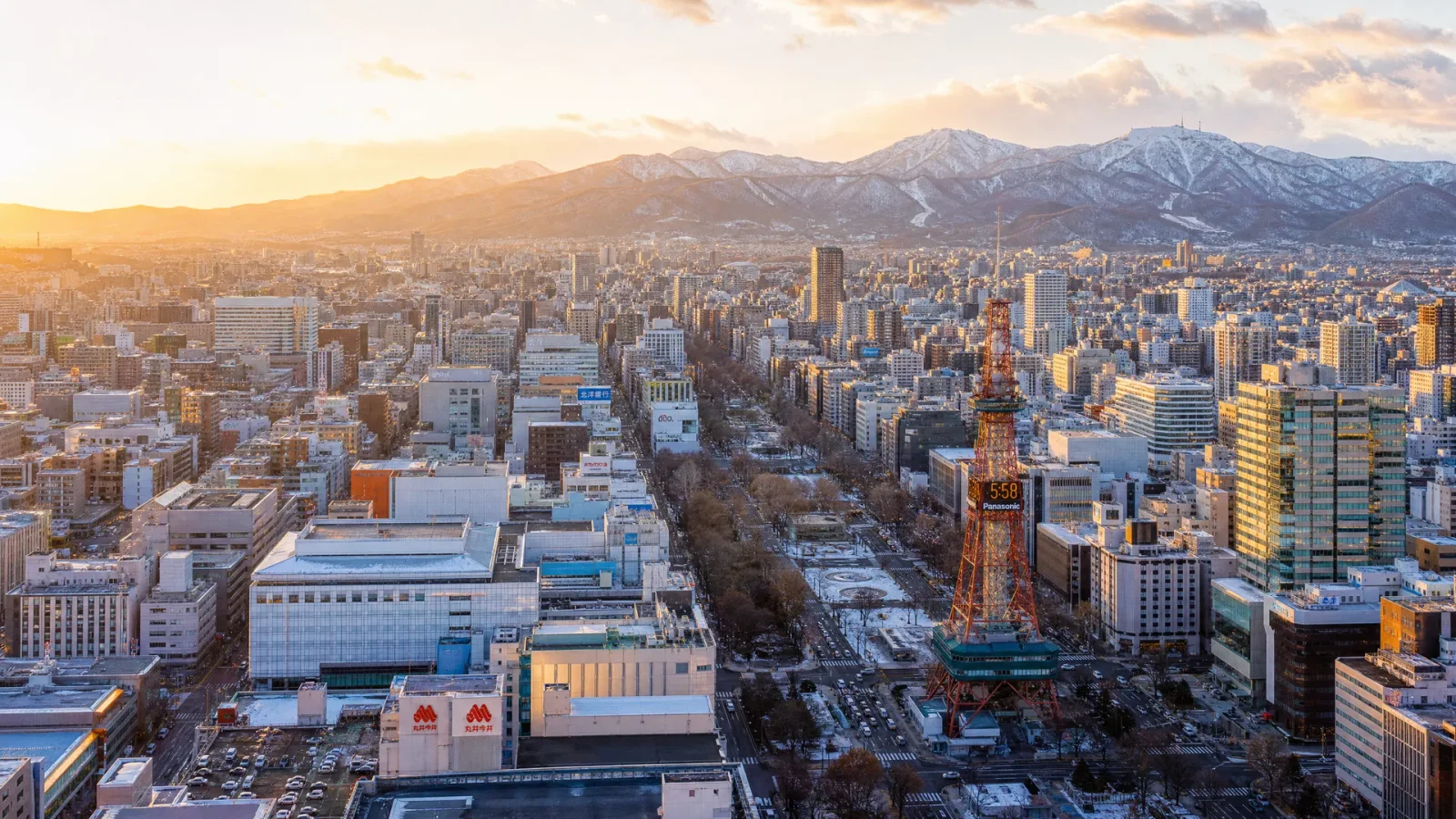
Use the first three nights as one Sapporo stay. Check station access and the hotel entrance before booking.
Use the full Sapporo day for one interest, not a cross-city checklist
The first two days can serve different purposes. Arrival day is for settling in; day two is where a museum, food interest, family attraction or park can receive enough time. Choose one outlying destination and combine it with a central meal or walk, instead of crossing the city for several unrelated attractions. For a history-focused day, connect the central heritage area with one interior visit. For a family day, decide whether the priority is hands-on activity, a large park or an animal-related visit, then check its opening and access separately.
Keep the second evening less rigid than the countryside bookings. A mountain view depends on visibility and operation, so make a nearby dinner plan that still works if the view is poor. A restaurant reservation, paid workshop and fixed sightseeing pickup cannot all move freely simply because the itinerary calls the day flexible. Put their cancellation and arrival conditions beside the booking, and leave ordinary shopping as the first thing to shorten. A full week is more comfortable when one afternoon can absorb a slow start or a longer meal.
Day 3: Otaru, without another hotel checkout
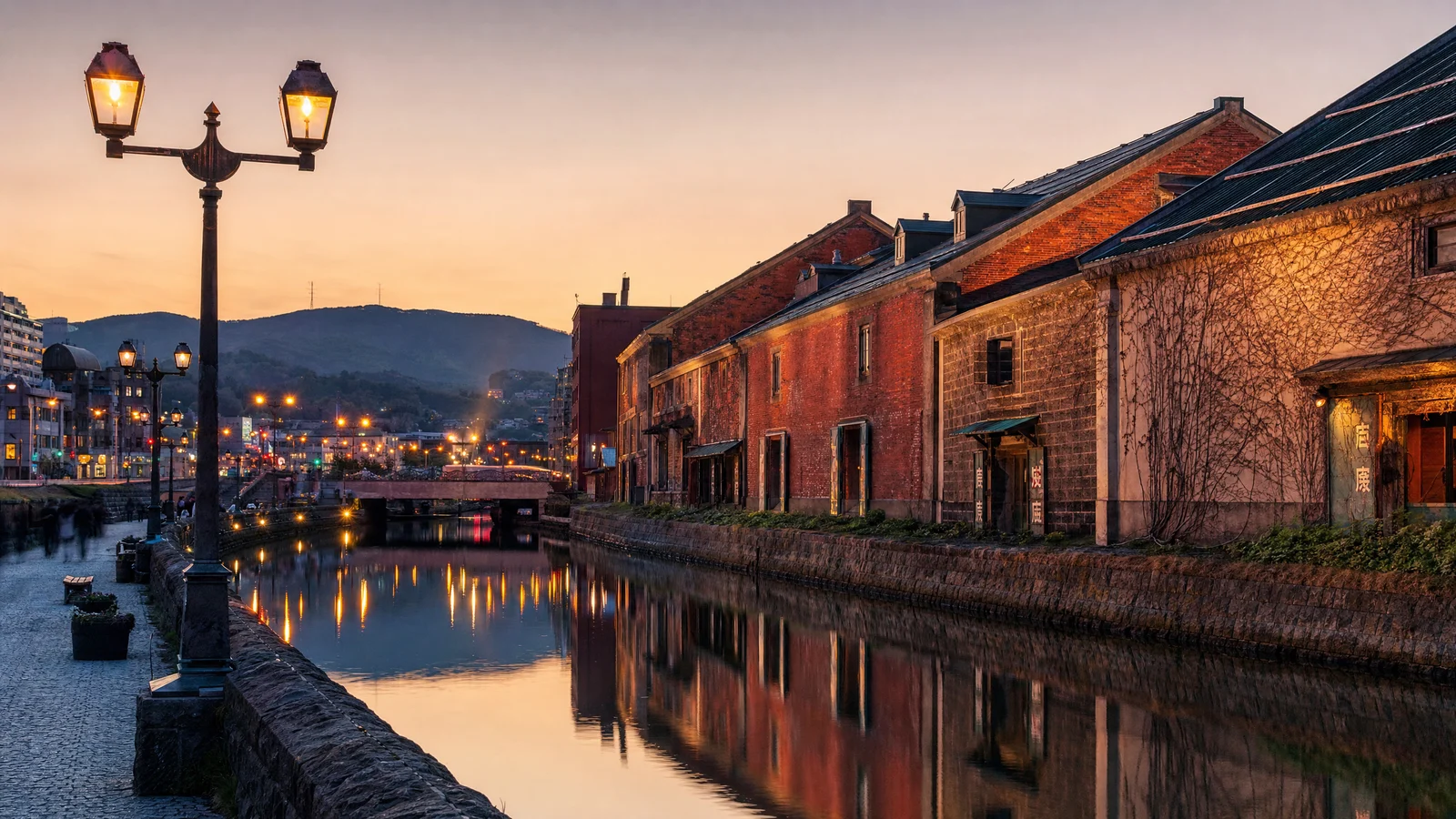
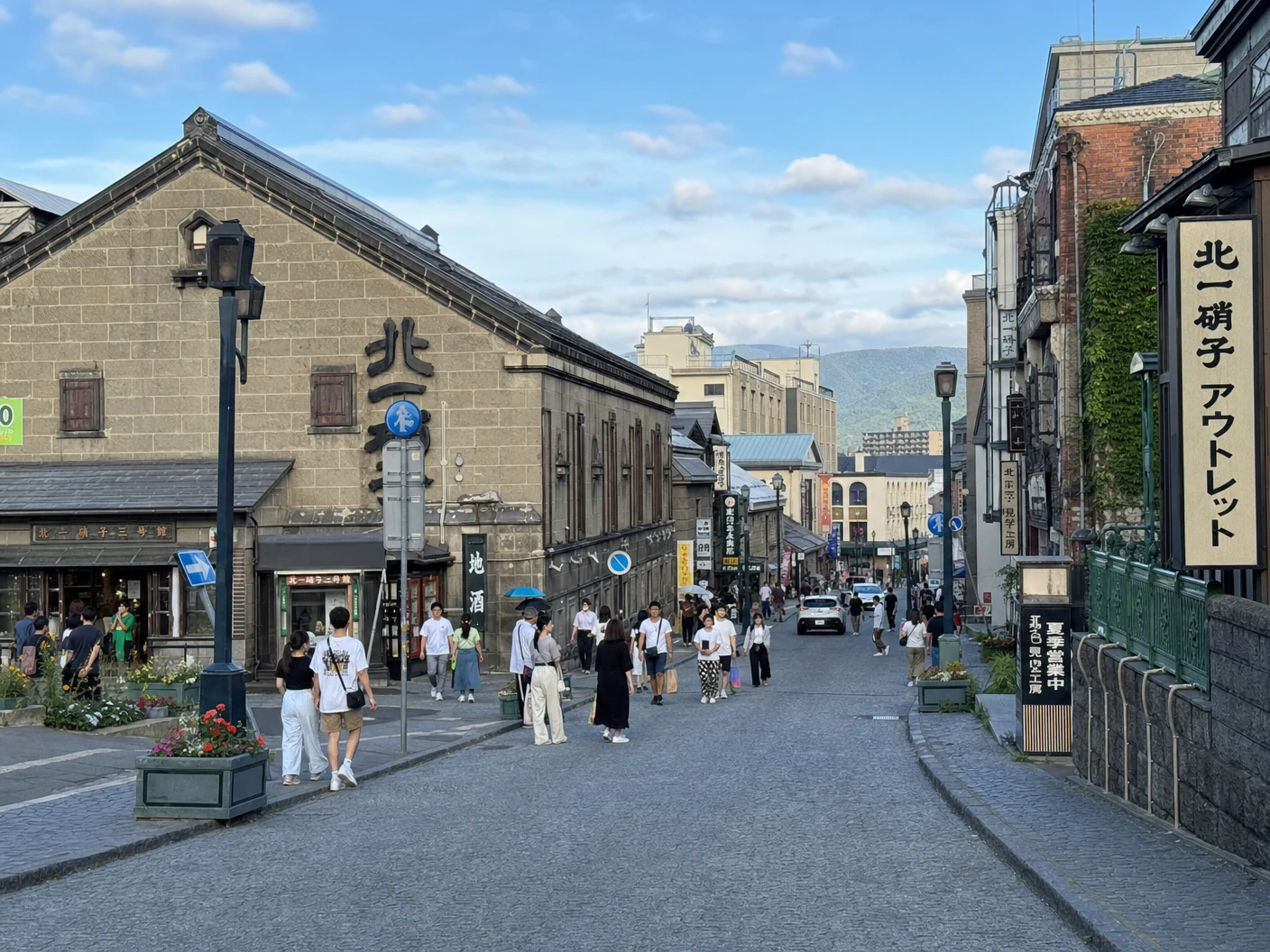
Travel to Otaru with a day bag and return to your Sapporo hotel. Make the canal and warehouse streets the first part of the outing, then allow time for lunch and the Sakaimachi shopping area. A craft experience or museum can be the afternoon focus; check its booking requirements and duration separately.
Choose your return journey before adding an evening activity. The walk from the station, a restaurant queue and time browsing shops all belong to the day, even though a route search does not count them. Staying for later light along the canal can be rewarding when weather and transport suit it; it is optional.
If whisky or Yoichi is the main reason for this excursion, rebuild the day around the relevant visit and reservation. Do not assume an attraction accepts walk-ins or that the canal, several workshops and a distant coast all fit between the same two trains. Our Otaru and Yoichi guide explains that alternative. A simple canal-town outing can work by rail; a driver is an option for a different stop list or less walking.
Otaru works as a day trip from the Sapporo base. Keep the evening return suitable for your group.
Otaru with enough time for craft, food and the return
With three Sapporo nights, the Otaru day can stay light on baggage. Choose the canal and Sakaimachi as the core, then add one interest that changes the experience: a booked workshop, a museum or a coastal excursion. If you choose the coast, reduce the time in the shopping streets instead of keeping a full town programme as well. Check the final stop’s connection back to Sapporo and the walking route to the station before agreeing a late dinner or another timed admission.
Craft activities need more than the advertised activity length. Allow time to arrive, receive instructions and collect or arrange delivery of the work; confirm age and language requirements directly. Food browsing also benefits from choices: decide whether you want a seafood meal, dessert stops or shopping for gifts, instead of turning all three into separate compulsory meals. Tell restaurants about allergies in advance. Return to Sapporo with enough time to repack for the countryside move, because day four carries the whole group’s luggage rather than a small excursion bag.
Day 4: make the move to Furano part of the trip
Book the countryside hotel after choosing how you will reach it. Rail can take you towards the towns, while an outlying lodge may need a bus, taxi, shuttle or reserved pickup after the station. A station-area base can make meals simpler; a rural setting can offer more landscape time. Neither automatically solves the sightseeing connections.
For scale, Biei’s tourism association lists about 2 hours 30 minutes from Sapporo IC to Biei via the expressway, and about 34 km / 40 minutes between Furano and Biei. Those are useful reference legs, not central-hotel-to-attraction promises. Collection, city traffic, breaks, weather and the final address add time.
Give the transfer the larger part of day four. If the timetable or private-car plan leaves room, choose one stop that lies sensibly on the way. Check luggage arrangements for every stop and the hotel’s check-in or dinner deadline. A distant flower garden should not turn a booked evening meal into a rushed arrival.
If you want a driver for this move, explain that it is a hotel change with sightseeing, with all cases on board. It is different from a return day trip from Sapporo. We can check the route, vehicle and operating hours with you before quoting.
What two countryside nights buy you—and what they do not
Two nights give you an arrival afternoon, one complete local day and a departure morning. They do not create two full sightseeing days before the return. Use day four for the hotel move and one priority; use day five for the main local route. On day six, a short nearby visit is optional only after the journey back has been protected. This separation is particularly useful for families: the same room waits after the full day, and the long return is not attached to the international flight morning.
Choose the hotel for the local route you actually want. A Furano town stay, a Biei town stay and an isolated rural property have different meal and last-mile requirements. For each proposed base, write the first sight, last sight, dinner option and route back to the room. If you cannot complete those four lines without relying on an unconfirmed taxi or shuttle, solve that transport before booking the room. A station-area hotel can be practical for rail arrivals, but it does not by itself connect you to every flower field or viewpoint.
Day 5: one countryside day, chosen for the season
Start close to the hotel and group nearby stops. If you sleep around Furano or Nakafurano, a morning flower-farm visit and lunch can be the anchor. If Biei’s hills and the Blue Pond are more important, put those into a coherent loop with time to park, walk and enjoy each place. Two or three priorities are a better starting point than collecting every photo location.
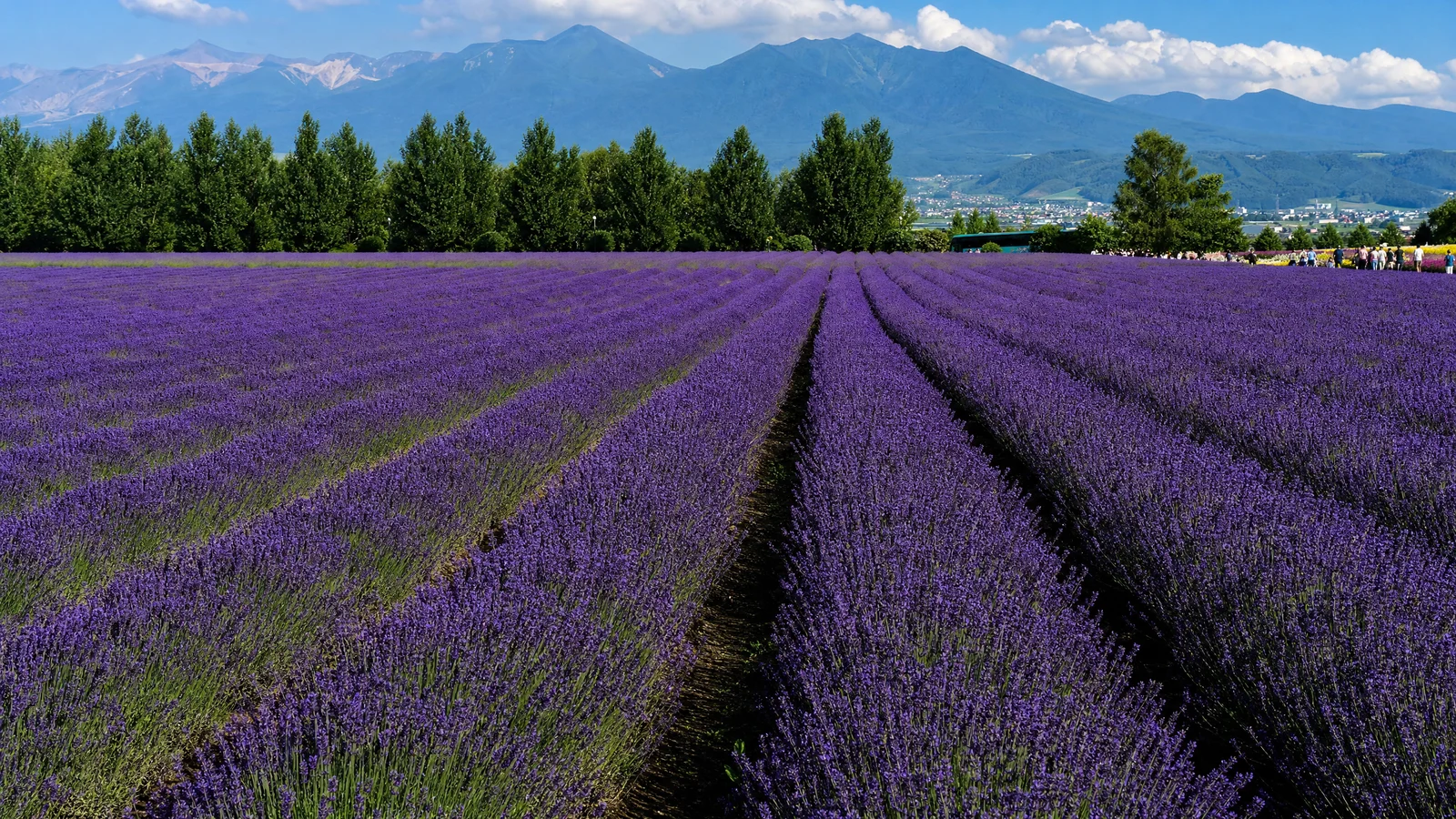
Outdoor lavender is a summer subject. Farm Tomita’s Irodori Field information lists July, with its best period in mid-to-late July; other fields have their own calendar. Check the farm’s current updates instead of assuming the photograph will match your date. In autumn, focus on open gardens, harvest landscapes and suitable viewpoints.
Allow time for a proper meal and a weather change. A private car makes a selective multi-stop day easier, but a suitable scheduled excursion or local bus plan can also work. Read the Furano and Biei tour guide to decide which stops belong together. Stay on permitted paths around working farmland and use designated parking; a field beside the road is not a public photo platform.
A summer-season photograph. Flowering, harvest and garden opening depend on the actual field and date.
Give the countryside day a clear geographic order
Start with one main interest—flowers, hills or Shirogane—and organise the remaining visits around that direction. A route might pair a morning field with a nearby meal and another short local stop; another might give the Blue Pond and a neighbouring waterfall the main part of the day. These are alternative priorities, not a list to combine automatically. Repeatedly driving from one side of the region to the other can use the afternoon without creating more useful visiting time. Check the route with the actual operating hours and the group’s walking ability.
Use designated visitor paths and parking, particularly beside working farmland. A famous tree or hill in a photograph is not permission to enter the field or stop on an unsafe shoulder. If the weather makes an exposed viewpoint unappealing, replace it with a suitable meal, town visit or bookable indoor activity near the base. Check that the alternative is operating; “indoors” does not mean unlimited capacity. Preserve the return to the hotel so children can eat and rest, instead of filling the saved time with another long drive.
Days 6–7: return first, then protect the flight
Day 6 · A nearby morning and a complete return journey
Use the morning for an unhurried breakfast or one nearby stop, then travel back towards Sapporo or New Chitose. Leave time for connections, rental-car return if relevant, the hotel and dinner. Avoid a cross-island detour simply because the week has one remaining calendar day.
Choose the last overnight according to the flight. Sapporo offers another city evening when the airport connection works. An early flight may suit airport-area accommodation better, but check its exact location and any shuttle schedule. “Near the airport” is not the same as having a confirmed early-morning ride.
Day 7 · Departure is the main plan
Work backwards from the airline’s check-in requirement and your terminal. Include the complete door-to-terminal journey, waiting or pickup time, and a reserve for the season. Add breakfast or shopping only after that plan is secure. An optional stop is the first thing to remove if transport conditions change.
If an Asahikawa departure works better for your flights, a different version can end in the countryside. Confirm the flight and airport connection first, then change night six and the return route. Our Asahikawa Airport and Furano guide helps compare that arrangement.
Day six is a return day, not a spare long-distance excursion
The main job on day six is to move the group and all bags back to the chosen final-night area. Set the hotel arrival and dinner first, then see whether a short stop near the departure base fits. If the day turns slow, remove that stop. A zoo, onsen detour or another mountain area needs a different allowance and must not be added as an automatic extra between checkout and the return. Check whether a private quote includes sightseeing stops or only a direct transfer; the same endpoints can have different service scopes.
For night six, central Sapporo offers a familiar city evening and airport transport the next morning. An airport-area stay can shorten the last connection, but verify the property’s actual terminal access, shuttle timetable and first departure if you need one. “Near the airport” does not mean walkable or connected around the clock. Choose using the actual flight rather than a general promise of convenience. Return a rental vehicle or end a private journey at the agreed place and time; do not leave that practical step outside the seven-day plan.
Winter, Hakodate or a one-base holiday: change the plan
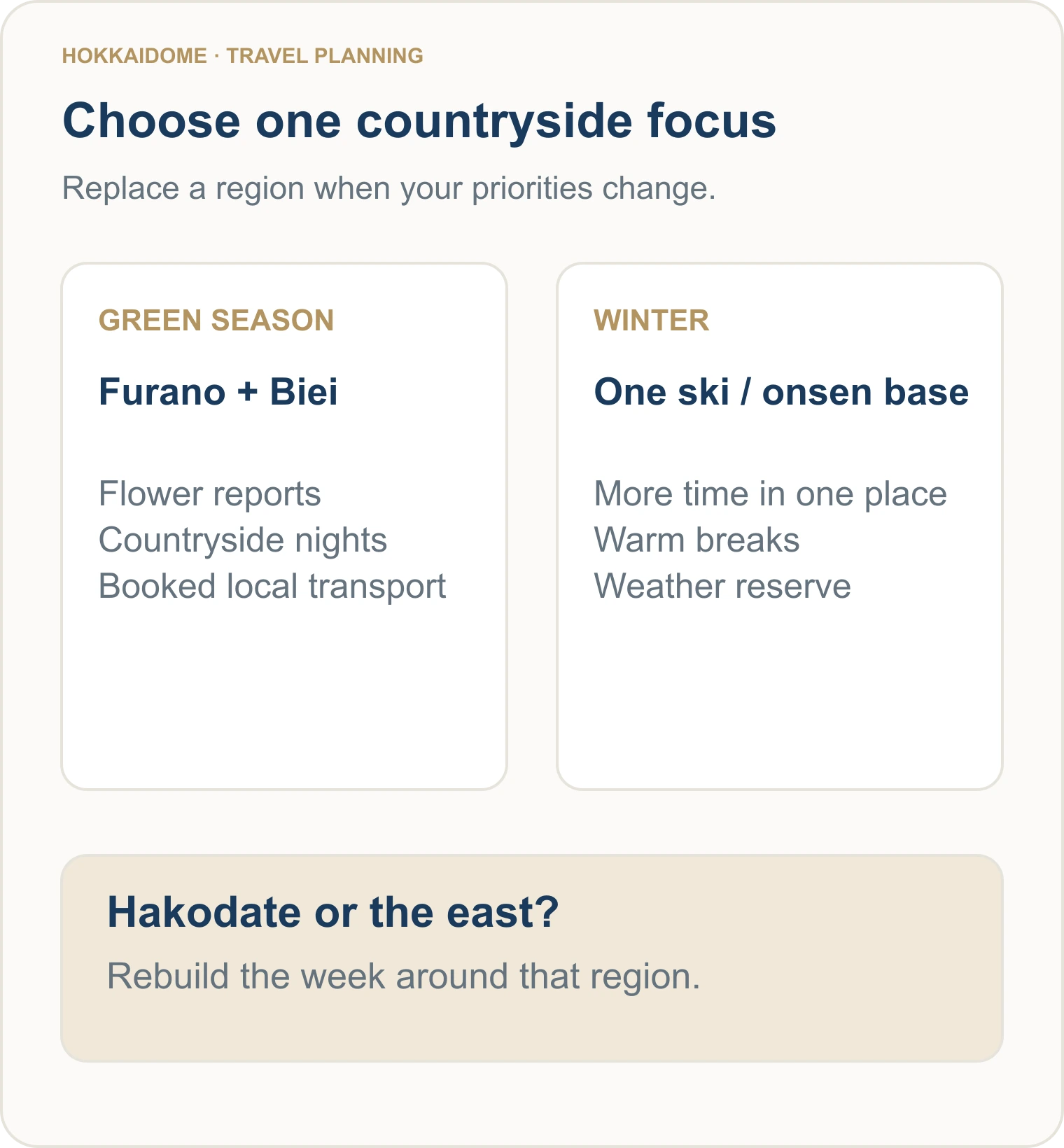
Planning alternatives. A winter resort week and a summer flower-field circuit need different bookings.
Winter and skiing
Replace the rural touring block with one ski base and give it useful resort time. Check transfers to the actual village, baggage space, lift operation and lessons separately. Use our Niseko transfer pages when that is your chosen focus.
Hakodate priority
Make southern Hokkaido the second half of the week and consider a Hakodate departure. Remove the Furano portion and rebuild the nights, intercity journey and flight connection; the night view also needs suitable weather and operating conditions.
Stay in one hotel
Keep all six nights in Sapporo, choose Otaru and a small number of suitable excursions, and accept less countryside time. A dated day tour can replace the rural overnight block, but is a longer excursion rather than the same experience.
A flower-oriented summer week and a snow-oriented winter week can share the same broad hotel pattern, but not an identical stop list. In winter, choose whether the countryside section is a sightseeing stay or a ski stay: equipment fitting, lessons and slope time compete with long sightseeing drives. Check opening dates and transport before keeping a resort night. In spring and late autumn, confirm which seasonal facilities operate and be willing to use more city time or a different overnight region. Photographs show one set of conditions, not the weather you have booked.
Keep a simple change plan beside the itinerary: a short outdoor visit when conditions are suitable, a nearby indoor or food option when visibility is poor, and direct travel to the next safe base when transport or road conditions require it. Confirm changes with the actual transport and accommodation providers; the itinerary does not create a blanket refund promise or guarantee that every substitute is available. Save confirmations offline and review the next day each evening. A week becomes more useful through these decisions, not through the length of its attraction checklist.
Book transport for the work it needs to do
You do not need the same transport for all seven days. Public transport may cover the airport, Sapporo and Otaru portion; the countryside can use a different arrangement. Compare the complete cost for your group, including the final connection from the station, before deciding that a rail pass or a private car is essential.
Use the official pass information to check eligibility, valid areas and dates. JR Hokkaido’s limited express services require reserved-seat arrangements. A pass purchase is not a seat assignment, and city subways or all rural buses are not automatically included. For a detailed comparison, see Hokkaido without a car.
Build the budget around six nights and seven days of meals, then add the actual transport. Our Hokkaido trip-cost guide separates room, person and vehicle charges. For private travel, send dates, both hotel addresses, passengers, all bags and child-seat requests. HokkaidoMe confirms English planning support, the driver arrangement, vehicle layout and inclusions in a written quote. Specialist guiding is a separate request.
Compare three ways to travel the week
A rail-and-local-transport version works best when the rural stay and selected sights have usable connections. Start with the last bus or reserved local tour, then choose trains around it. A mixed version uses rail for Sapporo and Otaru, with a confirmed countryside tour or hotel-to-hotel vehicle for the dispersed section. A self-drive version can add route freedom but requires a suitable licence, rental terms, parking and weather-appropriate ability. None of these choices means that every suggested stop is included or that a whole-week driver is necessary.
For the budget, separate six hotel nights, person-by-person rail or bus tickets, group vehicle quotes, meals, admissions and any driver accommodation allowance. A rail pass is worth comparing only after the ticketed journeys and eligibility are known; it does not cover every local connection simply because it covers a train to that town. Request only the vehicle days you need, with each day’s addresses, desired stops, full load and finish time. Compare the written JPY scope and current Terms, keeping personal hotels and food outside the transport total unless expressly included.
Seven-day Hokkaido itinerary: questions
Is seven days enough for Hokkaido?
Seven calendar days give you a useful first visit when you choose a region. This plan uses six hotel nights: three in Sapporo, two around Furano, and one back in Sapporo or near New Chitose Airport. Arrival and departure are included; it is not seven full sightseeing days.
Can I follow this itinerary without renting a car?
Yes, if you arrange the countryside connections. Use trains and city transport around Sapporo and Otaru, then compare rail plus local buses, a scheduled tour or a booked private car for Furano and Biei. Confirm the hotel entrance and return service rather than stopping your plan at the station.
Should I include Hakodate and Furano in the same week?
You can create such a trip, but it uses a substantial transfer day and needs suitable flights or rail plans. For a more relaxed first visit, choose the central route here or replace the countryside section with southern Hokkaido. Do not add Hakodate after an already full Furano stay and assume the airport return is a short final hop.
How many nights should I book in Furano?
This outline uses two consecutive nights at one Furano-area base, on nights four and five. It gives you one full countryside day plus selective stops on the arrival and return days. Choose the location according to your actual stops and meal arrangements; Furano and Biei are different towns.
Does this seven-day route work in winter?
The six-night framework can be adapted, but the summer sightseeing stops should not be copied unchanged. Use a city-and-onsen week or replace the countryside section with one ski base. Confirm seasonal opening, winter transport and flight buffers before booking.
Do I need a seven-day Hokkaido Rail Pass?
Not automatically. Compare the current price and coverage with the rail journeys you will actually take. A week that uses a private vehicle for rural days may not need a pass valid for every day. Local connections, subways and some other transport need separate payment.
Can we book only the rural part with HokkaidoMe?
Yes, ask about the specific sightseeing day or hotel change you need. Give both addresses, dates, passengers, child-seat requests and luggage. We confirm availability, vehicle layout, inclusions and a written quote before a reservation is made.
Where should we stay before an early flight?
Check the first workable connection for your actual airline and terminal. If a Sapporo departure cannot meet the required check-in time with a sensible buffer, move the final night to suitable airport-area accommodation and confirm its transport. This is a booking decision, not an extra morning sightseeing opportunity.
Sources and booking checks
Reviewed 7 November 2026. The overnight sequence and sightseeing choices are HokkaidoMe planning suggestions. Check services, opening dates, weather and booking terms for the actual journey.