New Chitose to Sapporo
Compare the airport journey and a direct hotel transfer.
Practical details · more time to enjoy the trip
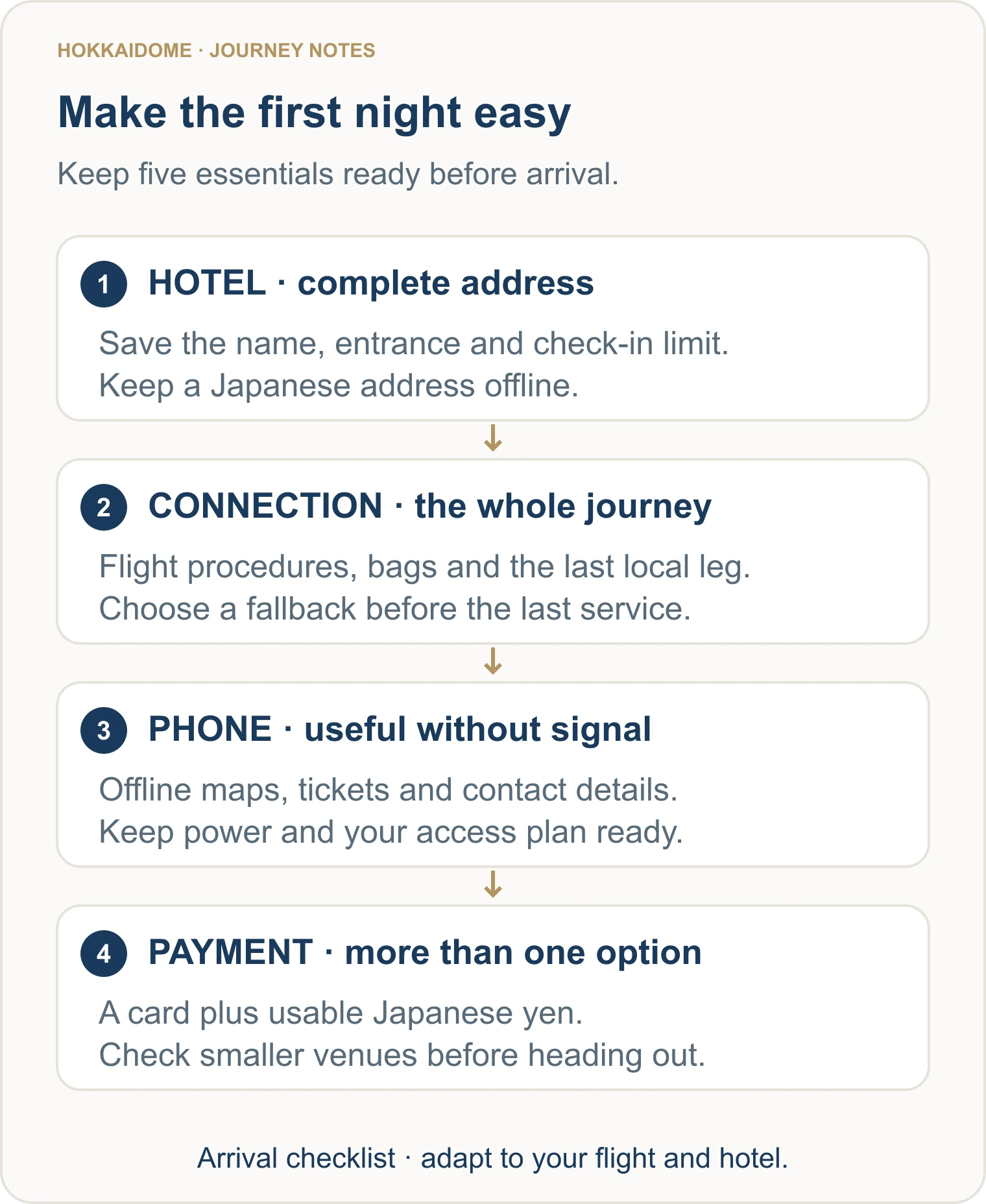
Get the everyday decisions ready before you arrive: the whole airport journey, usable payment options, a phone plan, a checked lunch and a reliable way back. Then leave room to enjoy Hokkaido.
The details that improve a Hokkaido holiday are often small: a hotel address saved before the flight, yen for a rural stop, the right station exit with luggage and a return bus checked before setting out. Prepare those details once and you can spend more of the trip enjoying the place you came to see.
Start by choosing one main region. Sapporo and Otaru, Furano and Biei, southern Hokkaido and the eastern national-park areas create different travel patterns. A convenient hotel in one region does not make every destination an easy day trip. The Hokkaido trip planner helps turn dates into hotel nights and a route; this page covers the practical decisions that keep that route running.
If this is your first visit to Japan, also read the first-time Japan travel guide. Keep current entry and customs requirements with the relevant official authorities. Here the emphasis is on getting around Hokkaido, managing daily needs and having useful alternatives when a journey changes.
Use the airport code on your ticket and the complete hotel name. New Chitose, Asahikawa and Hakodate are separate gateways; a transfer booked for one does not apply to another. Match the arrival time in Japan with baggage collection, the actual ground service and the accommodation’s check-in arrangements.
Save the hotel’s Japanese address and entrance instructions offline. If you have booked a vehicle, follow the confirmed terminal and meeting point. If using scheduled transport, check the final walk or connection from the station or bus stop. A hotel described as being “in Sapporo” may still require another journey after reaching Sapporo Station.
Keep the arrival evening simple. Choose a nearby meal option and know what happens if the flight is delayed. Check the last usable ground connection rather than relying on a service you found in an old travel post. Discuss late check-in directly with the accommodation before travel.
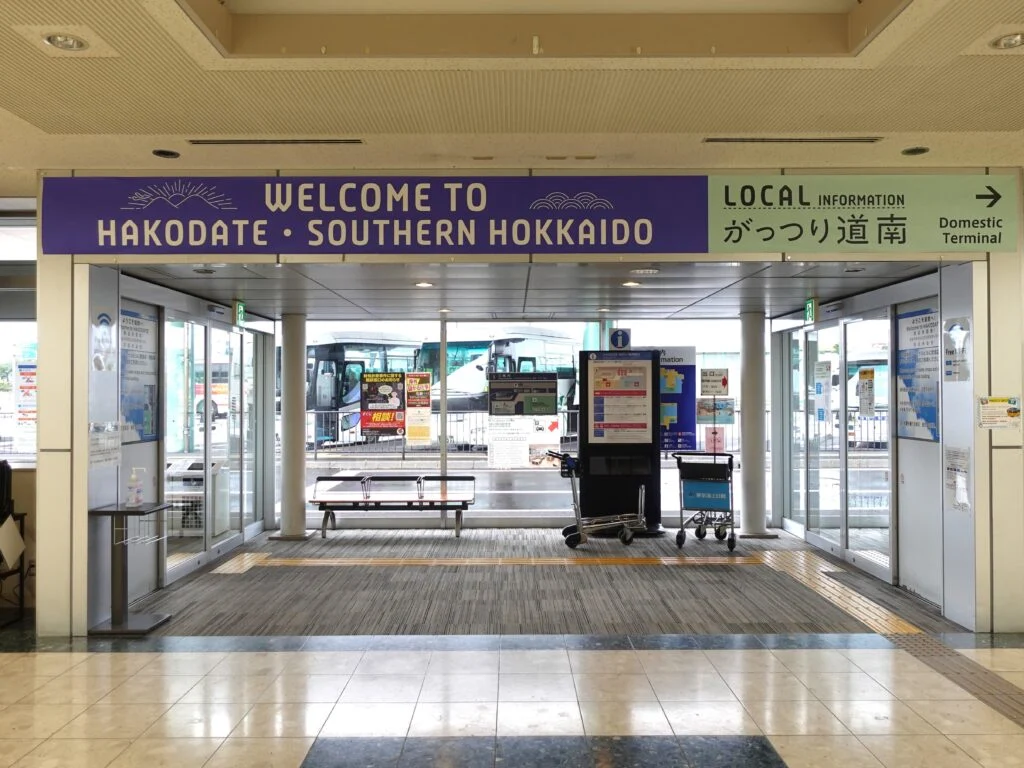
Compare the airport journey and a direct hotel transfer.
Check the actual destination and onward service for AKJ.
Match the arrival point to the first and last hotel nights.
JNTO’s credit-card guide describes broad card acceptance while still pointing travellers to cash access and venue-specific checks. In practice, ask the actual shop, lodging or activity provider what it accepts before a rural day. A familiar payment logo at one branch does not establish the arrangements everywhere else.
Keep smaller usable denominations for modest purchases and a payment alternative that does not depend on the same phone or card. Check your issuer’s overseas settings and fees before departure. For withdrawals, JNTO identifies Japan Post Bank and Seven Bank as options; actual card compatibility, operating hours and charges still need checking.
Treat transport payment separately. A city IC card can be convenient where supported, but it is not a universal Hokkaido ticket. Check the specific rural bus, intercity journey and any separate train reservation or supplement. The JR-pass guide and money and tipping guide cover those decisions in more depth.
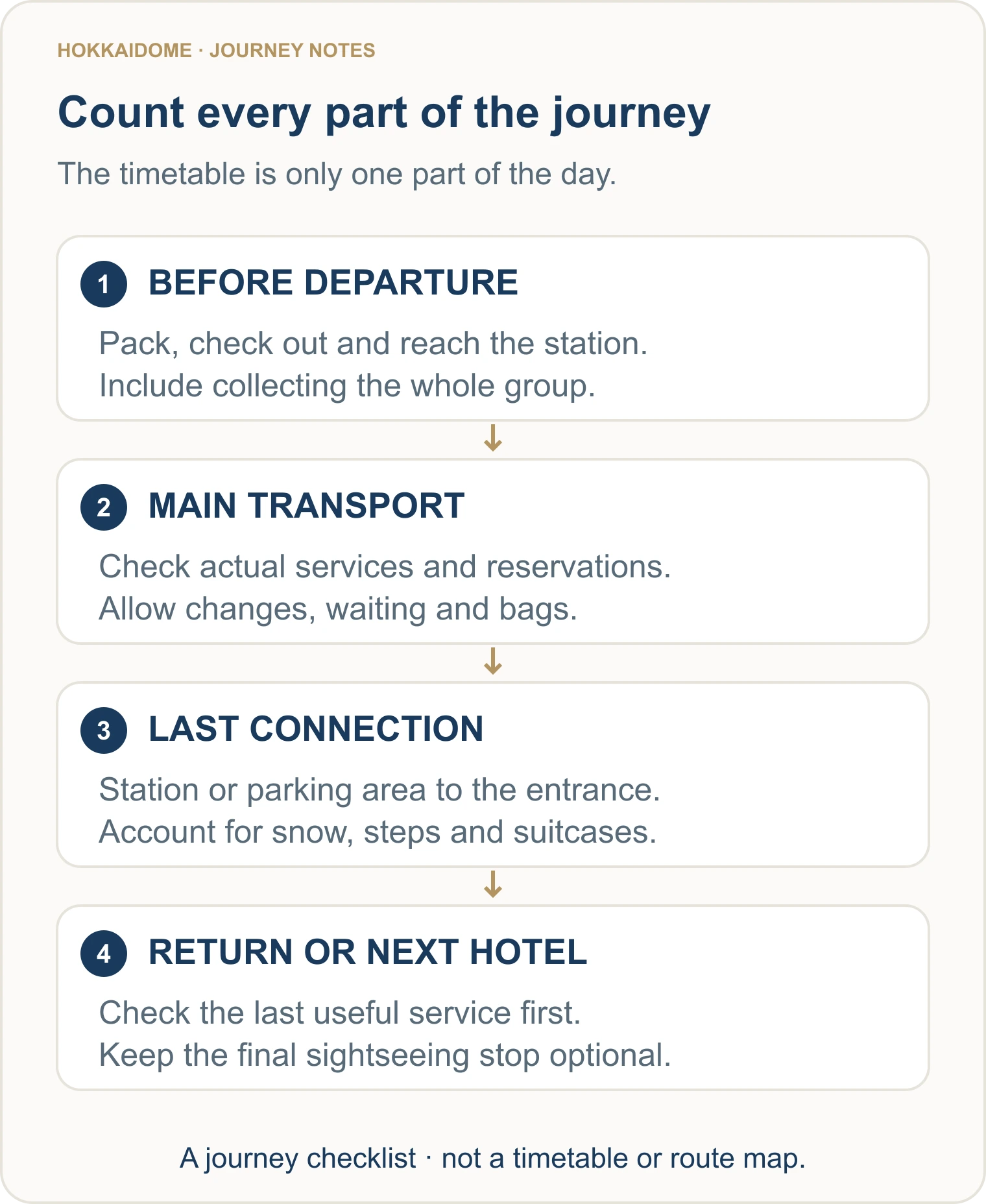
A timetable measures only part of a sightseeing day. Add packing, checkout, reaching the station, waiting, changes and the final walk to the entrance. On a hotel-change day, bags stay part of the calculation throughout. The attraction’s name and the nearest station’s name can be similar without the two being close together.
Use the current JR Hokkaido information for trains and the actual bus operator for local services. Check operating dates and reservations where applicable. A seasonal service shown in another traveller’s itinerary is a lead to investigate, not a year-round connection.
Before setting out, choose a return service that leaves a buffer. If the final bus is your only viable way back, make the sightseeing plan shorter. A taxi or private vehicle also needs actual availability; a remote stop does not acquire a waiting car just because an app displays a road.
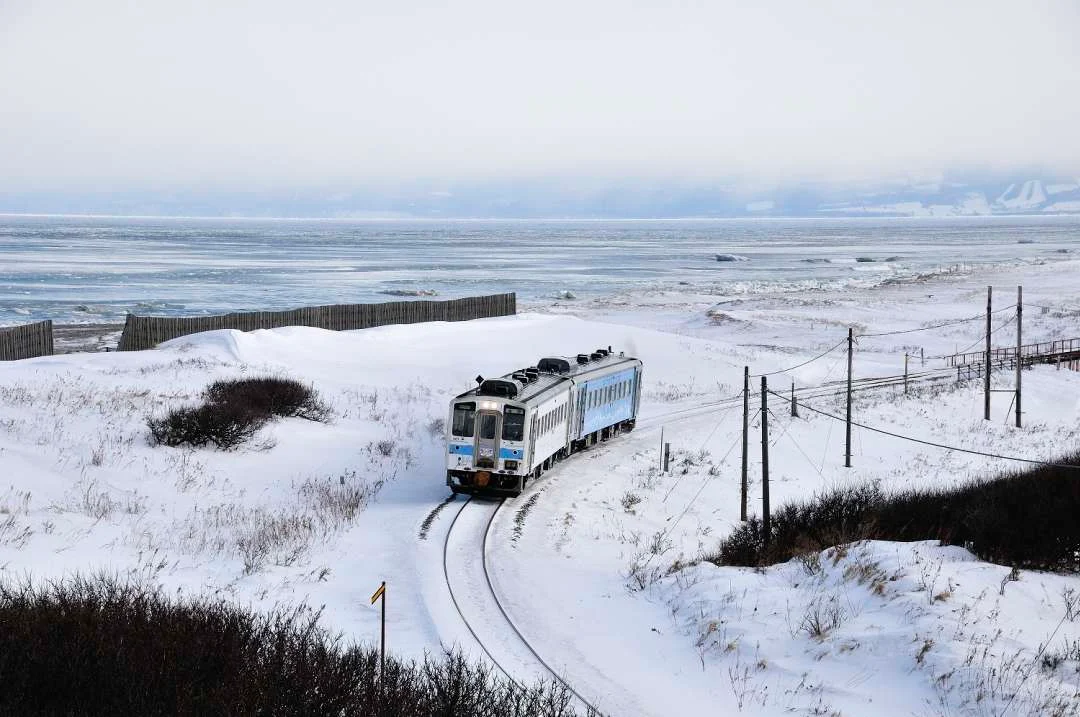
For a convenient city route, independent travel may be all you need. For several rural stops, child seats or a hotel transfer with bags, compare a pre-arranged car. Our car-free travel guide explains mixed transport choices; sightseeing transfers can connect two hotel bases without a return drive.
Choose your data arrangement before arrival and check device compatibility and activation instructions. Save maps, tickets, accommodation details and a contact method offline. Keep a charger and power bank accessible; confirm airline rules for the equipment you carry. A data-only service is different from having a local voice number.
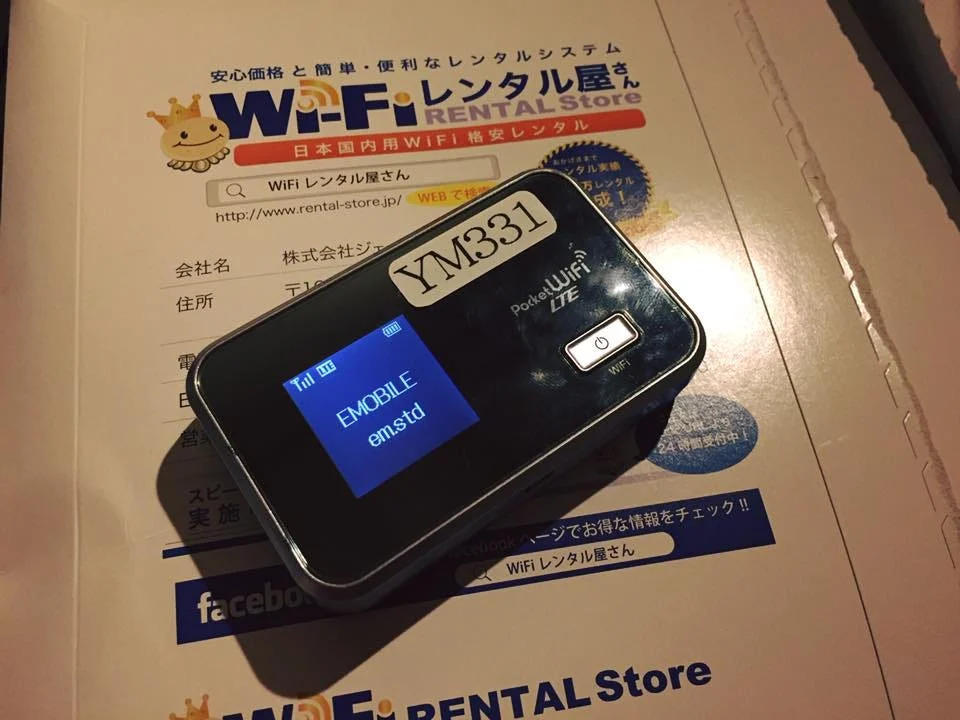
Use the eSIM and pocket-Wi-Fi comparison to choose between an individual connection and a shared device. If the group shares one hotspot, agree what happens when people separate. Keep the essentials available without depending on a particular person’s battery.
Choose lunch before a long rural drive, including the venue’s current opening and last-order arrangements. When dietary requirements matter, contact the actual kitchen in advance and keep a workable alternative. The gluten-free and allergy-planning guide explains why a menu label alone is not a complete answer.
Use the seasons guide to match activities and packing to the region. Keep the day’s outer layer, suitable shoes and essentials separate from the items you will not need until the hotel. Leave a nearby indoor or shorter-route alternative for weather changes rather than trying to rescue the day with a distant detour.
| Before leaving | What to keep ready |
|---|---|
| Destination and timing | Full address, opening arrangements, reservation and the stop you would remove first. |
| Travel and return | Actual boarding point, full connection and a return with a useful buffer. |
| People and bags | Walking pace, child seats where needed, suitcases and any bulky equipment. |
| Daily essentials | Yen, card, charged phone, offline details, suitable clothing and a checked meal plan. |
Keep your accommodation and travel contacts somewhere you can reach without a network connection. JNTO’s emergency page links current visitor-support and medical-information resources. Before an outdoor activity, use the actual operator’s requirements and local notices; a city sightseeing checklist is not a mountain safety plan.
If you would like help with a specific day, send the full route and practical requirements in the form. Our planning team communicates in English. Drivers assist with conversational English and translation apps; specialist guiding is a separate request. You can keep straightforward city days independent and ask us only about the journeys that need coordination.
Choose one main region, make the first airport-to-hotel journey workable, carry more than one payment option and save essential information offline. Check the full return journey before a rural outing. Use this practical checklist alongside a separate route plan; a long list of attractions is not the same as a usable holiday.
Keep usable Japanese yen as well as a card. Card acceptance and ATM access depend on the actual venue, issuer and location. Ask smaller shops, rural lodgings and activity providers before travelling. Do not leave the first cash withdrawal until you reach a remote destination or need to pay immediately.
Do not assume that a city transport card covers every rural bus, intercity service or train ticket. Check the specific operator and service, including any separate limited-express or reservation requirement. A stored-value balance is not proof that a particular journey is covered.
Only if the route and group need it. Convenient city days can work independently, while a rural sightseeing day or luggage-heavy hotel change may justify a private vehicle. Compare complete journeys, total group costs and actual bags. Ask for selected days or transfers rather than adding an idle car automatically.
Keep your hotel’s full name and Japanese address, the entrance or meeting instructions, confirmed tickets, contact details and the first ground journey available offline. Check your data plan and keep charging equipment accessible. A data-only plan may not provide the voice service you expect.
Pack for your actual region, season and activities, then keep the arrival-day essentials accessible. Use layers and appropriate footwear for the expected surfaces. A city forecast does not describe a mountain outing. For winter, do not bury outerwear and suitable shoes under all the checked-in luggage.
Check the return before leaving, using the timetable for the actual date and stop. Include the walk or local connection from the attraction. Choose an earlier usable service as the plan and keep the last stop optional; the final departure should not be your only workable route home.
Send Japan-local dates, flights, full hotel names and addresses, the journeys you need, all passengers and bags, and two priorities. Include child-seat or shorter-walking requests where relevant. Our team confirms route, vehicle, availability and a written quote before a booking is made.
Reviewed 20 October 2026. The checklists are HokkaidoMe editorial planning tools. Payment acceptance, transport operation and individual bookings should be confirmed with the relevant provider for your date.
Plan it with HokkaidoMe
Send the dates, full hotel addresses, passengers, luggage and the days you want help with. Include any child-seat, shorter-walking or meal-stop timing needs.
We reply in English with availability and a personalised quote. A form enquiry does not create a confirmed reservation.