HokkaidoMe planning team · Reviewed 7 November 2026
5 calendar daysFlight days included
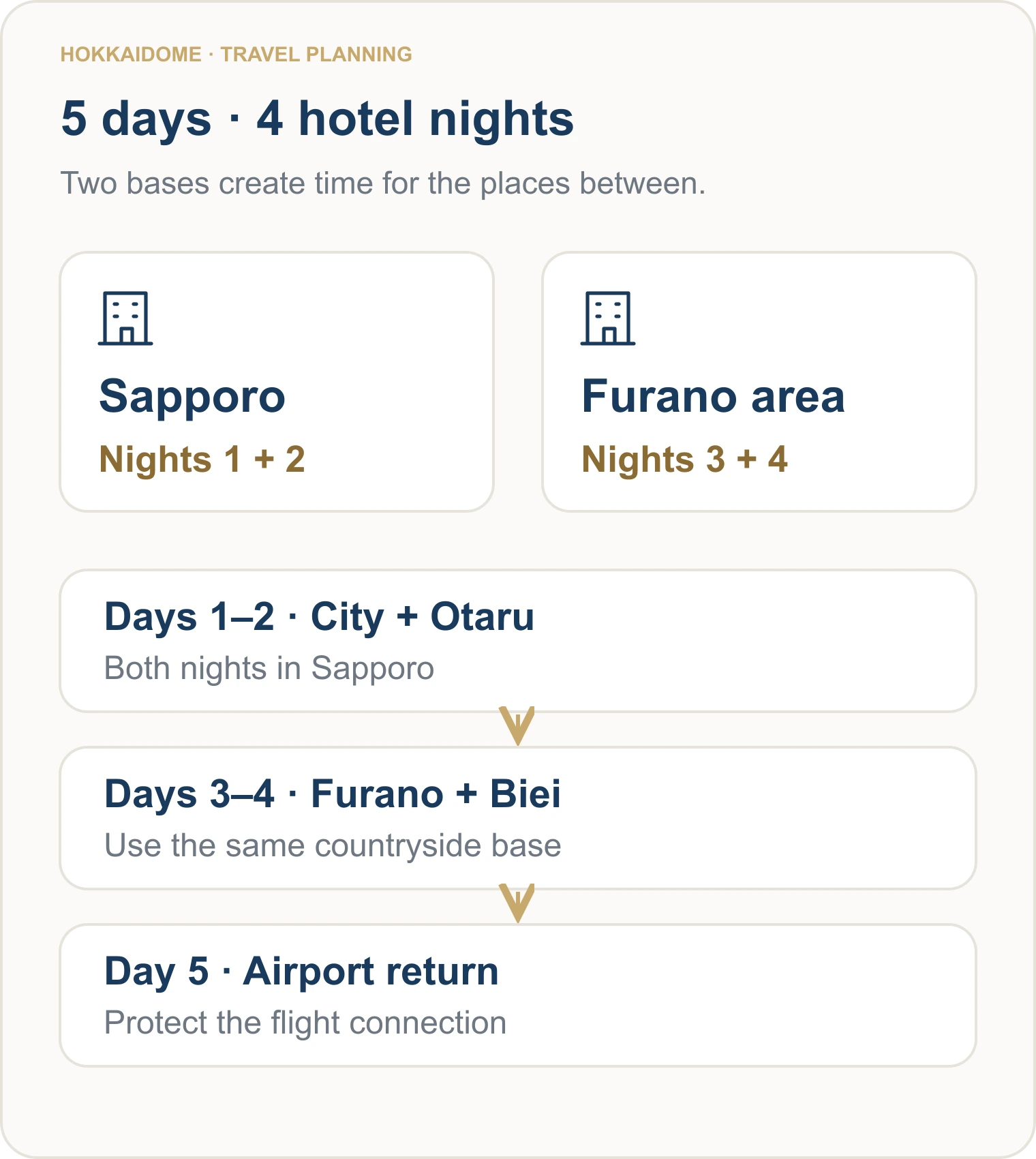
4 hotel nightsSapporo 2 + Furano area 2
Two main basesLess packing, more local time
Five days, four nights and two useful bases
This Hokkaido 5 day itinerary combines Sapporo and Otaru with a dedicated stay around Furano and Biei. The main version suits the green season, especially travellers interested in flower farms and the countryside. It uses two nights in Sapporo followed by two around Furano, rather than moving hotel after every sightseeing stop.
The route assumes arrival at New Chitose Airport on day one and departure from there on day five. The first and last days include flight logistics. A late arrival, an early flight or a lodge far from town changes what will fit. Treat the outline as a basis for choosing hotels and transport, not a promise to visit every attraction regardless of conditions.
Day
Main journey and priorities
Overnight
1
New Chitose → Sapporo; check in, short city walk and dinner
Sapporo · night 1
2
Otaru day trip; canal, lunch and Sakaimachi; return to Sapporo
Sapporo · night 2
3
Sapporo → Furano area; one seasonal stop if the journey allows
Furano area · night 3
4
A selective Biei and flower-country sightseeing day
Same Furano-area base · night 4
5
Furano area → New Chitose; protect the flight connection
Departure · no fifth night
Four hotel nights in two bases: Sapporo on nights 1–2 and the Furano area on nights 3–4, with an airport return on day 5. This is a planning schematic, not a geographic map.
Furano, Biei or Asahikawa: choose the right two-night base
The label “Furano–Biei” covers a region, not a hotel district where every sight is walkable. Furano suits a stay whose main interests are its town, nearby food stops and the southern part of the countryside route. Biei can reduce the first journey towards Biei’s hills or Shirogane. Asahikawa is an alternative if urban dining and rail connections matter more, but adds a journey back to the rural sights. Compare the exact hotel address with the first and last visits on both days; a town name alone is insufficient.
For a no-car stay, confirm dinner and breakfast access as carefully as the room. A scenic rural property can require another transfer for meals, and a railway station nearby does not mean a bus serves the farm you want. Ask the accommodation about its actual pickup, meal booking, arrival cutoff and nearby food options; do not assume a shuttle is included. Staying in one property for both countryside nights avoids another checkout. If you substitute Asahikawa or a final airport-area night, change the overnight table as well as the sightseeing text.
Days 1–2: Sapporo and an Otaru day trip
Day 1: arrive and use the city as a comfortable base
Arrange the airport-to-hotel journey first. JR’s fastest Special Rapid takes 33 minutes to Sapporo and its fastest Rapid takes 37 minutes, before arrival formalities, waiting and the final hotel walk. A direct private vehicle is another option when luggage or the group’s needs make it worthwhile.
Use the remaining day for one central area, such as an Odori walk and dinner, rather than racing between several ticketed sights. Confirm luggage storage or check-in with the hotel. If your flight is delayed, keep the evening simple. See our New Chitose–Sapporo transfer page when comparing direct vehicle options.
Day 2: Otaru without a hotel move
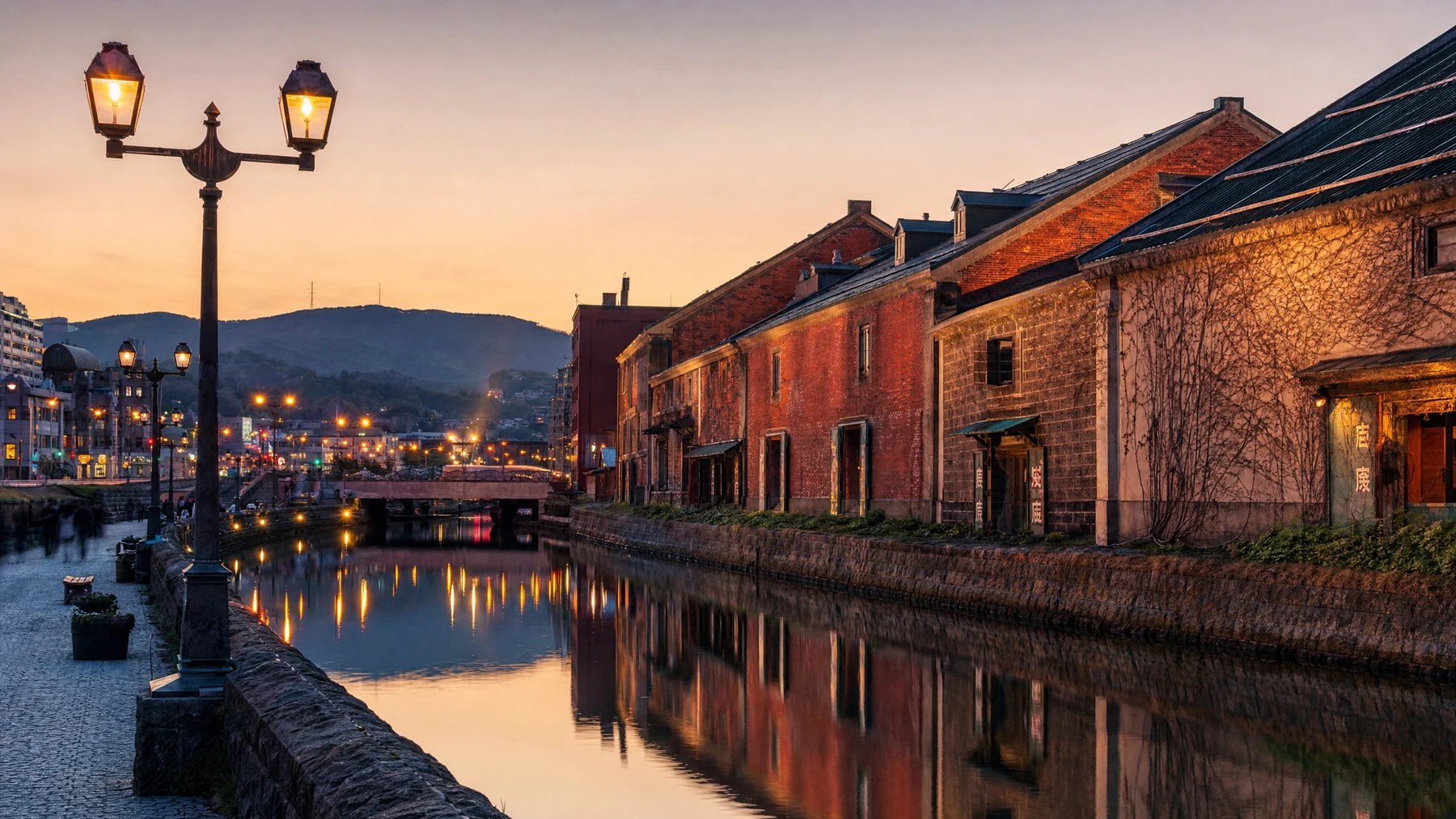
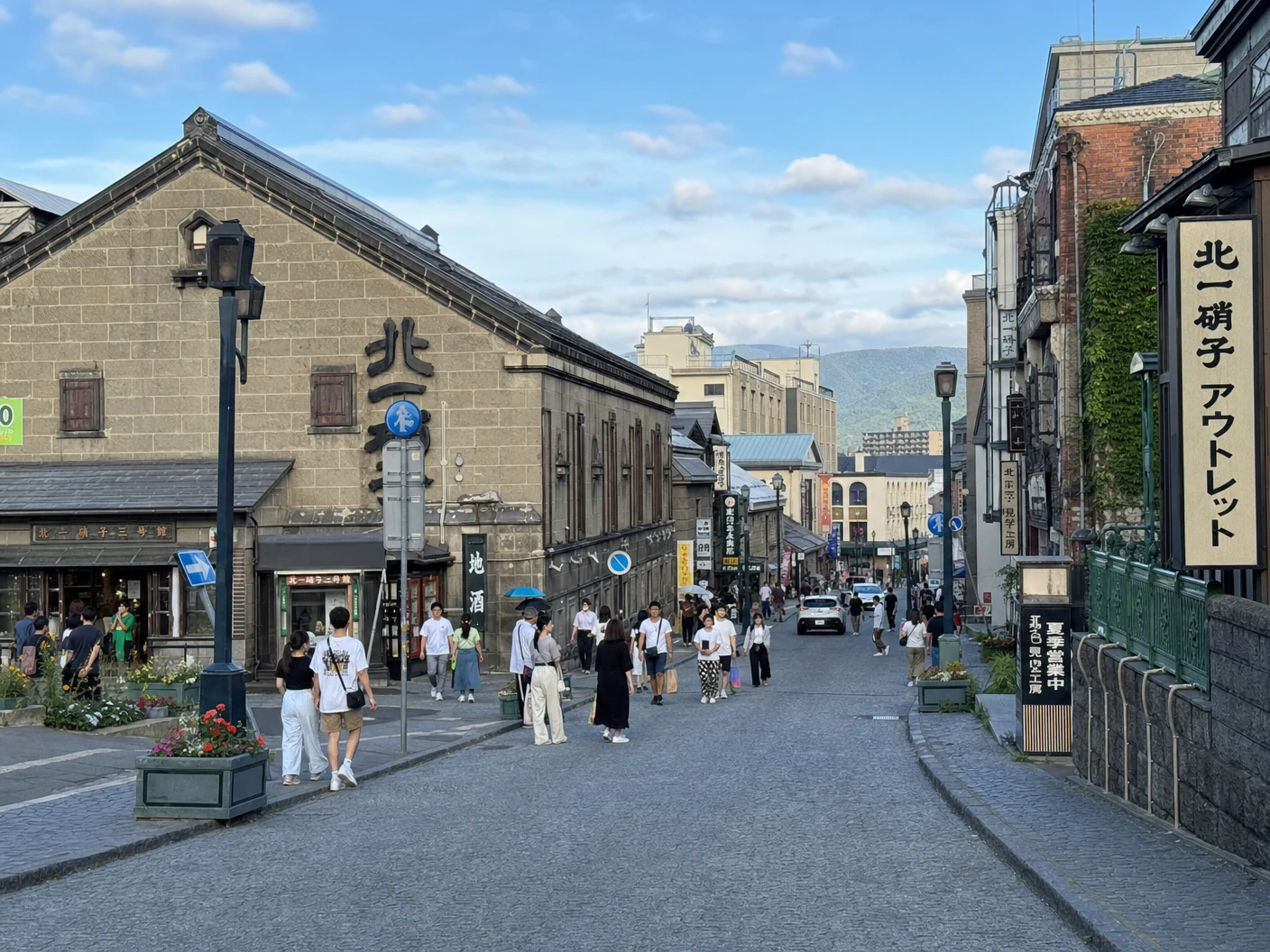
Leave the main suitcases at the Sapporo base where permitted and use JR or an agreed private excursion for Otaru. Walk the canal, choose a lunch and explore Sakaimachi’s shops and craft heritage. Give a reserved craft activity its own time instead of expecting it to fit between every other stop.
Return to Sapporo for the second night. This avoids carrying luggage on a short sightseeing visit and leaves you ready for the next day’s regional move. If Yoichi is essential, use the Otaru and Yoichi plan and make that the day’s focus; a distant coastal extension is not a free addition to a relaxed canal visit.
Visit Otaru from the Sapporo base, then return to the same hotel for the second night.
Keep the Otaru day separate from the countryside transfer
Using day two for Otaru lets you leave the main cases in Sapporo, eat without watching a countryside check-in deadline, and return to the same room. A canal and Sakaimachi day gives enough choice for a workshop, café or harbour walk without assuming that all of them fit. If you want a timed activity, place lunch and the return train around it. Do not add Yoichi or Shakotan just because the map places them west of Sapporo: they change the day’s travel and the amount of time left in Otaru.
If you want to move directly from Otaru to a countryside hotel, treat it as a replacement route and request the whole hotel-to-hotel journey. You will carry all luggage, need a different pickup point and have less margin for an evening canal visit. That can work for a particular group, but is not the same service as a Sapporo-return day trip. Compare the revised stop list, hours, overnight address and total before changing your accommodation. Keep a booked workshop only if its finish leaves enough travel time afterwards.
Day 3: move to Furano, then choose one local priority
Check out after breakfast and travel towards your Furano-area accommodation. This is a real intercity journey, not a short hop between attractions. Leave space for collecting the party, loading cases, a meal or comfort break and the final hotel approach. Confirm the actual route and expected arrival with the transport provider.
For public transport, use the service operating on your dates. JR’s Furano-area information includes seasonal trains, and rail connections may involve changing at Asahikawa or another relevant station. Do not assume a summer direct train runs every day of the year. Kamui and Lilac limited expresses towards Asahikawa use reserved seating under the 2026 rules.
For a private car, combine the hotel move with only the stops that fit the agreed hours. In July, one flower-farm visit can be the priority. At another time of year, choose an open local attraction or simply arrive early enough to enjoy the accommodation. A driver cannot turn the moving day into unlimited sightseeing.
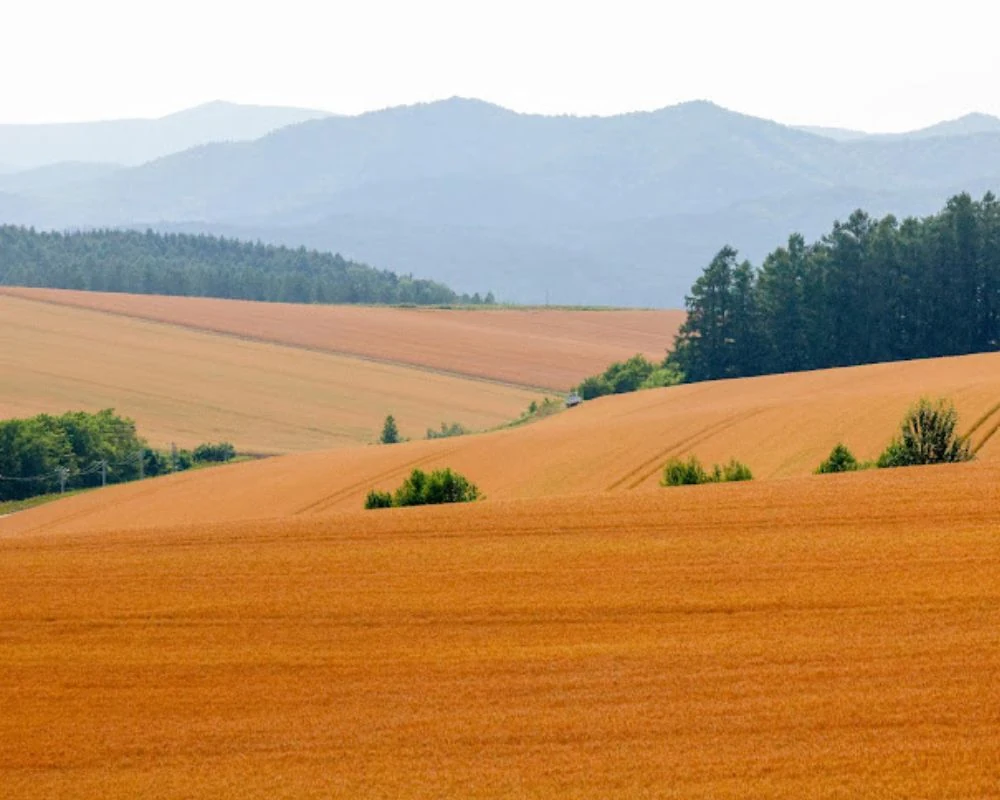
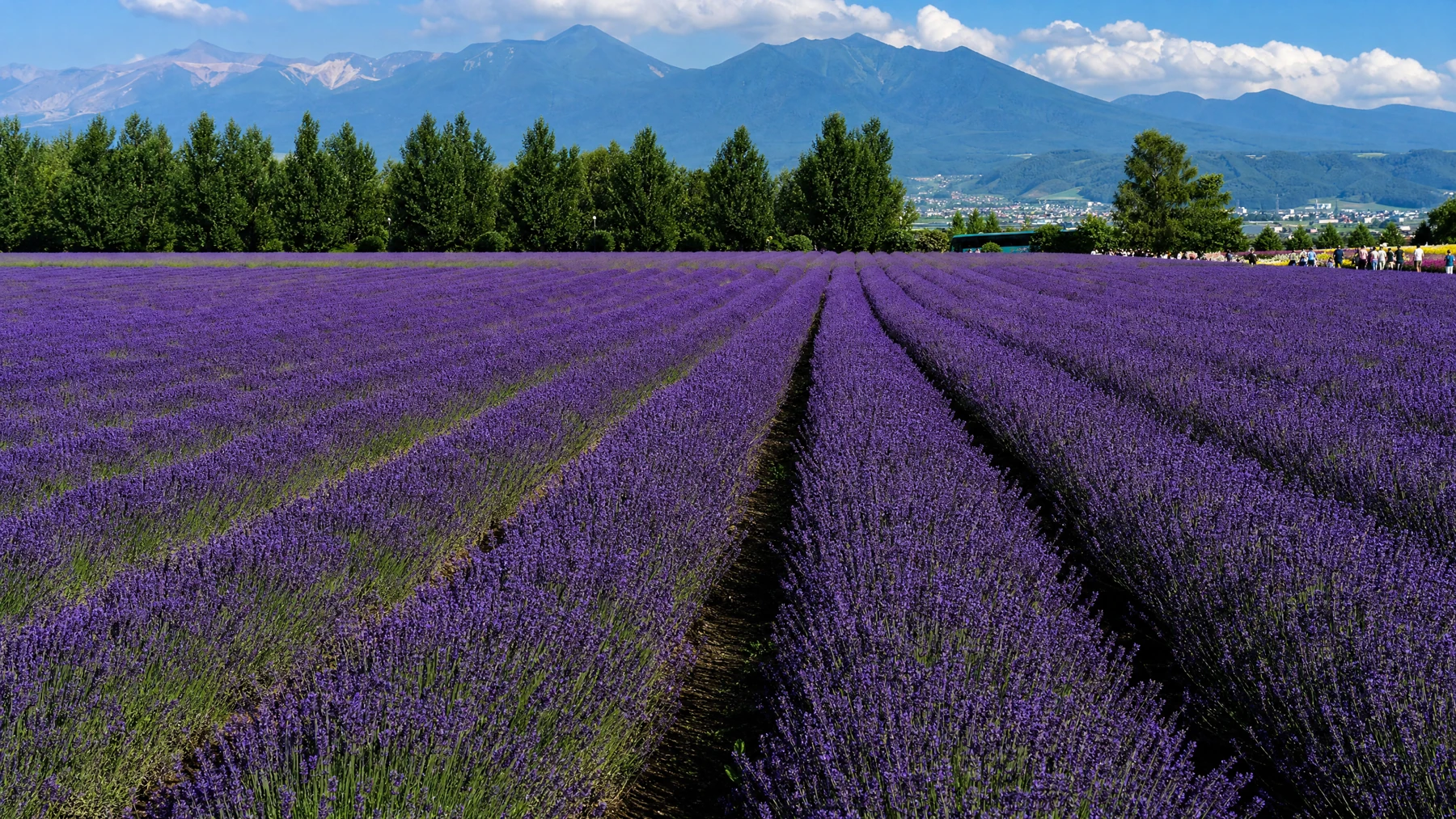
July is the main lavender planning window. The flowers visible on a particular date depend on the field, weather and harvest.
The hotel move is part of day three’s sightseeing budget
Start with checkout, baggage loading, the outward journey and the receiving hotel’s arrival arrangements. Then add one main visit, not a full Furano-and-Biei circuit copied from a day tour. If the first priority is a flower field, make the rest of the afternoon a nearby meal and check-in. If it is the Blue Pond, allow for its position away from the town centre and confirm the onward journey. A stop on a map can consume a much larger block once parking, paths, toilets and photography are included.
Rail is a useful city-to-city link, but the last leg needs a separate plan. JR’s official Blue Pond example combines a limited express, a local train and a route bus: that shows access is possible, not that every rural attraction is linked by a convenient through service. Check the actual date’s connections and return bus before choosing the outward train. Under the current rules, regular limited expresses require reserved seating; the airport Rapid is a different train category. Include any separately paid bus in the budget.
Day 4: give Biei and the flower country a full day
Build the day around two or three priorities
Decide whether the main reason for the day is flowers, the Blue Pond or a countryside drive. Those interests can be combined selectively, but every extra stop adds walking, parking and travel. A proper lunch and a rest for children also need time. Keep a fourth stop optional rather than making it a condition of a successful day.
Farm Tomita and other flower gardens have their own seasonal appearance and visitor arrangements. The Blue Pond changes with weather and light; snow and ice can hide the water in winter. Biei’s hills are working farmland, so stay on permitted paths and use designated stopping places. A photograph is not permission to enter a field.
Match the local transport to the stop list
A route bus can reach the Blue Pond, as listed by Biei’s tourism association. That does not mean one bus links all your chosen gardens and viewpoints. Check the return journey as carefully as the outward trip. A dated sightseeing bus may suit a fixed list; a private car suits a selective route and the group’s pace.
Use the Furano and Biei tour guide for the detailed seasonal choices, vehicle considerations and current published charter starting rates. Starting locally can leave more sightseeing time than a return trip from Sapporo. Give the provider the exact hotel and all luggage, particularly if you are changing accommodation.
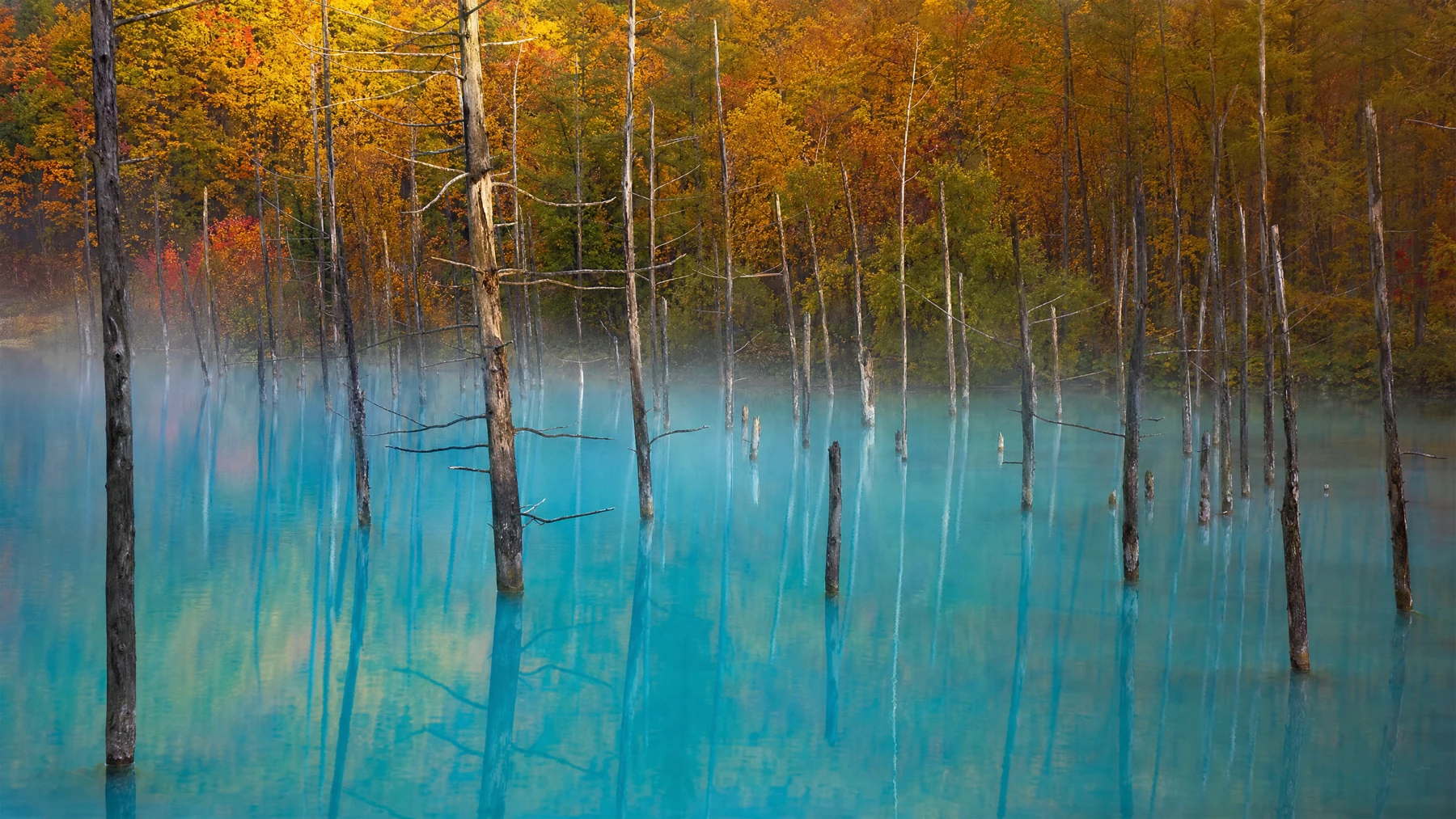
The Blue Pond is one possible priority, not a guaranteed blue-water view in every season.
Choose a flower morning or a Shirogane morning
For a flower-focused day, begin around your actual countryside base and give the main field time before adding another garden. Farm Tomita’s Irodori Field guide lists a July flowering window, with its usual best period in mid-to-late July; other fields and varieties have their own calendars. “Summer” is not a guarantee of the same landscape throughout June, July and August. Check the current flowering report, then decide whether a second flower stop adds variety or simply repeats the first while using another part of the day.
For a Shirogane-focused day, pair the Blue Pond area with a manageable nearby visit, then leave time for lunch and the return to your base. Biei’s tourism guidance warns that snowmelt and heavy rain can cloud the water, and that the surface is snow-covered in winter. A blue-summer-water photograph is therefore not a winter promise. It also identifies congestion on fine days, especially around the early afternoon. Consider an earlier visit when access allows; do not make a precise colour or an empty viewpoint part of a paid expectation.
Day 5: return to the airport with a protected buffer
Build the final day backwards from your flight’s check-in requirement. Include the complete road or rail journey, loading or station access, connections and an allowance for the conditions. The countryside hotel’s location matters. Do not treat a journey estimate to Furano Station as the same thing as travel from every lodge to the airport terminal.
For a later flight, a short local stop may be possible after the transfer plan is settled. An early flight can make a final night closer to New Chitose or Sapporo more sensible; that changes the hotel pattern and may shorten day four. Make that decision before booking a remote fourth-night stay.
If suitable flights leave from Asahikawa Airport, compare an alternative final transfer from the Furano area. It can avoid part of the backtracking, but is a different airport with different flights and timings. Our Asahikawa Airport–Furano guide explains the bus and private-car options in both directions.
When four nights should become three bases
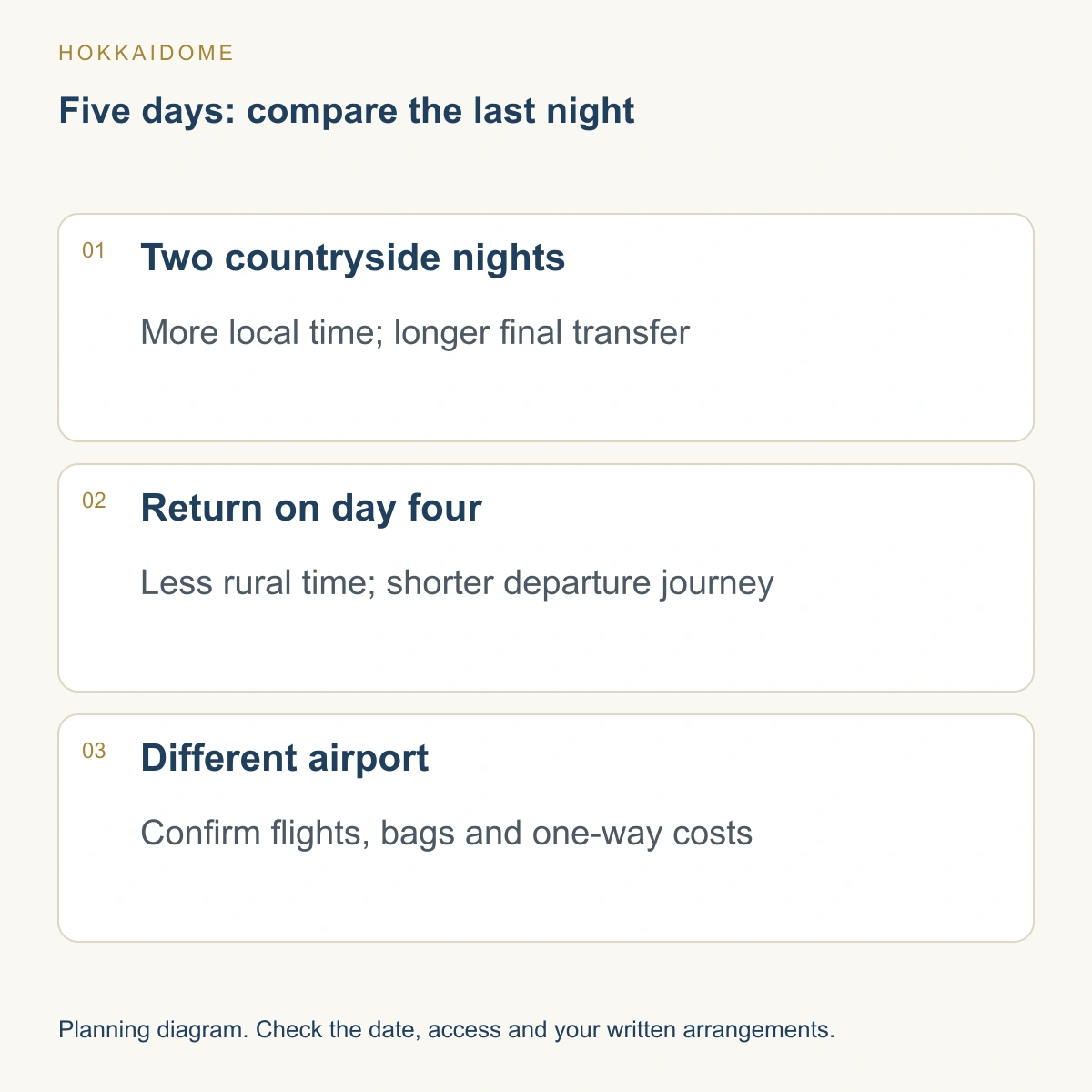
Two nights in the countryside are most useful when the fifth-day flight allows a realistic return. If the flight is early, replace the fourth night with Sapporo or an airport-area stay and bring the final long journey forward to day four. You lose a second countryside evening but gain a shorter departure-day connection. Do not keep both versions in one day-by-day table. The comparison is between two genuine alternatives: more rural time with a longer final transfer, or less rural time with an easier last morning.
An Asahikawa departure is another route only if a suitable flight is available for your destination and date. Check the complete air itinerary, rental return or transfer endpoint and baggage arrangements before paying for an open-jaw trip. A cheaper fare from a different airport does not automatically save money after a one-way vehicle charge or another hotel. For a New Chitose return in winter, use the actual provider’s road or rail plan and disruption advice; a fixed summer driving estimate cannot be converted into a guaranteed flight connection.
Choose the season before fixing the exact stops
July and the flower season
Lavender is the main July draw, while other flowers have different dates. Check current reports and expect busier roads and car parks. Two nights locally give more flexibility than one rushed pass through the region.
Spring and autumn
Confirm which gardens and attractions are open. Use countryside scenery, food and shorter walks as conditions suit. Do not sell an April or late-autumn itinerary using a promise of midsummer flower fields.
Winter
Use a snow-specific route with fewer outdoor stops, warm breaks and extra travel allowance. Skiing needs its own time. A city-and-onsen version can be a better fit than repeating the summer circuit.
For a ski holiday, choose a Niseko or Furano resort stay as the purpose of the trip and reduce touring. Our winter family guide discusses slower days and practical support; the Sapporo five-day itinerary offers a city-based alternative.
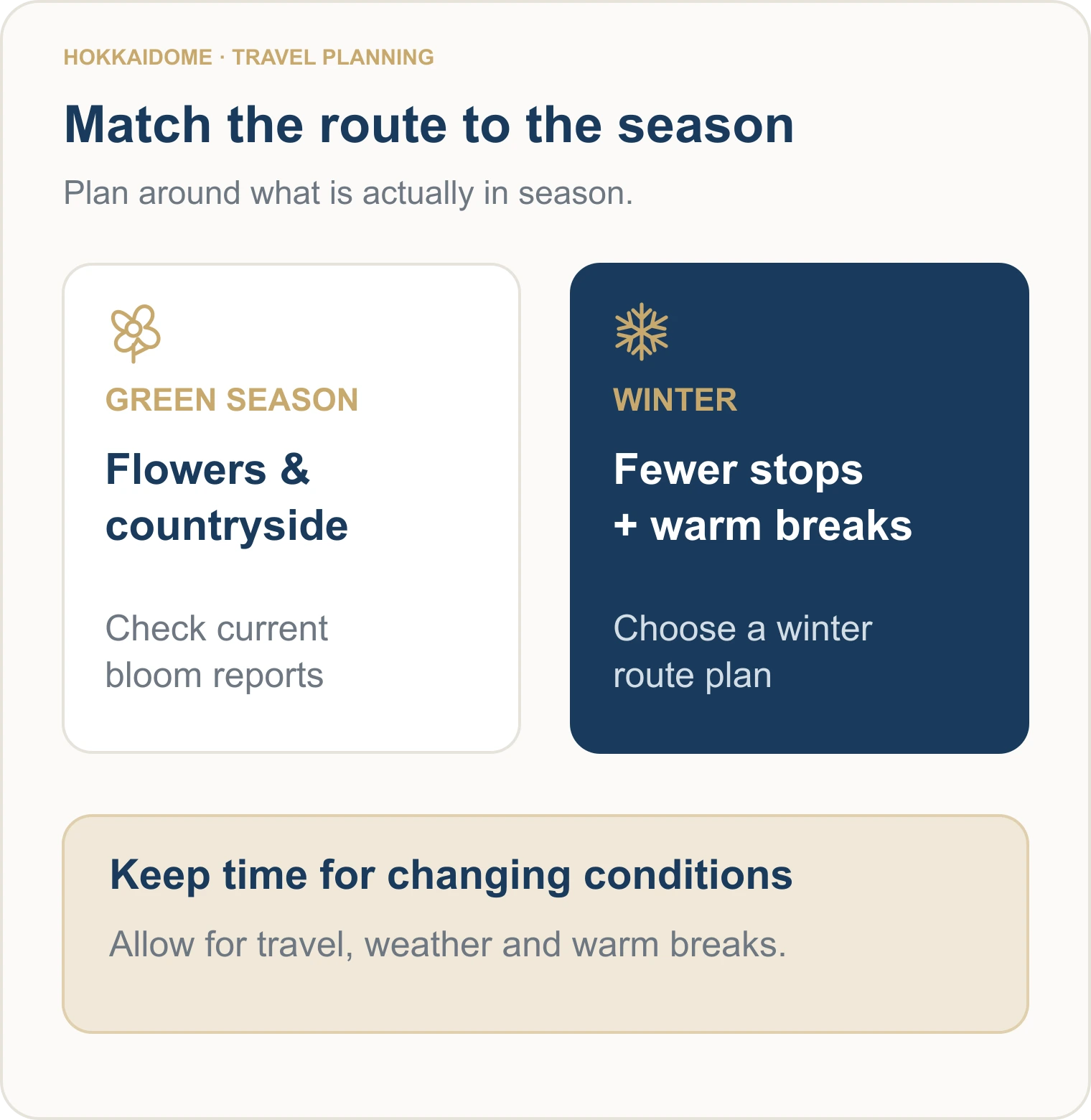
Match the route to the season: check current flower conditions in the green season, or choose fewer stops, warm breaks and a winter-specific route.
Book the route, hotel bases and driving days together
You do not need a driver for every day to use this plan. One approach is independent airport and city transport, followed by a booked countryside day and the required hotel transfers. Another is a private arrangement for the regional section. Compare what is actually included, especially suitcases on a hotel-change day and any separate attraction bookings.
HokkaidoMe quotes the car, driver and agreed route in Japanese yen. The starting-rate guide explains charter conditions, while a multi-day request needs a written total for the dates, driving hours and vehicle. Meals, your hotels and attraction admission are separate unless expressly included. Driver accommodation for overnight work has separate arrangements and should appear in the quotation.
Send one complete list: flights, all hotel addresses, adults and children, suitcases, ski bags or stroller, required child seats and your top three sightseeing priorities. Our planning team replies in English; drivers use conversational English and translation apps. Request specialist guiding separately if it is part of the experience you want.
A 20% deposit makes the booking provisional. Pay the remaining 80% by 21 days before the first pickup; full payment confirms the booking. Short-notice requests require an availability check and full payment.
Children, luggage and meals on a two-base itinerary
Count the move-day load before selecting a vehicle or train. Include every suitcase, folded stroller, mobility aid and child-seat request, rather than only the adult headcount. A day bag that works for Otaru is different from the full load travelling to Furano on day three. Keep a change of clothes, medicines and weather protection accessible without opening every case. If you are considering forwarding bags, verify the carrier’s delivery day, hotel acceptance and cutoff before relying on it; carry essentials for any gap.
Plan one proper seated meal and a warm or shaded break before filling the remaining day with photographs. For food allergies or dietary restrictions, contact the actual restaurant or accommodation in advance with the ingredients that must be avoided; a translated menu alone does not establish safe preparation. An indoor food workshop can be a rain option only when its age, reservation, language and operating arrangements fit. Keep one confirmed option and one simple fallback near the base, rather than assuming rural restaurants operate at city hours.
A five-day budget and booking order that match the route
Build five columns: flights, four hotel nights, daily transport, meals and visits, then a contingency amount. Write which transport is independent rail, a shared day tour, a direct transfer or a sightseeing charter; otherwise the same day can be counted twice. Ask whether any vehicle quote assumes a Sapporo return, a regional hotel finish or multiple days, and list the driver accommodation allowance where applicable. Keep your own accommodation and attraction tickets separate unless the written quote explicitly includes them. The transport enquiry is not a package-holiday price.
Settle the flight pattern and realistic final-night location first, then compare countryside availability and transport for the same dates. Book the must-have timed activity after its surrounding travel is feasible, and leave minor stops flexible. In winter or outside the flower season, replace the rural emphasis with a suitable city, onsen or snow-focused stay rather than retaining empty summer sightseeing slots. Read the current prices and booking FAQ alongside the itinerary, and send the exact overnight addresses when asking for a route check.
Five-day Hokkaido itinerary questions
What is a good five-day Hokkaido itinerary for a first visit?
For a green-season trip, use two nights in Sapporo with an Otaru day trip, then two nights around Furano for flower farms and Biei. This groups nearby sightseeing and avoids adding a long Niseko-to-Furano transfer to an already short holiday.
How many nights does this five-day itinerary need?
Four: Sapporo on nights one and two, then Furano or a suitable nearby base on nights three and four. Day five is the airport return. Arrival and departure count as travel days; late or early flights reduce the available sightseeing.
Can this five-day route be done without renting a car?
Yes, if you confirm the intercity journey and countryside connections in advance. Use rail or a suitable bus between towns, then a dated sightseeing service or a pre-arranged car for the rural stop list. The station-to-hotel journey and luggage arrangements need checking separately.
When should I go for lavender?
July is the main planning window around Furano. Different fields and varieties peak at different times, and weather and harvest affect the view. Check current flower reports. A five-day trip outside July can still work, but its attractions should match the season.
Is the same itinerary suitable in winter?
Use a winter-specific version. Outdoor flower fields are not the attraction, and snow can hide the Blue Pond’s water. Keep fewer stops, warm breaks and extra travel allowance. A Sapporo stay with an onsen night or a dedicated resort stay may fit better than copying the summer circuit.
Can we include Hakodate, Niseko and Furano in five days?
Choose the region that matters most rather than adding all of them to this route. Each move consumes sightseeing time. Our separate five-day model-route collection offers other directions; combining those alternatives would require more time or fewer stops.
Should I fly home from New Chitose or Asahikawa?
Use the flight that fits your wider journey and budget. An Asahikawa Airport departure can reduce backtracking from a central-Hokkaido stay, but flights and onward connections must suit you. Rebuild day five around that airport rather than treating the two airports as interchangeable.
Is there a fixed five-day private-car price?
This page does not offer a fixed five-day package price. Send the flights, all hotel addresses, dates, group, luggage and desired stops. The written quote confirms driving days, hours, vehicle, inclusions, any driver accommodation and the total yen amount.
Official sources for the transport and season
Reviewed 7 November 2026 by the HokkaidoMe planning team. Hotel-base choices and pacing are our recommendations. Public services, flower conditions and operating dates are controlled by the relevant operators, so check their latest information for your date.
Send your travel dates, flights, all hotel addresses, party size, luggage and preferred sights. We will check a suitable vehicle and quote the private-car days or transfers you need.
We reply in English with availability and a personalised quote. A form enquiry does not create a confirmed reservation.
Fields marked * are required. Please use your local travel dates in Japan.