Spring planning · Blossoms and the thaw
Hokkaido in spring, planned for your dates.
A practical guide to the thaw, cherry blossoms and later spring flowers—with local reports, regional choices and a plan that works when the weather changes.
Hokkaido in spring: choose the window before the route
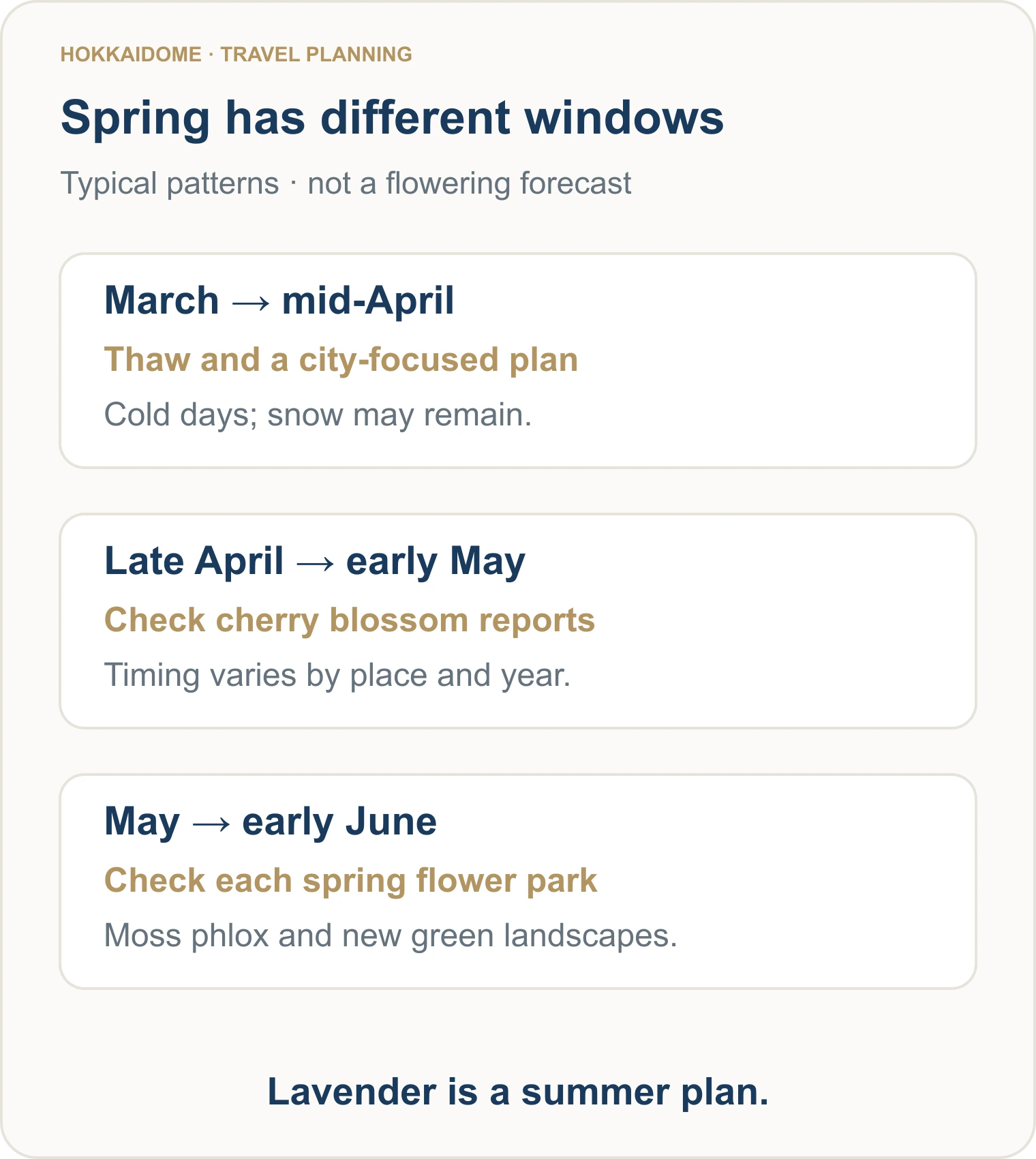
Spring in Hokkaido is a sequence of different trips. March can still feel like winter, April brings the thaw, and late April through May offers changing blossom and flower opportunities. The famous lavender photographs belong to summer. Start with what is likely to be open and in season for your dates, then choose the region that best matches it.
This guide is a planning framework, not a live flower forecast. A park can move from bloom to leaves quickly, and different cherry varieties do not all follow the same date. Check current local reports shortly before travel and leave a good alternative for a cold, wet or blossom-free day. The trip should still be enjoyable if the flowers are early or late.
| Travel window | A useful focus | What to verify |
|---|---|---|
| March–mid April | Sapporo food, indoor visits, an onsen stay or a specifically confirmed snow activity | Residual snow, walking conditions, seasonal closures and current transport |
| Late April–early May | Cherry blossom reports around Hakodate, Matsumae and Sapporo | Actual park conditions, different varieties and Golden Week bookings |
| Mid–late May | New greenery and selected spring flower parks | The individual garden’s flowering and opening; choose the region first |
| Late May–early June | A spring-to-summer countryside trip where facilities are open | Garden updates, mountain access and local transport; not a lavender guarantee |
Cherry blossoms: follow local reports, not one island-wide date
For Sapporo, the official city guide gives late April to early May as a usual peak window. Hokkaido Shrine and Maruyama Park are established choices, with other city parks offering different walking settings. Use the report for the particular park, and check access and visitor rules rather than assuming a picnic, barbecue or event is always allowed.
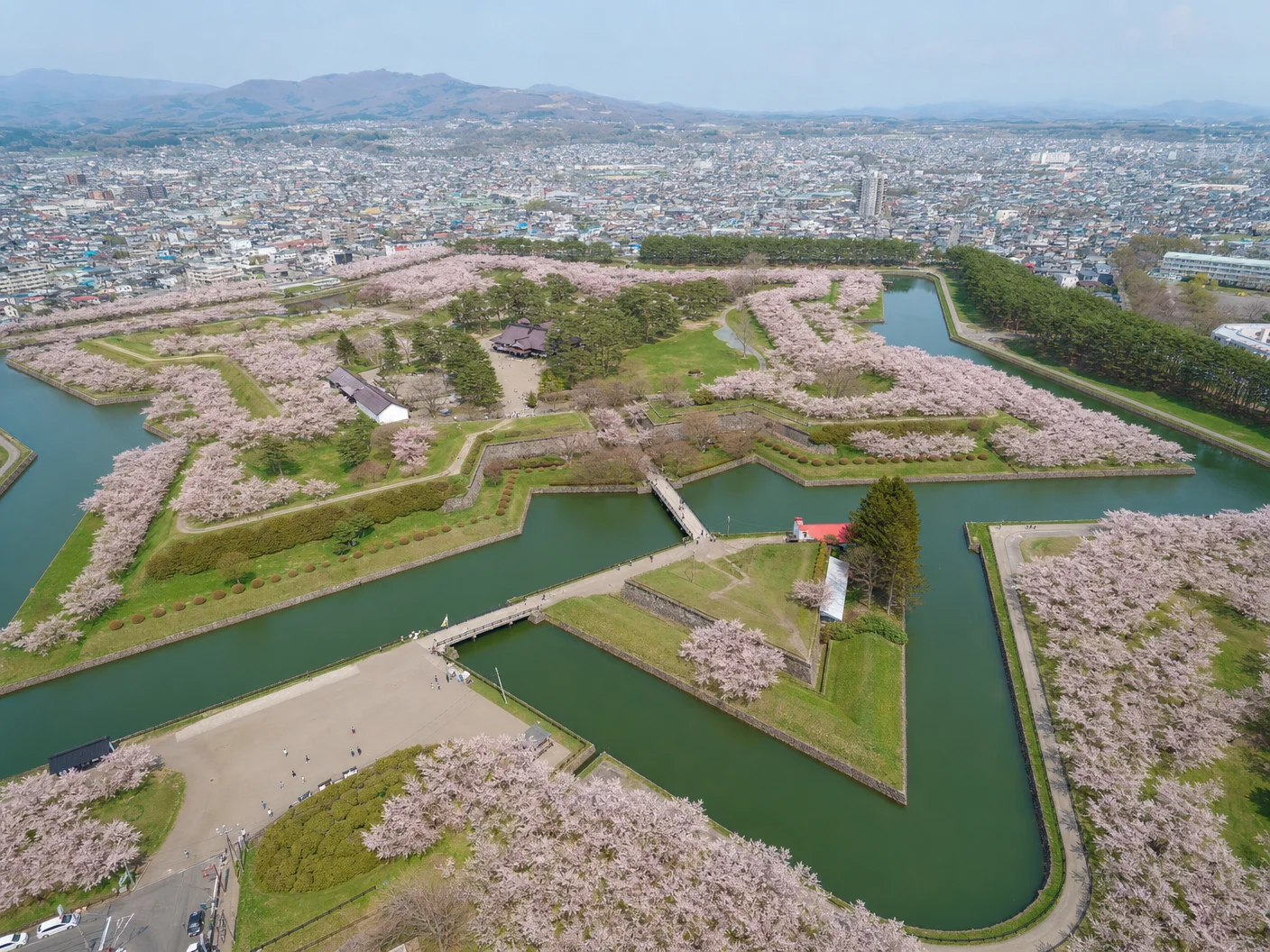
In Hakodate, Goryokaku’s star-shaped fort is a strong focus for a spring visit. Walk at ground level, then consider the tower if the view and current opening suit you. The tower’s blossom page is useful because it publishes dated conditions rather than just a seasonal photograph. Its past records show why the same calendar day cannot promise the same flowers every year.
Choose one main blossom location for the morning and keep the afternoon adaptable. If flowers are still good and the group wants longer there, stay. If the weather changes, a market meal, indoor visit or town walk can make a better afternoon than a long drive to another uncertain park. The itinerary should create options rather than a string of fixed bloom promises.
Southern Hokkaido: give Hakodate and Matsumae their own time
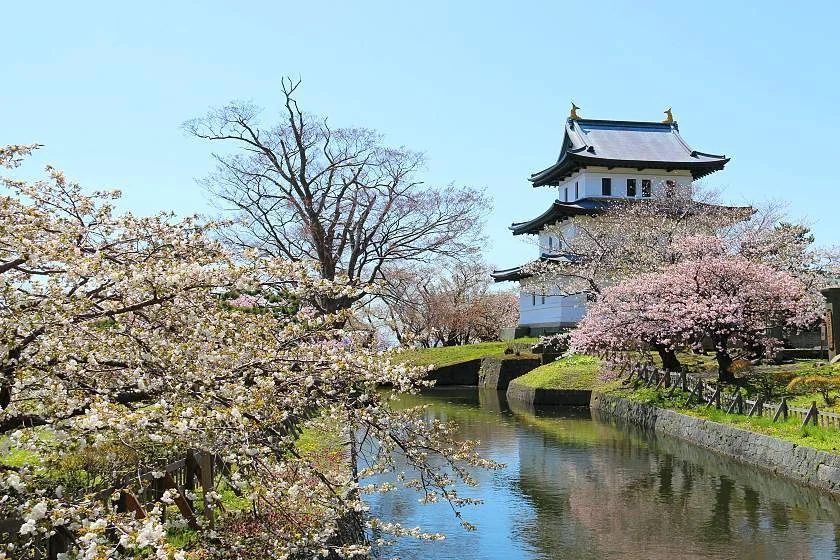
Matsumae combines its castle setting with different cherry varieties that flower successively. That variety is a reason to read the town’s current reports, not a guarantee of all trees being in bloom together. The official regional listing describes bus access from Kikonai as well as road access, so the trip needs a complete transport plan.
Use Hakodate or a suitable southern base for a Matsumae-focused outing. Include the journey out and back, lunch, walking and any museum time before deciding it fits. Do not combine a full Matsumae visit, a long move to Sapporo and several city attractions into the same easy-looking day. A route-search driving time leaves out most of the visit.
A useful southern spring stay can give one day to Hakodate’s fort and neighbourhoods, another to Matsumae when conditions suit it, and a separate travel day for the onward journey. Choose the arrival and departure airport accordingly. Our Hakodate guide is a starting point for the city portion; a private day quote should use your actual hotel and return requirements.
Sapporo and Otaru: a spring trip that still works without blossoms
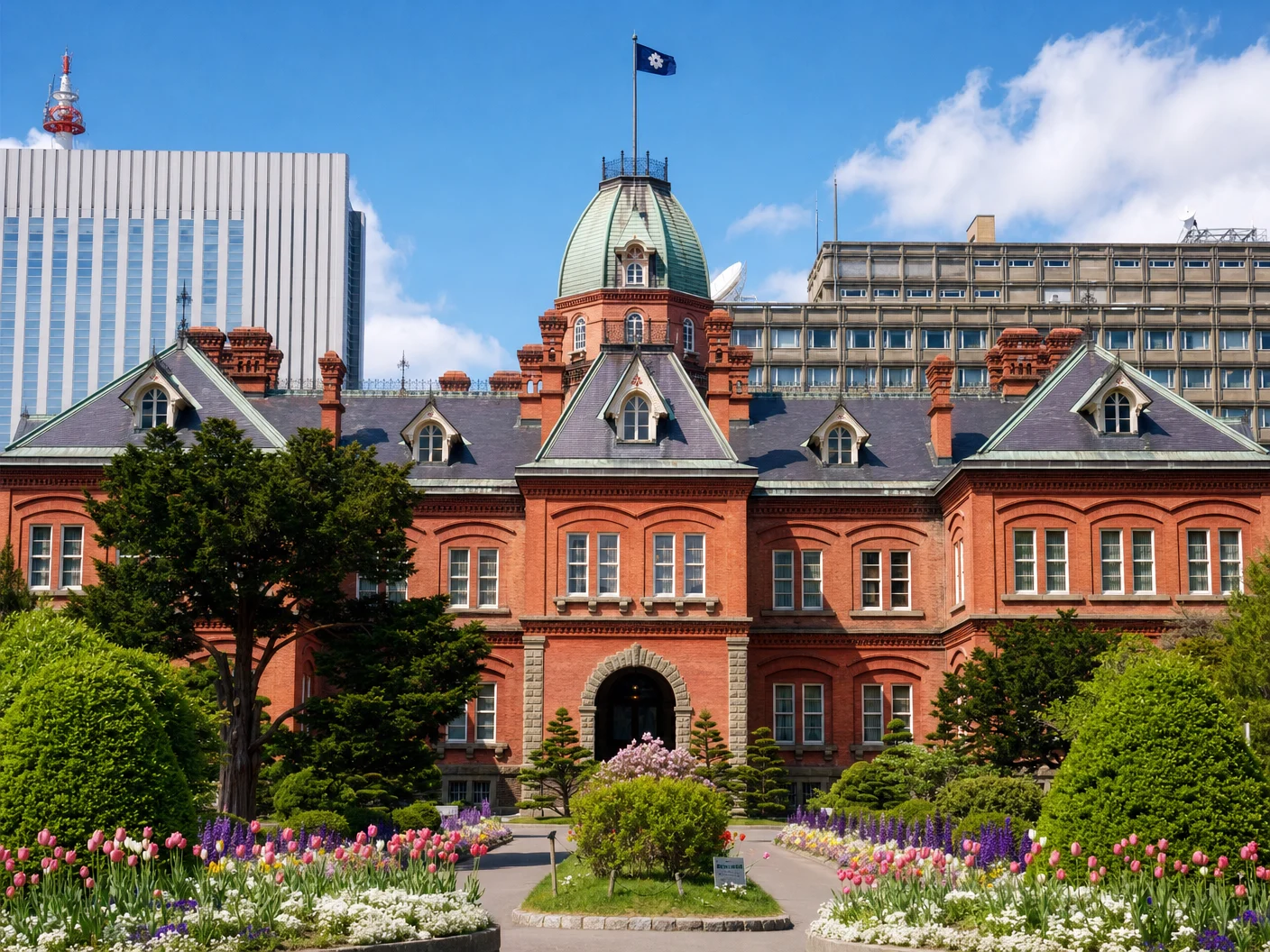
A Sapporo base is practical when food, relaxed parks and straightforward transport are the priority. Put the outdoor day in the best weather and keep an indoor choice available. The same hotel can cover an Otaru outing, avoiding another checkout just to see the canal and shopping streets.
For five calendar days and four nights, consider this flexible outline: arrive and settle in on day one; use day two for the best available city park conditions; visit Otaru on day three; keep day four for another Sapporo area or a separately confirmed Jozankei outing; leave day five for a flight-appropriate morning and the airport. All four nights can stay at the same Sapporo hotel if the departure connection works.
This version does not include Hakodate or the northeastern flower parks. It uses flexibility as its main advantage. If blossoms have finished, the city, canal town and food still give the visit purpose. Confirm any bath, shuttle or attraction booking rather than assuming a transport ticket includes admission. Compare the short Sapporo and Otaru plan when your flights leave fewer usable days.
Moss phlox and flower gardens are a different route decision
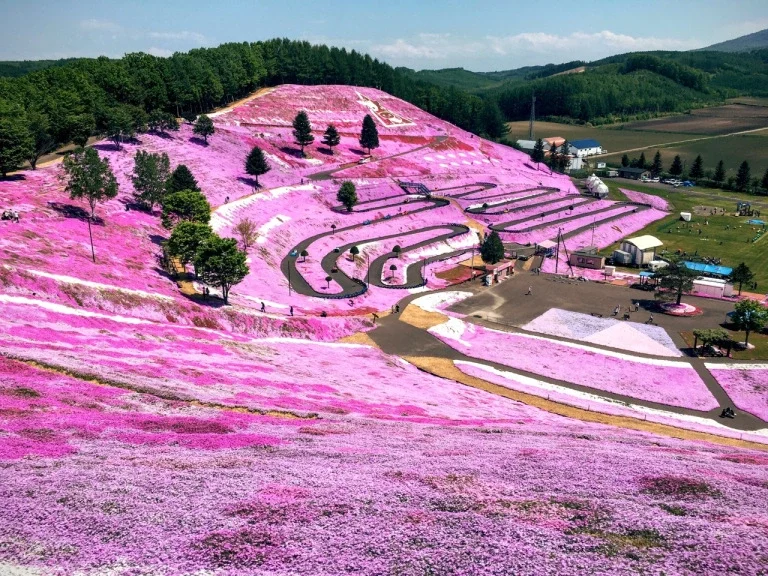
The pink carpet of shibazakura is moss phlox, not a cherry orchard. Takinoue and Higashimokoto are northeastern Hokkaido outings, and they should be planned around their own bloom reports and regional access. They are not convenient extras to every Sapporo or Hakodate day.
The Takinoue tourism association describes a general early-May to early-June viewing season. Higashimokoto’s park website publishes current announcements and conditions. Verify the year’s opening and flowers, and compare a base and airport that leave useful time in the area. A full regional day can be worthwhile; a late airport-day detour can be a poor fit.
Furano and Biei also change through the thaw. Do not expect the mature flower rows of a July photo in April, or assume every seasonal sightseeing service is running. Use Farm Tomita’s field guide and the current garden updates to see which plants belong to the date. Inland farmland is also a working place: stay on permitted routes and avoid entering fields for a photograph.
Choose a region, then the airport and nights
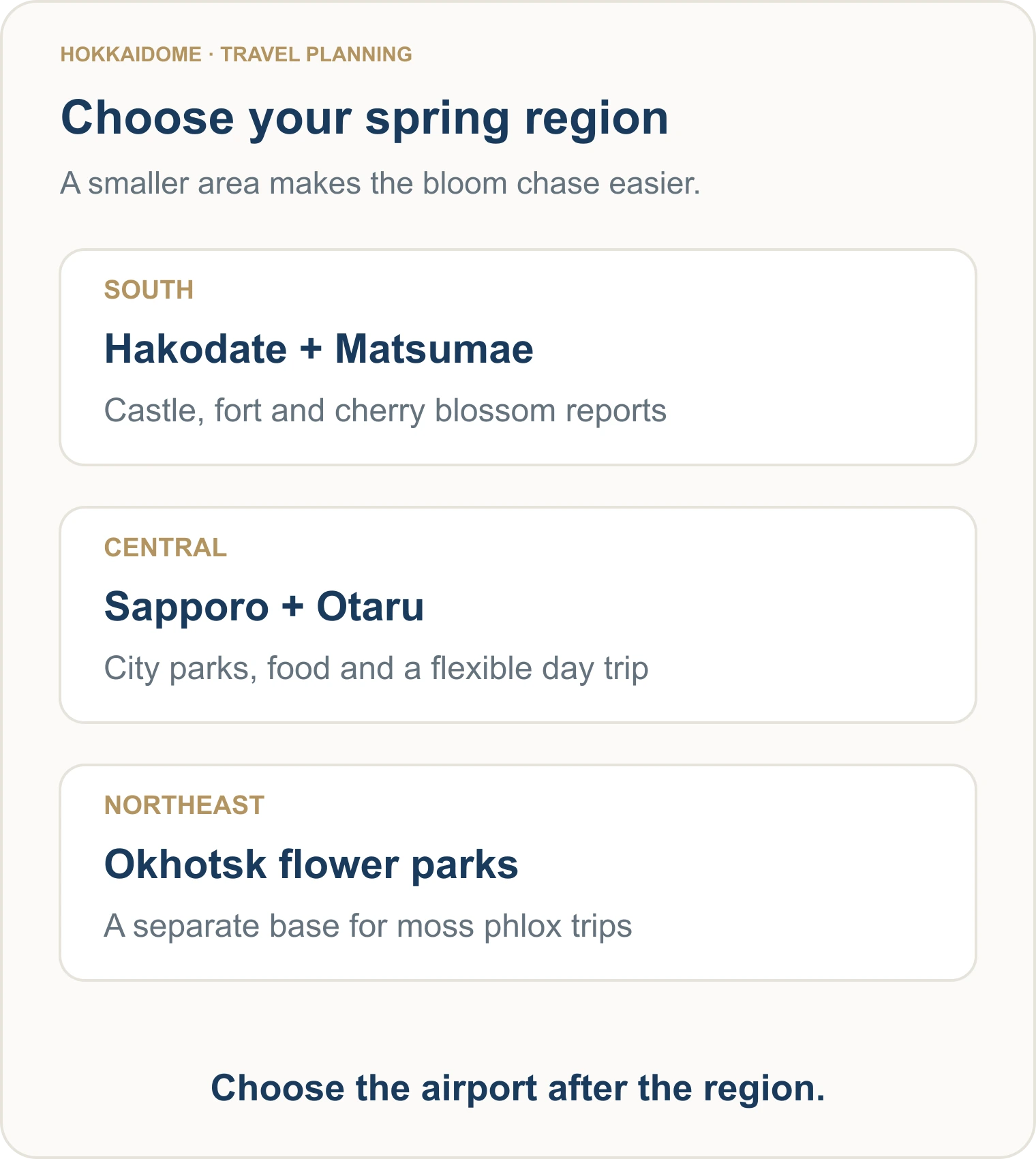
| Your priority | A practical starting shape | What to leave out |
|---|---|---|
| Castle and fort blossoms | A southern stay around Hakodate with a dedicated Matsumae outing when conditions fit | A rushed same-day move through Matsumae to Sapporo |
| Easy city days and flexibility | One Sapporo base with Otaru and selected parks | A cross-island flower chase on the final morning |
| Northeastern moss phlox | A regional base, checked local connections and an airport suited to the area | Treating Takinoue or Higashimokoto as a short central-city detour |
| Furano and Biei landscape | A countryside stay based on actual spring opening and transport | Promising outdoor lavender in cherry blossom season |
For a longer week, add one region only after the travel days and hotel nights fit. A blossom report can help choose between two nearby parks; it should not encourage a last-minute cross-island drive with no room for meals or check-in. If the flower region is the main reason for the trip, choose that region first and let the airport follow.
Ask accommodation about dinner times, luggage storage and any shuttle before finalising the route. Rural buses, seasonal services and the journey from a station to the hotel need separate checking. Our car-free planning guide explains how to trace the complete outward and return connections.
Pack for the forecast at every overnight base
Spring averages are useful context, but they are not a clothing forecast. JMA’s 1991–2020 normals put Sapporo’s mean temperature at 7.3°C in April and 13.0°C in May. Those monthly means are not daily highs, and do not describe every inland town, mountain pass or windy morning.
Take layers you can remove, a suitable wind- and rain-resistant outer layer, and comfortable shoes for the actual walking surface. March and early April may still need winter clothing. Cold evenings and wet thaw conditions can matter even when an afternoon photo looks sunny. Check the forecast for each overnight base shortly before packing.
For a road journey, confirm conditions and any seasonal closure on the route. A professional driver can take over the driving and help adjust agreed stops, but cannot eliminate snow, ice, traffic or closure risk. Keep a shorter alternative and protect the flight connection. For parks with slopes or longer walks, check the actual access if someone needs step-free travel or assistance.
How to ask for a spring sightseeing day
Tell HokkaidoMe your travel dates, overnight bases, flights, group size, luggage and the flowers or places that matter most. We can help compare a realistic local day, a hotel change with stops or a private airport connection. Send the preferred region first; “all the spring highlights” can span much more distance than a single touring day allows.
Our planning support is in English. Drivers assist with conversational English and translation apps; a specialist guide is a separate request. We confirm the feasible stop list, operating time, vehicle and written quote before booking. Flowering and weather cannot be guaranteed, so an agreed fallback is part of sensible planning.
See the published charter conditions and trip-cost worksheet to separate vehicle, room and per-person expenses. For a selected countryside day, our Furano and Biei guide explains how to choose stops for the actual season. Your enquiry starts a conversation; it is not a confirmed reservation.
Spring travel in Hokkaido: questions
When is spring in Hokkaido?
The visitor experience changes from the March and April thaw to later spring flowers in May and early June. Cherry blossoms are often planned around late April to early May in southern Hokkaido and Sapporo, but exact timing varies by location and year. Use current local reports before making the final route.
Is April a good month to visit Hokkaido?
Yes for a flexible city, food and onsen trip, and potentially late-April blossoms when current reports support them. Early April is not a reliable flower-field holiday: snow may remain, some seasonal facilities may not be operating, and the landscape can still be in transition.
Can I still see cherry blossoms in May?
Possibly, depending on the place, variety and year. Do not assume every early-May trip will catch peak bloom. Compare the latest park reports and be ready to use city walks, food or another seasonal activity when the blossoms have finished.
Can we see lavender and cherry blossoms on one spring trip?
Do not plan on the famous outdoor lavender fields matching cherry blossom season. Lavender around Furano is a summer attraction, with individual fields having specific windows. For spring, check the plants actually in flower at each garden rather than using a July photograph as a promise.
Should I visit Takinoue as a quick detour from Sapporo?
Treat it as a separate regional outing that needs a checked route and sufficient time. It is in the northeastern part of Hokkaido, and should not be added to a full Sapporo or Hakodate sightseeing day. For moss phlox as the main priority, consider a regional base and suitable arrival airport.
What should I wear in Hokkaido in spring?
Take removable warm layers, an outer layer that handles wind and rain, and comfortable shoes suitable for the actual conditions. March and early April can still need winter clothing. Inland nights and higher places can be colder than central Sapporo; check the forecast for every overnight base.
Can a private driver guarantee we will see flowers?
No. A driver can help with a workable route and agreed adjustments, but cannot control flowering, road closures, traffic or weather. Confirm the day’s feasible stops and opening information; a flexible itinerary improves choices without guaranteeing a particular scene.
Can I make this spring trip without a car?
A Sapporo base with selected city parks and Otaru can work well using public transport. Southern or northeastern flower trips need separate planning for local connections. Check the return as well as the outward journey, and compare a dated tour or private day only where it helps.
Current reports and official planning sources
Reviewed 17 October 2026. Seasonal windows are general guidance, not forecasts for a future spring. Check the current year’s reports, operator dates and access before making final bookings.
- Sapporo official tourism: spring blossoms and places to visit
- Goryokaku Tower: cherry blossom reports and past flowering dates
- Hokkaido official tourism: Matsumae Park and access
- Takinoue Tourism Association: moss phlox season and regional information
- Higashimokoto Shibazakura Park: current park announcements
- Japan Meteorological Agency: 1991–2020 climate normals
- Farm Tomita: field-by-field flowers and seasons
Plan it with HokkaidoMe
Plan a spring day around your region
Share your dates, overnight bases and the places you most want to see. We will help check a feasible route, vehicle and seasonal alternatives.
We reply in English with availability and a personalised quote. A form enquiry does not create a confirmed reservation.