How to Use Public Transport
in Hokkaido
11 min read · Updated June 2026
Hokkaido has public transport — but it is not the seamless, everywhere-you-need-to-go network that visitors to Tokyo or Osaka expect. Understanding how it works, where it works well, and where it falls short is essential for planning a smooth trip.
This guide covers every mode of transport available in Hokkaido: JR trains, intercity buses, the Sapporo subway, local buses, and taxis. It also compares them honestly with private car hire — so you can choose the right option for each leg of your journey.
The Honest Summary
Public transport in Hokkaido works well between major cities (Sapporo ↔ Hakodate, Sapporo ↔ Asahikawa). It becomes unreliable or non-existent for rural areas, scenic spots, and ski resorts. Services are infrequent, often require multiple transfers, and timetables can be difficult to navigate without Japanese.
For travellers who want to visit Biei, Furano, Niseko, or multiple destinations in one trip, a private car with driver is significantly more practical.
JR Hokkaido Trains
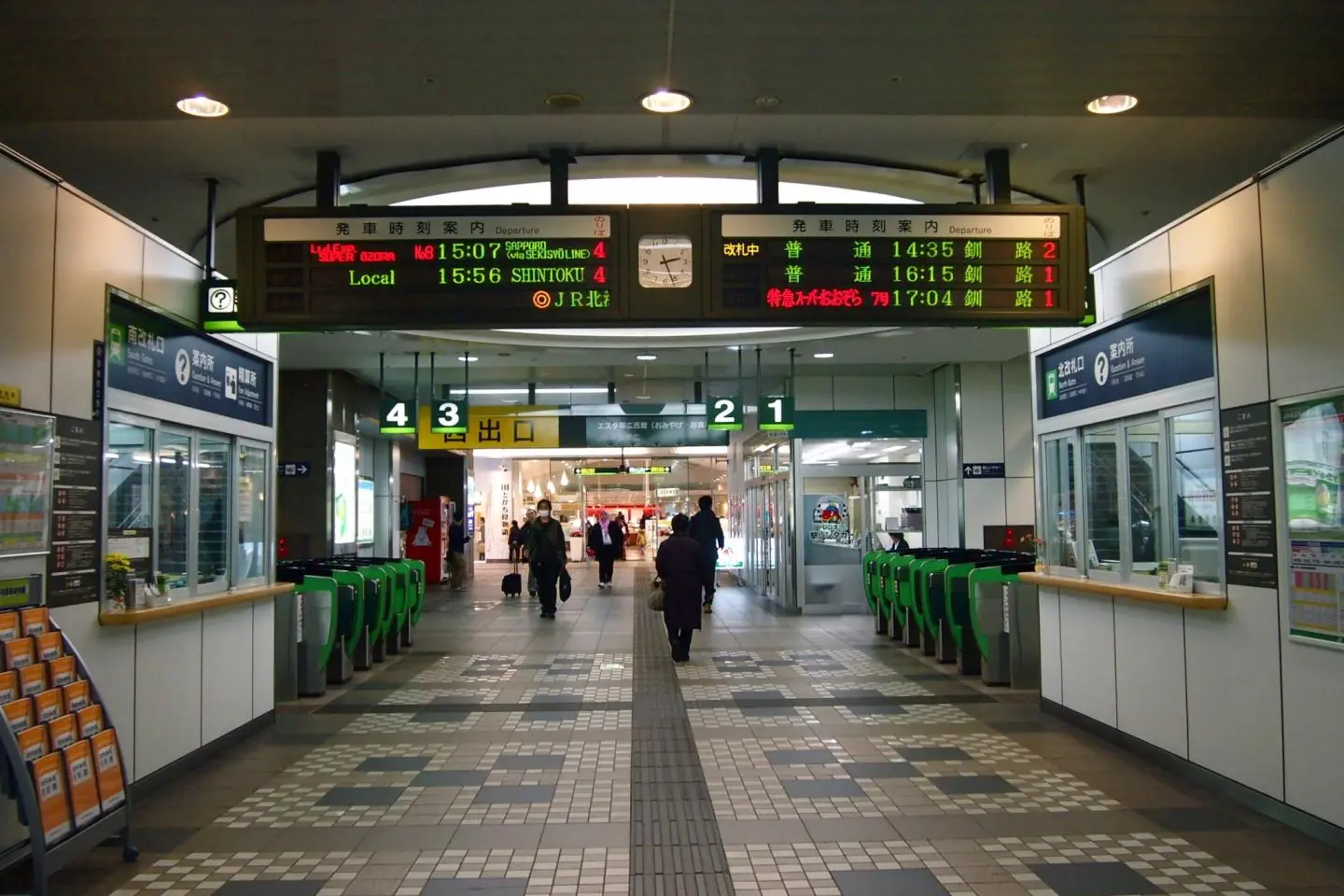
JR Hokkaido operates the main rail network across the island. The flagship route is the Hokkaido Shinkansen, which connects Tokyo to Shin-Hakodate-Hokuto (the southern tip of Hokkaido) via the Seikan Tunnel. From there, limited express trains continue to Sapporo and other major cities.
Key routes for tourists include the Hokuto/Super Hokuto (Sapporo–Hakodate, ~3.5 hours), the Lilac/Kamui (Sapporo–Asahikawa, ~1.5 hours), and the Furano/Biei Norokko seasonal tourist train (summer only, Asahikawa–Biei–Furano).
| Route | Train Name | Duration | Fare (approx.) |
|---|---|---|---|
| Sapporo → Hakodate | Super Hokuto | ~3h 30m | ¥8,910 |
| Sapporo → Asahikawa | Lilac / Kamui | ~1h 25m | ¥4,290 |
| Sapporo → Niseko | Local (transfer at Otaru) | ~2h 30m | ¥2,310 |
| Asahikawa → Biei | Furano Line | ~35m | ¥680 |
| Biei → Furano | Furano Line | ~50m | ¥860 |
| Sapporo → Otaru | Local / Rapid | ~35m | ¥750 |
Important caveat: JR Hokkaido has been steadily reducing services on unprofitable rural lines. Several lines have been discontinued in recent years, and others operate with very limited daily services (sometimes just 2–3 trains per day). Always check the current timetable before planning a trip on a rural JR line.
Intercity Buses
Hokkaido Chuo Bus, Donan Bus, and several other operators run intercity coach services connecting Sapporo with most major towns. These are often cheaper than the train and serve destinations that the JR network no longer reaches.
The main intercity bus terminal in Sapporo is Sapporo Eki-mae Bus Terminal, located directly beneath Sapporo Station. Buses to Niseko, Furano, Biei, and many other destinations depart from here.
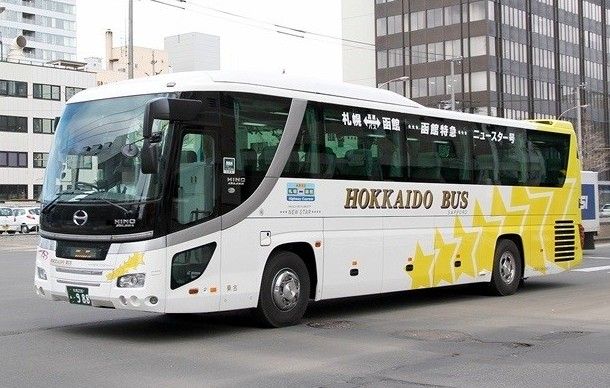
Hokkaido Bus operates intercity coach services connecting Sapporo with regional towns and tourist areas.
| Route | Duration | Fare (approx.) | Frequency |
|---|---|---|---|
| Sapporo → Niseko | ~2h 30m | ¥2,200 | 3–5/day |
| Sapporo → Furano | ~2h 15m | ¥2,060 | 4–6/day |
| Sapporo → Biei | ~2h 30m | ¥2,200 | 2–3/day |
| Sapporo → Hakodate | ~5h 30m | ¥4,700 | 8–10/day |
| Sapporo → Asahikawa | ~2h | ¥2,060 | Hourly |
Intercity buses are a reasonable option for budget travellers doing point-to-point journeys. The limitation is flexibility: you're locked to the timetable, and once you arrive at your destination, getting around locally often requires another bus or taxi.
No Timetables. No Transfers.
Private car hire across Hokkaido
Door-to-door service with English-speaking driver
Sapporo Subway & City Buses
Within Sapporo, the Sapporo Municipal Subway is excellent — clean, frequent, and easy to navigate. Three lines (Namboku, Tozai, Toho) cover most of the city's key areas. A single ride costs ¥210–370 depending on distance. The Odori station is the central interchange point.
The subway is the best way to get around central Sapporo during the Snow Festival, when roads are congested. For day trips outside the city, however, the subway is of limited use.
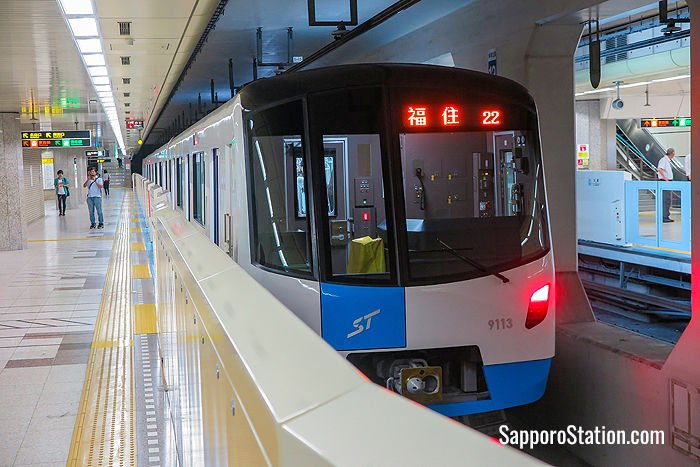
The Sapporo Municipal Subway is efficient and easy to use within the city — but does not extend to rural Hokkaido.
Taxis in Hokkaido
Taxis are widely available in Sapporo and other major cities, but become scarce in rural areas. They are metered, safe, and reliable — but expensive for longer distances. A taxi from Sapporo to Niseko (approx. 100km) would cost ¥25,000–35,000 one-way.
Ride-hailing apps like Uber have limited coverage in Hokkaido. GO (ゴー) is the main taxi-hailing app in Japan and works in Sapporo. Outside major cities, you'll need to call a taxi company directly — which requires Japanese.
Public Transport vs. Private Car: Honest Comparison
| Factor | Public Transport | Private Car Hire |
|---|---|---|
| Cost | Lower (¥2,000–5,000/day) | Higher (from ~$120/day) |
| Flexibility | Fixed timetables | Fully flexible, your schedule |
| Rural access | Very limited | Anywhere in Hokkaido |
| Luggage | Awkward with large bags | Door-to-door, no carrying |
| Language barrier | Moderate (English signage in cities) | None (English-speaking driver) |
| Scenic stops | Only at scheduled stops | Stop anywhere, anytime |
| Group travel | Costs multiply per person | Fixed price regardless of group size |
| Winter reliability | Delays/cancellations in heavy snow | Experienced winter driver |
IC Cards: Your Essential Transport Tool
Whether you use trains, buses, or the subway, an IC card (Suica or Kitaca) makes payment seamless. Simply tap in and tap out — no need to calculate fares or buy individual tickets. IC cards are accepted on virtually all public transport in Hokkaido.
Kitaca
Hokkaido's local IC card. Available at JR Hokkaido stations. Works on JR trains, Sapporo subway, and most buses.
Suica
Japan's most widely used IC card (JR East). Works everywhere Kitaca does, plus convenience stores and vending machines.
Apple/Google Pay
You can add Suica to your iPhone or Android before leaving home. Convenient for travellers who prefer not to carry a physical card.
IC card top-up
Top up at any JR station ticket machine, 7-Eleven, or convenience store. Machines have English interfaces.
Practical Tips for Using Public Transport in Hokkaido
Check timetables before you go
Rural bus and train services can be as infrequent as 2–3 times per day. Missing the last bus can leave you stranded. Use the Jorudan or HyperDia apps for timetables.
Book intercity buses in advance
Popular routes (Sapporo–Niseko in ski season, Sapporo–Furano in summer) sell out. Book online via the Hokkaido Chuo Bus website or at the bus terminal.
Carry cash for rural buses
Many rural buses are cash-only and do not accept IC cards. Have ¥500–1,000 coins ready.
Download offline maps
Google Maps works well for public transport navigation in Japan, including bus routes. Download the Hokkaido region for offline use in case of poor signal.
Allow extra time in winter
Snow and ice cause delays across all transport modes in winter. Build buffer time into your schedule, especially for airport connections.
Frequently Asked Questions
Is the JR Pass worth it for Hokkaido?+
For most visitors, the Hokkaido-specific JR pass (Hokkaido Rail Pass) is better value than the national JR Pass if you're staying only in Hokkaido. However, if you're combining Hokkaido with Tokyo or Kyoto, the national pass may be worthwhile. See our dedicated JR Pass guide for a full breakdown.
Can I get from New Chitose Airport to Sapporo by public transport?+
Yes — the JR Airport Express runs every 15–30 minutes and takes approximately 37 minutes to Sapporo Station. The fare is ¥1,150. This is the most convenient public transport option from the airport.
Is there public transport to Niseko?+
Yes, but it's limited. Buses run from Sapporo to Niseko (approx. 2.5 hours, ¥2,200) several times per day. In ski season, additional resort shuttle buses operate. However, once in Niseko, getting between resorts and the town requires additional buses or taxis.
Can I get to Biei and Furano without a car?+
Technically yes — JR Furano Line connects Asahikawa to Biei and Furano. However, services are infrequent (especially outside summer), and the famous flower fields and viewpoints are not walkable from the stations. A rental bicycle or taxi is needed for the last mile, which adds cost and complexity.
What's the best transport option for a group of 4–6 people?+
For groups, private car hire is almost always more cost-effective than public transport once you factor in multiple tickets, transfers, and the time cost of navigating timetables. A private minivan can accommodate 6 passengers at a fixed price regardless of group size.
Skip the Timetable Stress
Private Car Hire Across Hokkaido
Go where you want, when you want — with an English-speaking driver who knows every corner of Hokkaido.
Related Articles